








Brief Introduction
●Smart App Monitoring
●Interactive Touch Screen
●Max Support 32 Parallels
●Big Power 200A Smart BMS
●Rigorous Structure, Top Brand Cell
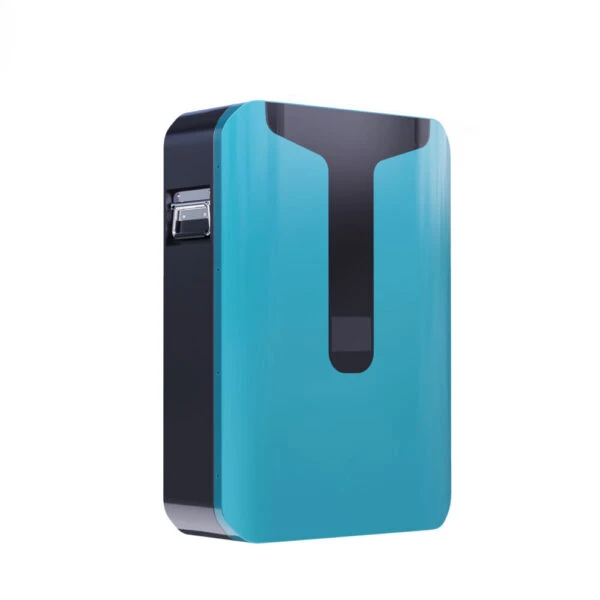
15KWh Lifepo4 Battery Home Energy Storage Solution
5-15kWh Wall-Mounted Battery

Main Parameters
|
Parameters |
|||||||
|
Item Model |
51.2V 100Ah | 51.2V 150Ah |
51.2V 200Ah |
51.2V 230Ah | 51.2V 300Ah | 51.2V 320Ah | 51.2V 300Ah |
|
Nominal Voltage |
51.2V |
25.6V |
|||||
|
Nominal Capacity |
100 Ah |
150 Ah |
200Ah |
230 Ah |
300 Ah |
320 Ah |
300 Ah |
|
Combination Method |
16 serial 1 parallel |
||||||
|
Working Voltage |
43.2-57.6V |
||||||
|
Charging Voltage |
58.4V |
||||||
|
Charging Current Limit |
10A(charging current greater than 55A automatically turns on the current limit) |
||||||
|
Standard Charging Current |
50A |
75A |
100A |
||||
|
Maximum Continuous |
100A |
100A |
200A |
||||
|
Standard Discharge Current |
50A |
75A |
100A |
||||
|
Maximum Continuous |
100A |
100A |
200A |
||||
|
Operating Temperaure |
Charge:0~45C |
||||||
|
Discharge:-20~60℃ |
|||||||
|
Operating Temperature |
RS485/CAN/RS232 |
||||||
|
Working Environment |
Temperature:≤95%;Altitude:≤4000m |
||||||
Lifepo4 Battery That Adapts to Every Climate
From -20°c cold winters to 55°c hot summers, your home Lifepo4 Battery always runs safely and efficiently

Tailor your home energystorage system
All built to your needs

Perfect for Homes, Villas, or Off-Grid Living
Never worry about sudden power outages again-your home backup battery has you covered.
From city apartments and large villas to remote off-grid homes, it provides consistent, reliable backup power to keep your lights on, appliances running, and essential devices safe.
No more disruptions, just peace of mind, comfort, and control-even when the grid fails.

FAQ
What is a LiFePO4 battery home energy storage solution, and how does it work?
A LiFePO4 (lithium iron phosphate) battery home energy storage solution is a system that uses LiFePO4 batteries as the core energy storage unit, combined with a solar inverter (if paired with solar panels), a battery management system (BMS), and supporting accessories to store electrical energy for home use. It works by either storing surplus electricity generated by home solar panels (off-grid or grid-tied) or charging from the grid during off-peak hours (when electricity prices are lower). When the home needs electricity (such as during peak hours, power outages, or when solar generation is insufficient), the stored energy in the LiFePO4 battery is converted into usable AC power through the inverter to supply power to household appliances.
What are the advantages of LiFePO4 batteries compared to other battery types for home energy storage?
LiFePO4 batteries have significant advantages for home energy storage compared to lead-acid, ternary lithium, and other battery types: First, they have a longer cycle life, usually reaching 3000-5000 charge-discharge cycles (at 80% depth of discharge), which means a service life of 8-15 years, far exceeding lead-acid batteries (2-5 years). Second, they are safer-LiFePO4 batteries have high thermal stability, no risk of thermal runaway, explosion, or fire, making them more suitable for home use. Third, they have a higher depth of discharge (DOD), generally up to 80%-100%, which means more usable energy can be extracted from the battery. Additionally, they have low self-discharge (≤3% per month), no memory effect, and can work normally in a wide temperature range (-20℃ to 60℃), adapting to different home environments.
How to determine the appropriate capacity of a LiFePO4 home energy storage system for my home?
The capacity selection of a LiFePO4 home energy storage system mainly depends on three factors: household daily power consumption, backup time requirements, and whether it is paired with solar panels. First, calculate your home's average daily electricity consumption (unit: kWh) by checking the monthly electricity bill or recording the power consumption of major appliances. Second, determine the required backup time (e.g., 24 hours, 48 hours) in case of grid power outages-this is crucial for areas with frequent power outages. Third, if paired with solar panels, consider the daily solar generation to match the battery capacity (avoid overcapacity or insufficient storage). For example, a family with a daily power consumption of 10 kWh and a 24-hour backup requirement would need a battery capacity of 10-12 kWh (considering 80%-90% DOD). It is recommended to consult a professional to conduct a detailed load calculation for accurate capacity matching.
Can the LiFePO4 home energy storage system be connected to the grid, and what are the benefits of grid-tied operation?
Yes, most LiFePO4 home energy storage systems support grid-tied operation (some also support off-grid or hybrid modes). Grid-tied operation means the system is connected to the public power grid, with the following key benefits: First, it can realize "peak shaving and valley filling"-charging the battery with low-price grid electricity during off-peak hours and using the stored energy during peak hours, reducing household electricity bills. Second, if the home has solar panels, surplus electricity stored in the battery can be fed back to the grid (depending on local grid policies) to earn feed-in tariffs. Third, it provides seamless power supply-when the grid is normal, the system can switch between grid power, solar power, and battery power automatically; when the grid is cut off, it quickly switches to off-grid mode to ensure continuous power supply for critical household appliances (such as refrigerators, lights, and medical equipment).
What maintenance is required for a LiFePO4 home energy storage system, and what is its service life?
LiFePO4 home energy storage systems require minimal maintenance compared to traditional battery systems. Routine maintenance includes: 1) Keeping the battery cabinet in a well-ventilated, dry environment (avoid high temperature, humidity, and direct sunlight) to ensure normal heat dissipation. 2) Regularly checking the connections of cables and terminals to prevent loose contacts or corrosion. 3) Using the system's built-in monitoring function (or APP) to check the battery's state of charge (SOC), voltage, and temperature, and handling abnormal alerts in a timely manner. 4) Avoiding overcharging or over-discharging (the BMS will automatically protect the battery, but it is still recommended to use it according to the manufacturer's guidelines). As for service life, the LiFePO4 battery itself has a cycle life of 3000-5000 times (80% DOD), and the entire system's service life is usually 8-15 years, depending on usage habits, environmental conditions, and the quality of components (inverter, BMS, etc.). The battery can be replaced independently when its capacity decays to 80% of the original, extending the system's overall service life.
Hot Tags: 15KWh Lifepo4 Battery, China 15KWh Lifepo4 Battery manufacturers, suppliers, factory, roof solar panels with battery storage, 20kwh battery storage, lithium battery for solar storage, solar panels with battery storage cost, 500 kw battery storage, solar power and battery storage


