


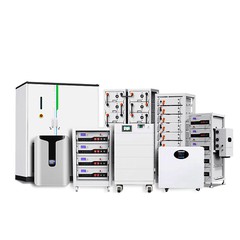


As a supplier of 60V batteries, I often receive inquiries from customers about the possibility of connecting multiple 60V batteries together. This is a common question, especially for those who require higher voltage or capacity for their applications. In this blog post, I will explore the technical aspects of connecting multiple 60V batteries, the potential benefits and risks, and provide some guidelines for safe and effective battery connection.
Technical Considerations
Before discussing the connection of multiple 60V batteries, it is essential to understand the basic principles of battery connection. There are two primary ways to connect batteries: series and parallel.
Series Connection
In a series connection, the positive terminal of one battery is connected to the negative terminal of the next battery. This configuration increases the total voltage while keeping the capacity (ampere-hours, Ah) the same. For example, if you connect two 60V batteries in series, the total voltage will be 120V, but the capacity will remain the same as that of a single battery.
The formula for calculating the total voltage in a series connection is:
[V_{total}=V_1 + V_2+\cdots+V_n]
where (V_{total}) is the total voltage, and (V_1, V_2,\cdots, V_n) are the voltages of individual batteries.
Parallel Connection
In a parallel connection, all the positive terminals of the batteries are connected together, and all the negative terminals are connected together. This configuration keeps the voltage the same but increases the total capacity. For example, if you connect two 60V batteries with a capacity of 20Ah each in parallel, the total voltage will remain 60V, but the total capacity will be 40Ah.
The formula for calculating the total capacity in a parallel connection is:
[Ah_{total}=Ah_1 + Ah_2+\cdots+Ah_n]
where (Ah_{total}) is the total capacity, and (Ah_1, Ah_2,\cdots, Ah_n) are the capacities of individual batteries.
Benefits of Connecting Multiple 60V Batteries
Higher Voltage
Connecting 60V batteries in series can provide a higher voltage, which is beneficial for applications that require a higher power supply. For example, some electric vehicles, industrial equipment, and high-power electronic devices may require a voltage higher than 60V to operate efficiently.
Increased Capacity
Connecting 60V batteries in parallel can increase the total capacity, which means longer runtime for the application. This is particularly useful for applications that require a continuous power supply for an extended period, such as electric bicycles, scooters, and backup power systems.
Risks and Challenges
Battery Mismatch
One of the significant risks of connecting multiple batteries is battery mismatch. Batteries with different capacities, voltages, or states of charge can cause uneven charging and discharging, leading to reduced battery life and performance. For example, if one battery in a series connection has a lower capacity than the others, it may become fully charged or discharged before the other batteries, causing overcharging or over-discharging, which can damage the battery.
Overheating
Connecting multiple batteries can also increase the risk of overheating, especially if the batteries are not properly ventilated or if the charging and discharging currents are too high. Overheating can cause thermal runaway, which is a dangerous condition where the battery temperature rises uncontrollably, leading to battery failure and even fire.
Safety Hazards
Working with multiple batteries involves electrical hazards, such as electric shock and short circuits. It is essential to follow proper safety procedures when connecting and handling batteries, including wearing appropriate protective gear and using insulated tools.
Guidelines for Connecting Multiple 60V Batteries
Use Batteries of the Same Type and Specification
To minimize the risk of battery mismatch, it is recommended to use batteries of the same type, brand, and specification. This ensures that the batteries have similar capacities, voltages, and internal resistances, which helps to ensure even charging and discharging.
Balance the Batteries
Before connecting the batteries, it is important to balance them to ensure that they have the same state of charge. This can be done using a battery balancer, which equalizes the voltage of each battery in the pack. Balancing the batteries helps to prevent overcharging and over-discharging, which can extend the battery life.


Monitor the Battery Temperature
It is crucial to monitor the battery temperature during charging and discharging to prevent overheating. This can be done using a temperature sensor or a battery management system (BMS). If the battery temperature exceeds the recommended range, it is important to stop charging or discharging immediately and allow the batteries to cool down.
Follow Proper Safety Procedures
When connecting and handling multiple batteries, it is essential to follow proper safety procedures to prevent electrical hazards. This includes wearing appropriate protective gear, such as gloves and safety glasses, and using insulated tools. It is also important to ensure that the batteries are properly secured and that there are no loose connections or exposed wires.
Our 60V Battery Products
At our company, we offer a wide range of 60V batteries to meet the diverse needs of our customers. Our 60V 20Ah Lithium Ion Power Battery is a popular choice for electric bicycles and scooters, providing a reliable and long-lasting power supply. For applications that require higher capacity, we also offer the 60V 55Ah Lithium Ion Power Battery and the 60V 30Ah Lithium Ion Power Battery.
All our 60V batteries are made from high-quality materials and are designed to meet the highest safety and performance standards. We also provide a comprehensive warranty and technical support to ensure that our customers have a hassle-free experience.
Conclusion
In conclusion, it is possible to connect multiple 60V batteries together, either in series or parallel, to achieve higher voltage or capacity. However, it is important to understand the technical aspects of battery connection, the potential benefits and risks, and to follow proper guidelines to ensure safe and effective operation.
If you are interested in purchasing 60V batteries or have any questions about connecting multiple batteries, please feel free to contact us. Our team of experts is always ready to assist you and provide you with the best solutions for your needs.
References
- Battery University. (n.d.). Series and Parallel Battery Configurations. Retrieved from https://batteryuniversity.com/learn/article/series_and_parallel_battery_configurations
- National Fire Protection Association. (2019). NFPA 70: National Electrical Code. Quincy, MA: NFPA.
- Society of Automotive Engineers. (2018). SAE J2464: Electric Vehicle Battery Abuse Testing. Warrendale, PA: SAE International.


