




Hey there! As a supplier of 80V batteries, I've seen firsthand how the state of charge can have a huge impact on these powerhouses. Let's dive right in and explore how the state of charge affects an 80V battery.
First off, what exactly is the state of charge (SOC)? Simply put, it's a measure of how much energy is currently stored in the battery compared to its maximum capacity. It's usually expressed as a percentage, ranging from 0% (completely empty) to 100% (fully charged).
Performance and Power Output
One of the most obvious ways the state of charge affects an 80V battery is its performance and power output. When the battery is fully charged (near 100% SOC), it can deliver its maximum power output. This means that whatever device it's powering, whether it's an electric motorcycle or an industrial machine, will run at its best. The motor will have plenty of juice to operate smoothly and efficiently, and you'll notice a significant difference in performance.
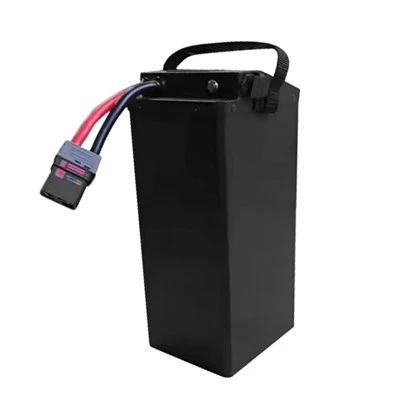
For example, if you're using an 80V 200Ah LiFePo4 Battery in an electric motorcycle, a fully charged battery will give you a top - notch riding experience. You'll have quick acceleration, and the bike will be able to handle inclines with ease.
On the other hand, as the state of charge drops, the power output of the battery also decreases. When the SOC gets down to around 20 - 30%, you might start to notice a significant drop in performance. The motor might not be as responsive, and the device might struggle to perform at its normal level. In the case of the electric motorcycle, you might find that it takes longer to accelerate, and it has a harder time climbing hills.
Battery Life and Longevity
The state of charge also plays a crucial role in the overall life and longevity of an 80V battery. Batteries don't like to be constantly at the extremes of their state of charge. Keeping the battery at 100% SOC for extended periods can cause stress on the battery cells. This is because when the battery is fully charged, there's a higher risk of overcharging, which can lead to the degradation of the battery's chemical components.
Similarly, letting the battery discharge all the way to 0% SOC is also bad news. When a battery is completely drained, it can cause irreversible damage to the cells. This can lead to a reduced capacity over time, meaning that the battery won't be able to hold as much charge as it used to.
To maximize the lifespan of an 80V battery, it's recommended to keep the state of charge within a certain range. For most lithium - based batteries, like the 80V 100Ah LiFePo4 Battery, a good range is between 20% and 80% SOC. This way, you're not putting too much stress on the battery cells, and you can expect a longer and healthier battery life.
Charging Efficiency
The state of charge affects the charging efficiency of an 80V battery as well. When the battery is at a low state of charge, it can accept a higher charging current. This means that it can charge up relatively quickly at the beginning of the charging process. However, as the state of charge approaches 100%, the charging current needs to be reduced to prevent overcharging.
For instance, if you're charging an 80V 50Ah Lithium Ion Battery, you might notice that it charges up rapidly from 0% to 50% SOC. But as it gets closer to 100%, the charging speed will slow down significantly. This is a safety mechanism built into the battery management system to protect the battery from damage.
Temperature and State of Charge
Temperature also interacts with the state of charge of an 80V battery. When the battery is at a high state of charge, it generates more heat during charging and discharging. High temperatures can be detrimental to the battery's health, as they can accelerate the chemical reactions inside the battery that lead to degradation.
In cold temperatures, the battery's performance can also be affected, especially at low states of charge. The chemical reactions inside the battery slow down in cold weather, which means that the battery might not be able to deliver as much power as it can in warmer conditions. It's important to take temperature into account when considering the state of charge of your 80V battery.
Safety Concerns
The state of charge is closely related to safety when it comes to 80V batteries. Overcharging a battery (keeping it at 100% SOC for too long) can lead to thermal runaway, which is a dangerous situation where the battery can overheat and even catch fire or explode. On the other hand, deep discharging (going to 0% SOC) can cause the battery to develop internal short - circuits, which also pose a safety risk.
That's why modern 80V batteries are equipped with battery management systems (BMS) that monitor the state of charge and prevent overcharging and deep discharging. These BMS systems are essential for ensuring the safe operation of the battery.
Impact on Different Battery Chemistries
Different battery chemistries respond differently to the state of charge. For example, LiFePO4 batteries, like the ones I mentioned earlier, are generally more tolerant of different states of charge compared to other lithium - ion chemistries. They have a more stable voltage profile and are less prone to overcharging and deep - discharge damage.
Other chemistries, such as lithium - cobalt - oxide batteries, are more sensitive to the state of charge. They require more careful management to ensure a long and safe lifespan.


How to Monitor the State of Charge
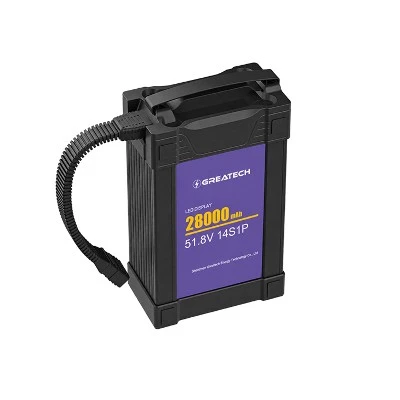
As a supplier, I always recommend that customers use reliable methods to monitor the state of charge of their 80V batteries. Many modern battery - powered devices come with built - in SOC indicators. These can be in the form of LED lights or digital displays that show the approximate state of charge.
There are also external battery monitors available in the market that can provide more accurate readings. These monitors can be connected to the battery and give you real - time information about the SOC, voltage, and other important parameters.
Conclusion
In conclusion, the state of charge has a profound impact on an 80V battery in terms of performance, battery life, charging efficiency, temperature, safety, and more. As a supplier, I'm committed to providing high - quality 80V batteries and helping our customers understand how to manage the state of charge effectively.
If you're in the market for an 80V battery, whether it's an 80V 200Ah LiFePo4 Battery, an 80V 100Ah LiFePo4 Battery, or an 80V 50Ah Lithium Ion Battery, we're here to assist you. We can offer you expert advice on how to get the most out of your battery and ensure its long - term performance. Don't hesitate to reach out to us for any procurement needs or to discuss your specific requirements.
References
- "Battery Management Systems: Design by Modeling and Identification" by Ali Emadi
- "Lithium - Ion Batteries: Science and Technologies" by Y. - K. Sun, S. - T. Myung, and B. Scrosati