




What is the thermal management of battery cells?
As a supplier of battery cells, I've witnessed firsthand the critical role that thermal management plays in the performance, safety, and longevity of these energy storage devices. In this blog post, I'll delve into the concept of thermal management for battery cells, exploring its significance, methods, and the impact it has on various applications.
The Significance of Thermal Management
Battery cells generate heat during charging and discharging processes. This heat is a natural by - product of the electrochemical reactions occurring within the cell. However, excessive heat can have detrimental effects on the battery's performance and lifespan.
High temperatures can accelerate the degradation of the battery's electrodes and electrolyte. For example, in lithium - ion batteries, elevated temperatures can cause the solid - electrolyte interphase (SEI) layer to break down and reform continuously. This process consumes lithium ions and electrolyte, leading to a reduction in the battery's capacity over time. Moreover, high temperatures can increase the internal resistance of the battery, which in turn leads to more heat generation in a vicious cycle.
Safety is another major concern. Overheating can trigger thermal runaway, a phenomenon where the temperature of the battery rises uncontrollably. Thermal runaway can cause the battery to vent flammable gases, catch fire, or even explode. This is especially dangerous in applications such as electric vehicles (EVs) and energy storage systems, where large numbers of battery cells are used.
Heat Generation in Battery Cells
The heat generation in battery cells can be attributed to several factors. Firstly, there is the resistive heating, also known as Joule heating. When current flows through the battery, it encounters resistance in the electrodes, electrolyte, and other components. According to the formula (Q = I^{2}R) (where (Q) is the heat generated, (I) is the current, and (R) is the resistance), the heat generated is proportional to the square of the current. So, high - current charging or discharging operations, such as fast charging an EV battery, can lead to significant resistive heating.
Secondly, the electrochemical reactions themselves can either generate or absorb heat. In some cases, the reactions are exothermic, releasing heat into the surroundings. For example, during the charging of a lithium - ion battery, the intercalation of lithium ions into the anode can be an exothermic process.
Thermal Management Methods
Passive Thermal Management
Passive thermal management systems rely on materials with high thermal conductivity to dissipate heat. One common approach is to use heat sinks. Heat sinks are made of materials such as aluminum or copper, which have high thermal conductivities. They are attached to the battery cells to absorb the heat and transfer it to the surrounding environment.
Another passive method is the use of phase - change materials (PCMs). PCMs can absorb a large amount of heat during the phase - change process, such as from solid to liquid. When the battery temperature rises, the PCM absorbs the heat and changes its phase, effectively keeping the battery temperature in a relatively stable range. Once the battery temperature drops, the PCM solidifies again, releasing the stored heat.
Active Thermal Management
Active thermal management systems involve the use of external energy sources to control the battery temperature. One of the most widely used active methods is liquid cooling. In a liquid - cooled system, a coolant, such as water or a water - glycol mixture, is circulated around the battery cells. The coolant absorbs the heat from the cells and transfers it to a radiator, where it is dissipated into the environment. Liquid cooling is highly effective in removing heat, especially in high - power applications like EVs.
Air cooling is also an active thermal management method. Fans are used to blow air over the battery cells, carrying away the heat. Air - cooled systems are relatively simple and cost - effective, but they are less efficient than liquid - cooled systems, especially in high - heat - generating scenarios.


Impact on Different Applications
Electric Vehicles
In electric vehicles, thermal management is of utmost importance. The battery pack in an EV is large and powerful, and it generates a significant amount of heat during operation. Effective thermal management ensures that the battery operates within the optimal temperature range, which is typically between 20°C and 40°C. This not only improves the battery's performance and range but also enhances its safety and longevity. For example, a well - designed thermal management system can prevent thermal runaway, which is crucial for the safety of the vehicle's occupants.
Energy Storage Systems
Energy storage systems, such as those used in grid - scale applications, also require proper thermal management. These systems often involve large numbers of battery cells connected in series and parallel. The heat generated by these cells can accumulate quickly, leading to performance degradation and safety risks. By implementing an effective thermal management system, the energy storage system can operate more efficiently and have a longer service life.
Consumer Electronics
In consumer electronics, such as smartphones and laptops, thermal management is also essential. These devices are becoming more powerful, and their battery cells are required to deliver higher currents. As a result, heat generation is increasing. Good thermal management can prevent the device from overheating, which can cause performance issues, such as reduced battery life and slower processing speeds.
Our Offerings as a Battery Cell Supplier
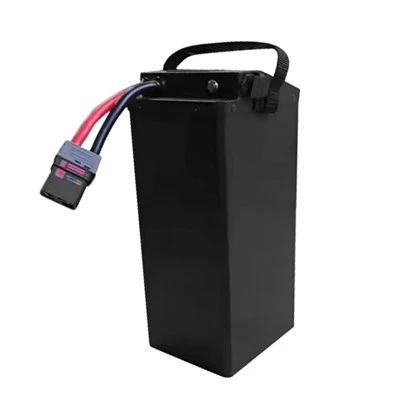
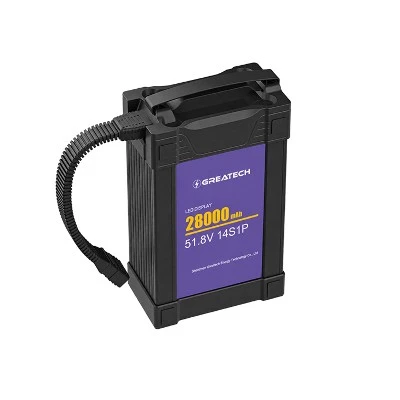
As a battery cell supplier, we understand the importance of thermal management. We offer a range of battery cells with advanced thermal management features. For example, our 12V 4.5Ah LiFePO4 Lithium Battery is designed with a combination of passive and active thermal management techniques. The battery uses high - quality heat - conducting materials to ensure efficient heat dissipation, and it can also be integrated into liquid - cooled or air - cooled systems for more demanding applications.
We work closely with our customers to develop customized thermal management solutions based on their specific requirements. Whether it's for an electric vehicle, an energy storage system, or a consumer electronic device, we have the expertise and resources to provide the best - in - class battery cells with optimal thermal management.
Conclusion
Thermal management is a critical aspect of battery cell technology. It has a profound impact on the performance, safety, and longevity of battery cells in various applications. As a battery cell supplier, we are committed to providing high - quality battery cells with advanced thermal management features. If you are interested in our products or have any questions about thermal management for battery cells, please feel free to contact us for procurement and further discussions.
References
- Chen, X., & Liu, J. (2017). Thermal management of lithium - ion batteries for electric vehicles: A review. Journal of Power Sources, 359, 278 - 294.
- Wang, Y., & Zhang, J. (2018). Thermal management strategies for lithium - ion batteries in electric vehicles. Energy Storage Materials, 12, 1 - 16.
- Safari, M., & Delacourt, C. (2010). Modeling of heat generation in lithium - ion batteries. Journal of The Electrochemical Society, 157(12), A1252 - A1257.