










Products Description
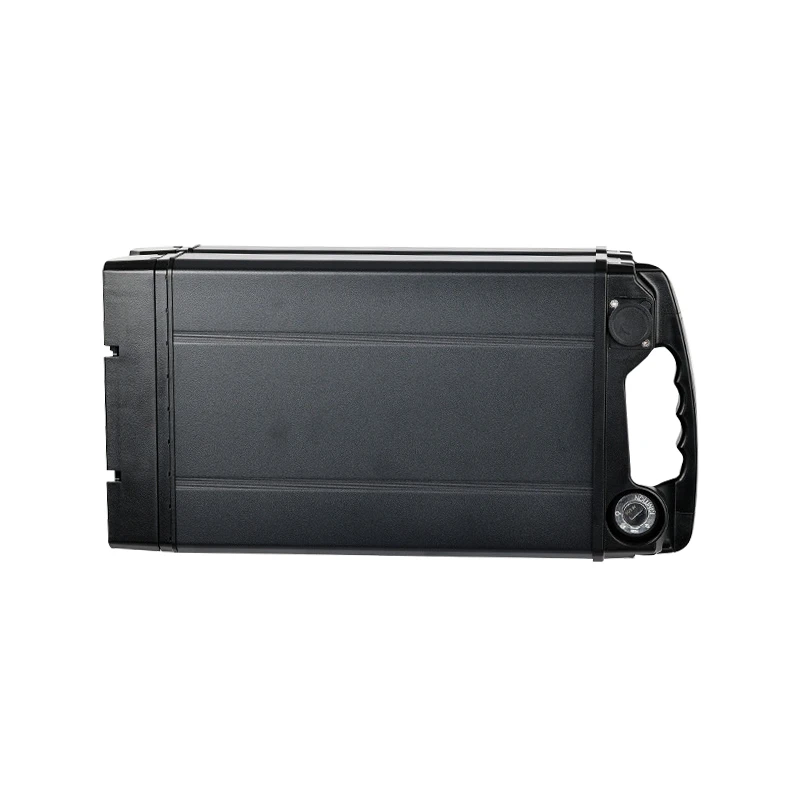
Practical structure, easy installation, and versatile mounting options.
Wear-resistant and high-temperature resistant.
Flame-retardant and fireproof material.
Battery with safety lock
| Model | JT0134 |
| Rated Voltage | 48V/36V |
| Rated Capacity | 10Ah-35Ah |
| Battery Power | 480Wh-800Wh |
|
Max Charge Voltage |
54.6V |
| Discharge Cut-off Voltage | 39V |
|
Max. Charge Current |
5A |
|
Standard Discharge Current |
5A |
|
Max. Discharge Current(BMS) |
15Ah |
|
Over current protection |
70±20A |
| Security lock | YES |
|
Gross weight |
6kg |
|
Packing size |
410*180*172mm |
BMS Management System

The BMS is an electronic system that manages and monitors rechargeable batteries, especially in applications like electric vehicles (EVs), energy storage systems, and portable electronic devices. Its main functions include:
Monitoring: It keeps track of various parameters of the battery cells, such as voltage, current, temperature. For example, it constantly measures the voltage of each individual cell in a battery pack to ensure that no cell is overcharged or undercharged. In an EV battery pack with dozens or even hundreds of cells, accurate voltage monitoring is crucial for the safety and performance of the entire battery system.
Protection: Based on the monitored data, the BMS takes measures to protect the battery. If it detects that the temperature of the battery is too high, it can trigger cooling mechanisms or limit the charging/discharging current to prevent thermal runaway and potential damage or safety hazards. Also, if a cell's voltage exceeds the safe range during charging, it will cut off the charging process to avoid overcharging which can lead to battery degradation or even explosion.
Balancing: Over time, individual battery cells in a pack may have slightly different capacities or states of charge. The BMS can perform cell balancing, which usually involves redistributing the charge among the cells to make sure that all cells are operating within a similar state of charge range. This helps to extend the overall lifespan of the battery pack and maintain its performance.
State Estimation: It estimates important states of the battery, like the state of charge (SOC) and state of health (SOH). SOC indicates how much charge is left in the battery, which is crucial information for users to know when they need to recharge. SOH reflects the general condition and remaining useful life of the battery, helping to predict when maintenance or replacement might be needed.
Overcurrent protection
Over-discharge protection
Overcharge protection
Short circuit protection
Supports fast charging
Long cycle life of 800-1200 times
Key Lock Feature
The key lock that secures firmly to the bike frame is a significant security measure. By locking in this way, it creates a deterrent against potential thieves who might target the battery.
Abrasion and Heat Resistance of the Housing
The abrasion-resistant and heat-resistant e-bike housing offers durability. Heat resistance is also crucial as e-bikes can be exposed to high temperatures, especially when parked in direct sunlight or in hot environments. This property helps maintain the integrity of the housing and protects the internal components from damage due to excessive heat.
Practical Structure and Easy Installation
The practical structure implies that the design of the e-bike or its accessories is well thought out to meet the needs of users. It likely means that it is convenient to use, with components in logical positions and perhaps having features that enhance the overall riding experience.
Mainstream recommendations for battery cell types
| Lithium Iron Phosphate (LiFePO4) | |
|
As the name suggests, it is mainly composed of lithium, iron, phosphorus, and oxygen. Lithium iron phosphate has a stable olivine crystal structure. The iron element in it provides a relatively stable electrochemical reaction platform, which contributes to good cycle stability. |
|
| Ternary Lithium (NCM/NCA) | |
|
NCM" stands for nickel-cobalt-manganese, and "NCA" stands for nickel-cobalt-aluminum. These battery cells are composed of a combination of these metal elements in different proportions along with lithium. For example, in NCM batteries, the proportions of nickel, cobalt, and manganese can vary to achieve different performance characteristics. The presence of nickel helps to increase the energy density of the battery, enabling it to store more energy per unit volume or weight. Cobalt also plays a role in improving the stability of the battery's structure during charging and discharging cycles. |


Applications

Shipping & Transportation

Certificate


FAQ
Can you accept OEM and ODM Service?
Yes, we supply OEM&ODM service as clients requirement.
Can we get samples for free?
Sorry, free samples are not available at beginning.
How long will be the delivery?
Usually delivery in 10 days, but could be change according to the quantity or other things.
What is the chemistry of these batteries?
They are either Li-Ni-Co-Mn or LiFePO4 lithium-ion batteries.
Hot Tags: 48v electric bicycle lithium battery pack, China 48v electric bicycle lithium battery pack manufacturers, suppliers, factory, 48v 10ah ebike battery, 48v 16ah ebike battery, ebike battery 52v, assist electric bike battery, 36v battery for electric bike, 1000w ebike battery


