



Composition of Lithium-ion Batteries
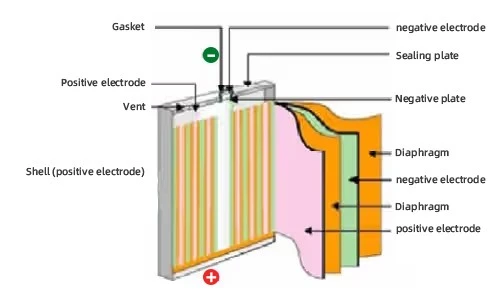
Lithium-ion batteries primarily consist of four key components: the cathode, anode, non-aqueous electrolyte, and separator. Currently, the most widely used lithium batteries on the market are lithium iron phosphate (LFP) batteries and ternary lithium (NCM/NCA) batteries. These two types differ significantly in cathode materials, and while their production processes are relatively similar, the required process parameters vary greatly. If a full transition from LFP to ternary materials is made, retrofitting existing production lines may prove ineffective, necessitating large-scale equipment replacement for battery manufacturers.
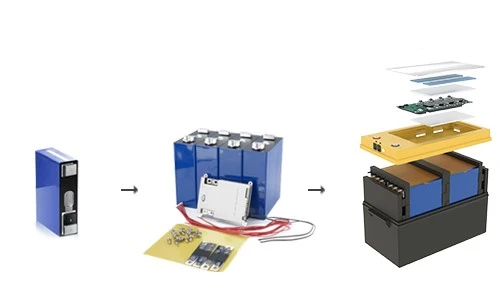
Lithium Battery Structure Breakdown:
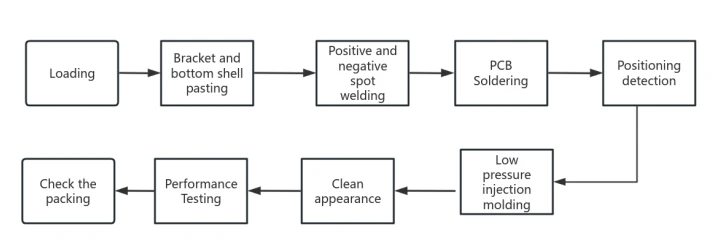
A power battery pack system connects numerous individual cells in series or parallel, integrating power and thermal management hardware. The Pack is a critical link in the production, design, and application of power battery systems, bridging upstream cell production and downstream vehicle integration. Design requirements are typically proposed by cell manufacturers or automakers, with production carried out by battery manufacturers, automakers, or third-party Pack suppliers. The Pack production line is relatively simple, with core processes including material feeding, bracket adhesion, welding, and testing. Key equipment includes laser welding machines and various adhesion/inspection devices. According to industry insights, major lithium battery equipment manufacturers have limited automation integration in this field, while laser equipment specialists like Han's Laser and United Winners Laser dominate the Pack equipment market due to their technological expertise.
The production process and workflow of a lithium battery PACK plant are crucial for ensuring battery performance, safety, and reliability. Typically, PACK plants follow these steps:
LFP vs. Ternary: The Inescapable Debate on Energy Density
Different materials require entirely separate equipment investments.
Currently, the mainstream cathode materials for power lithium batteries in China fall into two categories: LFP and ternary (NCM/NCA).
LFP batteries are among the safest lithium-ion cathode materials, offering cycle lives exceeding 2,000 charges. Mature industrialization has also driven down costs and technical barriers, making them a preferred choice for many manufacturers.
However, LFP batteries suffer from low energy density. BYD, a leading LFP battery producer, currently achieves 150 Wh/kg in single-cell energy density, with plans to reach 160 Wh/kg by year-end. Theoretically, LFP energy density is unlikely to exceed 200 Wh/kg.
Ternary lithium batteries use nickel-cobalt-manganese (NCM) cathodes, with adjustable ratios to meet specific needs.
Ternary batteries offer higher energy density-top-tier manufacturers like CATL achieve 200-220 Wh/kg, with industry projections reaching 300 Wh/kg by 2020. As a result, the passenger vehicle market is shifting toward ternary batteries, while LFP remains favored in safety-critical applications like buses. With the rise of full-electric passenger cars, ternary batteries are gaining prominence.
The two materials differ in energy density and cost, leading automakers to adopt different strategies. While their production processes are broadly similar, key differences lie in material composition and process parameters, making shared production lines impractical. Retrofitting LFP lines for ternary production is costly (ternary materials demand strict vacuum dehumidification, unlike LFP). Thus, many cell manufacturers invest in separate production lines for each material.
Cell Selection and Procurement
Selection: Choose appropriate cell models and specifications based on customer requirements and application scenarios.
Procurement: Source high-quality cells from reliable suppliers to ensure consistency and performance.
Cell Testing and Sorting
Testing: Evaluate cell performance, including capacity, internal resistance, and voltage.
Sorting: Select cells with uniform performance to ensure pack stability.
Battery Module Assembly
Connection Method: Configure cells in series or parallel to achieve target capacity.
Structural Design: Optimize layout for secure connections, thermal management, and space efficiency.
Battery Management System (BMS) Installation
BMS Selection: Choose a BMS capable of real-time monitoring.
Installation & Calibration: Integrate and test the BMS for proper functionality.
PACK Encapsulation
Enclosure Selection: Use materials (e.g., aluminum, plastic) with waterproof, dustproof, and shock-resistant properties.
Sealing: Protect internal components from environmental exposure.
Aesthetic Design: Customize appearance with coatings and branding as needed.
PACK Testing and Validation
Charge-Discharge Testing: Verify capacity, voltage, and other performance metrics.
Cycle Life Testing: Assess performance degradation over repeated cycles.
Safety Testing: Conduct overcharge, over-discharge, and short-circuit tests.
Environmental Testing: Evaluate performance under extreme temperatures, vibration, and humidity.
Final Inspection and Shipment
Quality Control: Perform final checks to eliminate defects.
Packaging & Logistics: Ensure damage-proof transportation.
Thermal Management and Aesthetic
Thermal Design: Incorporate cooling systems (e.g., heat sinks) to prevent overheating.
Aesthetic Customization: Refine appearance per client specifications.
Certification and Design Optimization
Compliance: Obtain industry certifications (e.g., UN 38.3, CE, UL) for global market access.
Optimization: Refine pack design (cell arrangement, connections, BMS) via testing.
Automated Production
Automation Equipment: Deploy robotic welding, assembly lines, and testing systems for efficiency.
Line Management: Optimize workflow for seamless production.