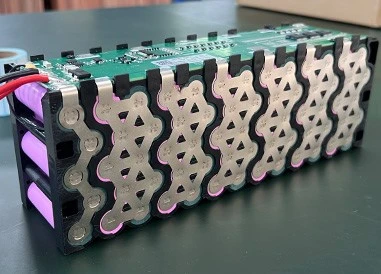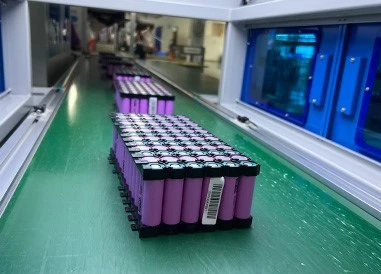




With the rapid popularization of new energy vehicles (NEVs) and energy storage systems, lithium batteries have become an indispensable core component. Among the numerous lithium battery types, Lithium Iron Phosphate (LFP) and Ternary Lithium (NCM/NCA) batteries are the two most mainstream options. Many consumers and industry buyers often fall into a dilemma when choosing between them: which one is more suitable for their needs? This guide will conduct an in-depth comparison of the two battery types from core performance, application scenarios, cost, and other key dimensions, helping you make an informed purchase decision.
What Are LFP and Ternary Lithium Batteries?
Lithium Iron Phosphate (LFP) Batteries: As the name suggests, their cathode material is lithium iron phosphate (LiFePO₄). Discovered by John Goodenough's team in 1997, LFP batteries feature an olivine crystal structure that is inherently stable, laying the foundation for their outstanding safety and long service life. They do not contain rare metals such as cobalt and nickel, which makes their raw material supply more stable.
Ternary Lithium Batteries: Their cathode material is a ternary composite of nickel, cobalt, and manganese (NCM) or nickel, cobalt, and aluminum (NCA), with the ratio of the three elements adjustable according to application needs. First introduced in the late 1990s, they gained widespread popularity after 2013 due to policy support and the promotion of brands like Tesla, thanks to their advantages in energy density.
LFP Undisputed Advantage
Safety is the top priority for battery selection, especially for NEVs and large-scale energy storage systems. The olivine crystal structure of LFP batteries gives them extremely high thermal stability-their thermal runaway temperature exceeds 800°C, four times that of ternary lithium batteries (around 200-300°C). Even in extreme conditions such as collisions, punctures, or overcharging, LFP batteries are less likely to catch fire or explode, and they do not release a large amount of heat or toxic gases when thermal runaway occurs.
Ternary lithium batteries, due to their more active chemical properties, have a higher risk of thermal runaway. However, with the continuous improvement of battery management systems (BMS) and structural design (such as explosion-proof valves and heat insulation layers), the safety of ternary lithium batteries has been significantly enhanced, and the risk of accidents is extremely low under normal use conditions.
Ternary Lithium Takes the Lead
Energy density, which refers to the amount of electricity stored per unit weight or volume, directly determines the range of NEVs and the storage capacity of energy storage systems. Ternary lithium batteries have a clear advantage in this regard: their energy density can reach 200-300 Wh/kg, while that of LFP batteries is generally 150-220 Wh/kg. For example, Tesla Model S Plaid, equipped with high-nickel ternary lithium batteries, can easily achieve a CLTC range of over 700 kilometers, while most LFP-equipped models have a range of 400-600 kilometers under the same battery pack volume.
It is worth noting that LFP batteries are catching up through technological innovations such as CTP (Cell to Pack) and CTC (Cell to Chassis) technologies, which improve volume utilization and bring their energy density closer to that of low-end ternary lithium batteries.
LFP Is More Durable
Cycle life refers to the number of complete charge-discharge cycles a battery can withstand before its capacity drops to 80% of the initial value, directly affecting the service life and long-term cost. LFP batteries have a crushing advantage in this dimension: their cycle life ranges from 3000 to 6000 times, nearly twice that of ternary lithium batteries (1500-2500 times). For example, LFP batteries used in ride-hailing vehicles can still maintain less than 20% capacity attenuation after 100,000 kilometers of use, while ternary lithium batteries may experience more obvious attenuation after 5-6 years of use.
Ternary Lithium Is More Cold-Resistant
Low-temperature performance is a key consideration for users in cold regions, as low temperatures will reduce the activity of the battery electrolyte and affect the available capacity. Ternary lithium batteries perform better in low temperatures: they can maintain more than 80% of their performance at -10°C, and some optimized models can even release more than 70% of their rated capacity in extreme environments of -40°C.
LFP batteries, on the other hand, experience significant capacity attenuation below 0°C-their capacity retention rate is only about 60% at -20°C, which may lead to obvious range reduction in winter. However, the latest LFP batteries are equipped with preheating systems, which can effectively alleviate this problem and improve low-temperature performance.
LFP Is More Cost-Effective
The cost difference between the two battery types is mainly determined by raw materials. LFP batteries do not require rare metals such as cobalt and nickel, so their raw material cost is more stable, and the unit Wh cost is 20%-30% lower than that of ternary lithium batteries. Currently, the market price of LFP batteries is about 0.9 yuan/Wh, while that of ternary lithium batteries is about 1.1 yuan/Wh. This cost advantage makes LFP batteries more competitive in mid-to-low-end NEVs and large-scale energy storage systems, accounting for more than 80% of the market share in these fields.
LFP Has Less Impact
LFP batteries contain iron and phosphorus elements, which have little impact on the environment. In contrast, ternary lithium batteries contain nickel and cobalt, which are more harmful to the environment if not properly recycled. Although ternary lithium batteries can be recycled through high-temperature pyrolysis and other methods, the recycling process is more complex and costly compared to LFP batteries.
Choose Based on Your Application Scenarios
There is no absolute "better" battery type-only the one that is more suitable for your needs. The following suggestions are based on common application scenarios to help you make the right choice.
For Energy Storage System Buyers
Choose LFP Batteries if:
You need a large-scale energy storage system (such as household energy storage, industrial and commercial energy storage) that requires long-term stable operation. The long cycle life and low cost of LFP batteries can reduce long-term operation and maintenance costs.
Safety is a top priority, such as energy storage systems installed in residential areas or public buildings. The high thermal stability of LFP batteries can avoid safety risks such as fire and explosion.
Choose Ternary Lithium Batteries if:
You need a portable energy storage system or a system with strict space and weight constraints (such as outdoor energy storage, emergency power supply). The high energy density of ternary lithium batteries can achieve smaller size and lighter weight.
The energy storage system is used in cold regions, and low-temperature performance is crucial to ensure stable operation in winter.
Key Tips for Purchasing
Focus on Brand and Quality
Check Key Parameters
Consider After-Sales Service
Look at Technological Innovations
When making a purchase, you should not blindly pursue "high performance" but combine your actual needs-such as usage region, budget, service life requirements, and space constraints-to choose the most suitable battery type. With the continuous advancement of battery technology, both LFP and ternary lithium batteries will continue to evolve, bringing more reliable and efficient solutions to consumers and industries.