







Prismatic vs Cylindrical vs Pouch Cells: Which Battery Cell Format Is Best?
Choosing between prismatic vs cylindrical vs pouch cells is not simply a matter of deciding which shape looks more efficient. Cell format affects thermal management, mechanical protection, manufacturing complexity, pack architecture, cost, scalability, and ultimately the performance of the finished battery system.
There is also no universally "best" format. Cylindrical cells can offer standardized construction and strong individual enclosures. Prismatic cells can reduce cell count and use rectangular pack space efficiently. Pouch cells can minimize enclosure weight and provide considerable packaging flexibility.
The right choice depends on the complete application: chemistry, energy and power requirements, operating environment, expected life, safety requirements, cooling strategy, manufacturing volume, and total system cost.
This guide provides a practical battery cell format comparison for engineers, OEMs, procurement teams, product developers, and anyone evaluating lithium-ion battery architectures.
Prismatic vs Cylindrical vs Pouch Cells: Quick Comparison
The short answer is that no battery cell format wins in every category.
Cylindrical cells use a rigid cylindrical metal enclosure and are available in widely used standardized dimensions. Prismatic cells use a rigid rectangular housing that can make efficient use of pack volume. Pouch cells use a lightweight laminated enclosure that provides dimensional flexibility but typically requires more support from the surrounding module or pack structure.
The most useful way to answer what is the difference between prismatic cylindrical and pouch cells is to compare the impact each format has on the entire battery system.
| Item | Cylindrical | Prismatic | Pouch |
|---|---|---|---|
| Outer housing | Hard metal can | Hard Al alloy shell | Al‑laminate soft film |
| Energy density | Medium | Medium‑High | High |
| Mechanical robustness | Very good | Good | Poor |
| Swelling risk | Low | Low | High |
| Space efficiency in pack | Fair | Very good | Good |
| Manufacture maturity | Excellent | Good | Medium‑High requirement |
| Main use cases | Power tool, E‑scooter, ESS | LFP EV, AGV, stationary storage | Drone, consumer electronics, high‑energy EV |
A good battery cell format comparison must also separate the effect of cell geometry from battery chemistry. An LFP prismatic cell and an NMC cylindrical cell differ in far more than shape, so attributing every performance difference to their format would be misleading.
IEC 62660-1 illustrates why controlled comparisons matter: the standard defines procedures for evaluating characteristics such as capacity, power density, energy density, storage life, and cycle life for lithium-ion traction cells.
IEC 62660-1 lithium-ion cell performance testing

What Are Cylindrical, Prismatic, and Pouch Battery Cells?
Before comparing performance, it is important to define what "cell format" actually means.
A battery cell format primarily describes the physical construction and external packaging of the cell. It is not the same as battery chemistry. Lithium iron phosphate (LFP), nickel manganese cobalt (NMC), and other lithium-ion chemistries can be engineered into different form factors.
At a basic level, lithium-ion cells contain positive and negative electrodes, separator material, electrolyte, current collectors, and electrical terminals. The way these components are packaged affects how engineers arrange, cool, protect, connect, and manufacture a battery pack.
This section serves as a practical lithium ion battery cell format guide before we move into system-level trade-offs.
What Is a Cylindrical Battery Cell?
A cylindrical battery cell houses the electrode active materials within a sturdy, round metal can. Most commercial versions adopt a wound‑roll electrode structure, though internal details differ across makers and product generations.
Cylindrical cells are named by their physical dimensions, for example 18650, 21700 and 26700. Thanks to standardized geometry, they fit perfectly into high‑volume automated production lines and modular battery‑pack designs.
Key characteristics
Robust rigid metal casing for individual cell protection
Standardized outer dimensions
Well‑proven high‑speed mass manufacturing technology
Higher cell quantities inside one complete battery system
Plenty of electrical connection points between cells
Inherent gaps among neighbouring cells, which may be leveraged for thermal cooling
Working with a large number of small cells brings good modular flexibility. Meanwhile it raises higher demands for welding quality, BMS cell monitoring, busbar layout, fuse protection and overall assembly process control.
What Is a Prismatic Battery Cell?
A prismatic battery cell contains electrode stacks housed within a rigid rectangular casing. Thanks to its rectangular form factor, cells can be tightly arranged in battery packs with minimal wasted dead space. Most prismatic cells come in relatively large single‑cell capacities. This enables pack designers to construct battery systems using a smaller number of individual cells.
Key advantages: ‑ Space‑saving rectangular packaging design ‑ Reduced quantity of cells per battery pack ‑ Fewer inter‑cell electrical connections for certain system architectures ‑ Expanded surface area for thermal interface implementation ‑ Sturdy rigid outer construction
On the flip side, large‑format prismatic cells may develop significant internal temperature gradients when thermal management is insufficient. Engineers need to take full account of mechanical fixation, dimensional expansion, terminal stress load as well as busbar layout during pack development.
Greatech supplies both cylindrical and prismatic battery cells for mobility and energy‑storage projects.
Explore Greatech battery cells
What Is a Pouch Battery Cell?
Pouch cells-fully known as pouch-type polymer lithium-ion batteries-are energy storage cells featuring flexible packaging, distinguishing them from cylindrical or prismatic cells with rigid metal casings. They utilize an aluminum-plastic composite film casing instead of traditional steel or aluminum shells and are formed through a vacuum heat-sealing process that encapsulates the internal assembly of positive and negative electrodes, separators, and polymer electrolyte. While their operating principle-relying on the intercalation and de-intercalation of lithium ions between electrodes-is identical to that of conventional lithium-ion batteries, their key differentiators lie in their flexible packaging and lightweight design. Most pouch cells are manufactured using a lamination (stacking) process, resulting in tightly stacked electrodes and high internal space utilization; free from rigid structural constraints, they can accommodate battery compartments in ultra-thin, uniquely shaped, or irregular devices. A standout safety feature compared to metal-cased cells is their pressure-relief mechanism: in the event of internal gas buildup or overheating, pressure is released through a controlled breach of the seal, resulting only in smoke or fire rather than an explosion, thereby offering a higher safety margin. Additionally, they offer advantages such as a slim profile, light weight, high energy density, and customizable form factors-with thicknesses as low as 0.7 mm-making them the mainstream energy storage solution for high-end, slim, and lightweight electronics, including 3C consumer devices, wearables, drones, medical equipment, and portable power stations.
Key characteristics:
1. Excellent safety performance:
Pouch cells utilize aluminum-plastic flexible packaging, distinguishing them from the rigid metal casings of liquid-electrolyte cells. Regarding safety, liquid-electrolyte cells are prone to explosion in the event of a failure, whereas pouch cells typically only swell, offering a higher level of safety.
2. Low profile and thinner design capabilities:
Standard liquid-electrolyte lithium batteries rely on a process where the casing is manufactured first and the anode/cathode materials are inserted later, creating technical limitations when trying to achieve a thickness of less than 3.6mm. Pouch cells avoid this issue; they can be made thinner than 2.5mm, making them better suited for products such as electric bicycles.
3. Lightweight:
Pouch cells weigh 40% less than steel-cased lithium iron phosphate (LFP) batteries and 20% less than plastic-cased batteries of the same specifications, giving products that use them a weight advantage.
4. High capacity:
For the same specifications, pouch lithium batteries offer 10–15% higher capacity than steel-cased batteries and 5–10% higher capacity than aluminum-cased batteries, making them the preferred choice for electric motorcycles and electric vehicles.
5. Low internal resistance:
Pouch cells generally exhibit lower internal resistance than liquid-electrolyte LFP cells with steel or plastic casings. This helps reduce self-discharge, thereby extending shelf life and operational longevity.
6. Customizable shapes:
Pouch cells allow for thickness adjustments based on customer requirements and the development of new models. They offer cost-effective production and short mold development cycles; some can even be custom-shaped to fit the specific contours of an electric vehicle, maximizing the use of available space and increasing battery capacity.
7. Superior discharge characteristics:
Pouch cells utilize a gel electrolyte rather than a liquid one. This results in stable discharge characteristics and a higher discharge voltage plateau, leading to superior discharge performance in the final products.

Cylindrical Cells: Advantages and Disadvantages
In a prismatic vs cylindrical battery cells decision, cylindrical designs often stand out for repeatable geometry, robust individual enclosures, and the maturity of available manufacturing processes.
They can be especially attractive when a battery manufacturer needs scalable automation or a modular architecture based on standardized cell sizes.
Advantages of Cylindrical Cells
1. Strong mechanical enclosure
The rigid can gives every individual cell a meaningful level of mechanical protection. That can simplify some handling and assembly operations compared with formats that rely more heavily on the surrounding module structure.
2. Consistent geometry
Repeatable shape can simplify automation, cell holders, inspection, and manufacturing fixtures.
3. Mature manufacturing ecosystem
Cylindrical lithium-ion production has benefited from extensive process development, particularly for high-volume applications.
4. Flexible modular architectures
Designers can combine large numbers of relatively small cells to achieve a wide range of pack voltages, capacities, and physical layouts.
Disadvantages of Cylindrical Cells
The circular cross-section naturally leaves gaps between adjacent cells. Those gaps are not automatically wasted-they can accommodate cooling or structural elements-but they affect volumetric packaging efficiency.
Large packs may also require hundreds or thousands of cells. That means more:
Cell-level connections
Weld points
Electrical paths
Inspection points
Assembly operations
This is an important difference in a cylindrical vs pouch cells or cylindrical-versus-prismatic analysis. Cell-level simplicity does not necessarily mean pack-level simplicity.
IEC 62660-2 provides standardized procedures for studying reliability and abuse behavior of lithium-ion cells used in EV propulsion systems, reinforcing the importance of evaluating actual cell behavior rather than assuming reliability based on shape alone.
IEC reliability and abuse testing for lithium-ion cells

Prismatic Cells: Advantages and Disadvantages
A large-format prismatic battery cell can be attractive when the battery system benefits from fewer individual cells and efficient rectangular packaging.
Prismatic construction is common in energy-storage and electric-mobility applications, but format alone should never be treated as a guarantee of higher energy density, longer life, or better safety.
Advantages of Prismatic Cells
Efficient use of rectangular space. Flat sides allow cells to sit close together, which can simplify module geometry.
Lower cell count. Larger-capacity cells can reduce the number of individual cells required for a given pack energy.
Fewer connections. With fewer cells, some systems can reduce weld points, busbar connections, and sensing points.
Large thermal-contact surfaces. Flat surfaces can integrate well with cooling plates or thermal interface materials.
Disadvantages of Prismatic Cells
Larger cells can be more challenging to cool uniformly. A single cell may experience meaningful temperature gradients from one region to another if the thermal system is not designed carefully.
Cell dimensions and terminals may also be less standardized between suppliers, which can create second-source and redesign challenges.
Prismatic vs Cylindrical Battery Cells
For prismatic vs cylindrical battery cells, the most important differences usually occur at pack level.
| Engineering Factor | Cylindrical | Prismatic |
|---|---|---|
| Cell Count | Usually higher | Often lower |
| Mechanical Enclosure | Strong individual can | Strong rigid case |
| Packaging Geometry | Circular | Rectangular |
| Connections | Potentially many | Potentially fewer |
| Supplier Standardization | Strong for some common sizes | Often more supplier-specific |
| Thermal Strategy | Many small thermal paths | Fewer, larger cell surfaces |
| Pack Architecture | Highly modular | Compact large-cell layouts |
Neither format is inherently superior. A cylindrical design may make sense when standardized automation and modularity dominate. A prismatic architecture may be better when the objective is to reduce cell count or build a compact rectangular pack.
Prismatic vs Pouch Battery Cells
The key distinction in prismatic vs pouch battery cells is enclosure structure.
Prismatic cells have rigid housings. Pouch cells use flexible laminated packaging and rely more heavily on external structural support.
That affects:
Compression design
Module frames
Impact protection
Thermal interfaces
Pack mass
Manufacturing fixtures
Cell handling
Pouch Cells: Advantages and Disadvantages
A pouch vs cylindrical battery comparison often begins with enclosure construction.
Cylindrical cells carry their own rigid metal housing. Pouch cells use a much lighter laminated enclosure, enabling thin and flexible designs.
Advantages of Pouch Cells
Low enclosure mass. The package can contribute less inactive structural material than a heavy rigid can.
Flexible dimensions. Manufacturers can create cells that fit constrained spaces or thin products.
Large flat surfaces. These surfaces can provide useful interfaces for thermal management.
Potentially efficient space utilization. Rectangular pouch geometry can reduce the geometric voids associated with circular cells.
Disadvantages of Pouch Cells
Mechanical design becomes especially important.
Pouch cells can expand during normal operation and aging. The degree of dimensional change depends on factors including cell chemistry, state of charge, temperature, age, and operating history.
Pouch vs Cylindrical Battery: Key Engineering Differences
| Factor | Pouch | Cylindrical | Engineering Impact |
|---|---|---|---|
| Enclosure | Flexible laminate | Rigid metal can | Different structural requirements |
| Shape | Flat/rectangular | Circular | Different packing geometry |
| Mechanical Support | More external support | Strong individual protection | Changes module design |
| Expansion | Must be accommodated | More constrained by can | Mechanical strategy differs |
| Cell Count | Application-dependent | Often higher | Affects connections and manufacturing |
| Cooling Surface | Large flat surface | Distributed curved surfaces | Different thermal interfaces |
When comparing cylindrical vs pouch cells, it is therefore more useful to ask "which architecture makes the complete battery easier to engineer?" than "which individual cell looks better on a specification sheet?"
When Do Pouch Cells Make Sense?
Pouch cells can be compelling when:
Pack thickness is strongly constrained
Low structural cell mass is important
Custom dimensions improve packaging
Large flat thermal interfaces are useful
The surrounding module can provide robust mechanical support
They can be used in applications ranging from consumer electronics to transportation and specialized battery systems, depending on the cell's chemistry, design, certification, and performance requirements.

Battery Cell Format Comparison: 8 Factors That Matter
A meaningful battery cell format comparison should evaluate the completed battery system rather than ranking cell shape in isolation.
The following eight factors usually have more influence on a real engineering decision than simple geometric preference.
1. Energy Density and Packaging Efficiency
Energy density can mean several different things:
Cell gravimetric energy density: Wh/kg at cell level
Cell volumetric energy density: Wh/L at cell level
Pack gravimetric energy density: Wh/kg after structure, cooling, BMS, wiring, busbars, and enclosure are included
Pack volumetric energy density: usable energy divided by complete pack volume
These are not interchangeable.
A pouch cell may use less rigid enclosure material, but additional structural support may be required at module level. Cylindrical cells may leave geometric gaps, but those spaces may accommodate cooling. Prismatic cells may pack efficiently but still require compression, spacing, or structural elements.
That is why comparing cell-format energy density without defining the measurement boundary can be misleading.
2. Thermal Management
Battery performance and lifetime are strongly influenced by temperature.
A good thermal system should aim to keep cells within their approved temperature range while also controlling temperature differences between cells and within large cells.
Each format creates different thermal opportunities:
Cylindrical: many repeatable small surfaces and natural spacing
Prismatic: large flat sides but greater dimensions across each cell
Pouch: broad flat surfaces well suited to plate-style interfaces
The real result depends on cooling-plate design, thermal interface material, coolant strategy, airflow, heat generation, power demand, and pack structure.
3. Safety and Mechanical Protection
Cell geometry influences safety engineering, but it does not determine safety by itself.
A safe battery system also depends on:
Cell chemistry
Manufacturing quality
Separator and electrode design
BMS protection
Cooling strategy
Electrical isolation
Mechanical enclosure
Vent management
Fault-propagation mitigation
4. Cycle Life
It is risky to say that cylindrical, prismatic, or pouch cells inherently have the longest cycle life.
Cycle life depends heavily on:
Chemistry
Depth of discharge
Charge voltage
Charge and discharge rate
Temperature
State-of-charge window
Calendar aging
Cell design
BMS control strategy
Two cells with the same format can deliver dramatically different lifetime performance if those variables differ.
5. Manufacturing Complexity
Cell count matters.
A cylindrical battery with thousands of cells may require more welds and interconnections than a pack built with several dozen large prismatic cells. On the other hand, cylindrical geometry may be highly compatible with automated sorting, handling, welding, and inspection.
Pouch cells reduce dependence on rigid individual cans but require careful cell handling, alignment, compression, and mechanical protection.
Manufacturing complexity should therefore be measured in terms of the complete production process, not the apparent simplicity of the individual cell.
6. Pack Space Utilization
Rectangular cells naturally tessellate more efficiently than circular ones.
However, battery packs also need room for:
Cooling channels
Structural members
Busbars
Wiring
Sensors
BMS components
Insulation
Expansion
Service clearances
That means "cell packing efficiency" and "pack packing efficiency" are not necessarily the same number.
7. Cost and Total Cost of Ownership
Cell price is only one component of battery cost.
A useful total-cost analysis should consider:
Cell acquisition cost
Pack structure
Cooling hardware
BMS
Busbars
Wiring
Assembly labor
Automation
Testing
Qualification
Yield
Logistics
Warranty
Maintenance
Replacement
End-of-life considerations
A cheaper cell can result in a more expensive battery if integration is complex.
8. Scalability and Supply Chain
Finally, procurement matters.
Ask whether a selected cell has:
Stable long-term supply
Multiple qualified sources
Consistent dimensional tolerances
Appropriate certifications
Production capacity at required volume
Stable material sourcing
Clear quality documentation
A manageable change-notification process
Highly manufacturer-specific cell dimensions can create greater redesign risk if the original supplier becomes unavailable.
| Selection Factor | Cylindrical | Prismatic | Pouch | Why It Matters |
|---|---|---|---|---|
| Pack Geometry | Moderate | Strong | Strong | Determines available space |
| Cell Count | Often high | Often lower | Varies | Affects connections |
| Mechanical Protection | Strong | Strong | Module-dependent | Influences pack structure |
| Thermal Interface | Distributed | Large flat surfaces | Large flat surfaces | Influences cooling |
| Format Standardization | Often strong | More variable | More variable | Influences sourcing |
| Expansion Management | Moderate | Important | Very important | Influences mechanical design |
| Automation | Highly mature for common formats | Mature but format-specific | More handling-sensitive | Influences manufacturing |
| TCO | Application-dependent | Application-dependent | Application-dependent | No format always wins |
Which Cell Format Is Best for Different Applications?
The best format depends on application priorities.
A useful selection process starts with system requirements and then identifies which cell geometry supports them most efficiently.
Best Battery Cell Format for EV Batteries
There is no universal best battery cell format for EV batteries.
Automakers use cylindrical, prismatic, and pouch architectures because vehicle platforms prioritize different combinations of:
Range
Fast charging
Crash protection
Weight
Manufacturing volume
Cooling strategy
Vehicle floor geometry
Structural integration
Supply-chain strategy
Cost
A high-volume manufacturer with extensive cylindrical-cell automation may prefer that architecture. Another manufacturer may favor large prismatic cells to reduce component count. A platform designed around thin modules may find pouch cells attractive.
The important decision is not which format is fashionable, but which format is best integrated into the vehicle architecture.
Best Battery Cell Format for Energy Storage
For stationary ESS, the priorities are different.
The best battery cell format for energy storage should be evaluated according to:
Calendar and cycle life
System cost
Safety strategy
Capacity
Thermal management
Maintenance
Footprint
Replacement strategy
Inverter integration
Communications
Project lifetime
Large prismatic LFP cells are widely used in stationary storage architectures because they can support large-capacity modules with relatively low cell counts, but this does not mean cylindrical or pouch solutions are technically impossible.
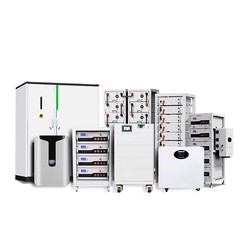
greatech's energy-storage offering focuses on LiFePO4 systems and includes customized voltage, capacity, structure, cooling, and communication options.
Power Tools and High-Power Applications
Power tools demand high peak power, robust construction, effective heat removal, and resistance to vibration and impact.
Cylindrical cells are often a strong candidate because their rigid enclosures and standardized geometry can work well in compact high-power packs.
The correct choice still depends on the specific cell's:
Continuous discharge rating
Pulse capability
Internal resistance
thermal limits
cycle requirements
Consumer Electronics and Portable Devices
In highly space-constrained devices, pouch formats can be attractive because they support thin profiles and application-specific dimensions.
Here, reducing enclosure mass and maximizing usable internal volume can matter more than the structural advantages of a rigid metal can.
Industrial and Custom Battery Packs
Industrial systems frequently have requirements that do not fit consumer or automotive assumptions.
The battery may need:
Unusual voltage
High peak current
Harsh-environment operation
Long service life
Specific communication protocols
Custom enclosure geometry
Field-replaceable modules
In such projects, the most suitable format is often determined only after the electrical, mechanical, thermal, regulatory, and commercial requirements are defined.
greatech describes its business as covering cylindrical cells, prismatic cells, battery solutions, and applications including micro-mobility, UAVs, and energy storage.
See greatech battery application solutions

Safety: Is Prismatic, Cylindrical, or Pouch Safer?
There is no universal "safest" cell type among prismatic, cylindrical and pouch batteries. Overall safety performance depends heavily on chemistry (LFP vs NMC), cell design quality, manufacturing consistency, and pack‑level mechanical & thermal management. Each form factor brings its own safety strengths and inherent risks.
Cylindrical Cells
Safety strengths: Individual rigid metal can contains short‑circuit events to some degree. Standardized dimensions support stable mass production. Gaps between cells assist passive heat dissipation. ⚠️ Key risks: High cell count in large‑scale packs means more potential failure points. Thermal runaway propagation is the main concern if one single cell fails. BMS fusing and proper cooling design are critical barriers against chain reaction.
Prismatic Cells
Safety strengths: Sturdy aluminium shell provides good mechanical protection. Fewer cells reduce total number of inter‑connection failure points. Large flat surfaces facilitate effective thermal control. For LiFePO4 prismatic cells, the chemistry itself delivers superior thermal stability. ⚠️Key risks: Large‑format cells may form internal temperature gradients. Gas buildup from aging or abuse raises internal pressure; reliable safety vent design and quality control are essential.
Pouch Cells
Safety strengths: Aluminium‑laminate film will vent gently under severe abuse without violent shell explosion. Lower thermal inertia enables faster heat dissipation from cell surface under normal operation. ⚠️ Key risks: No rigid protective housing. Swelling, puncture, squeezing and edge damage become major safety hazards. The whole module design must deliver sufficient compression, impact shielding and swelling containment. Poor mechanical design can turn minor defects into safety incidents.
How to Choose the Right Battery Cell Format
A reliable lithium ion battery cell format guide should start with your application specification rather than the cell shape.
Before choosing cylindrical, prismatic, or pouch cells, define what the battery actually needs to do.
Battery Cell Selection Checklist
Use the following 12 questions as a technical starting point.
What is the application?
EV, e-bike, ESS, UAV, power tool, industrial equipment, consumer device, or something else?
What pack voltage is required?
This determines series-cell configuration.
How much energy or capacity is required?
Specify Wh or kWh in addition to Ah where possible.
What are the continuous and peak power requirements?
High-power applications may require a very different cell than low-rate energy storage.
What charge rate is required?
Fast charging can significantly affect thermal and cell-selection requirements.
What are the size and weight limits?
Define the available envelope before selecting a format.
What is the operating temperature range?
Include normal and extreme conditions.
What cycle and calendar life are expected?
A battery used twice per year has different design priorities from one cycled daily.
What safety and certification requirements apply?
These vary by market, product category, transport mode, and application.
What is the annual production volume?
Tooling and automation economics change substantially with scale.
What is the target battery cost?
Evaluate complete pack cost, not simply cell price.
What are the supply-chain requirements?
Consider second sourcing, availability, lead time, and expected product lifetime.
| Requirement | Question to Ask | Why It Matters |
|---|---|---|
| Energy | How many Wh or kWh? | Determines cell count and architecture |
| Power | Peak/continuous current? | Determines thermal and discharge requirements |
| Packaging | Maximum dimensions? | Strongly affects format suitability |
| Weight | Maximum pack mass? | Influences cell and structure selection |
| Lifetime | Required cycles/years? | Influences chemistry and operating window |
| Environment | Temperature/vibration? | Influences enclosure and thermal strategy |
| Volume | Annual production? | Influences automation economics |
| Cost | Cell price or total pack cost? | Prevents misleading comparisons |
Need Help Evaluating the Cell Format?
If you already know your target voltage, capacity, peak current, dimensions, operating temperature, and annual quantity, those specifications provide a much stronger starting point than simply asking which battery shape is best.
greatech provides battery-cell and application-specific solution information through its existing product and solution pages.
Contact greatech to discuss your battery requirements
Frequently Asked Questions About Battery Cell Formats
What Is the Difference Between Prismatic, Cylindrical, and Pouch Cells?
The primary difference is physical construction.
Cylindrical cells use rigid cylindrical metal cans. Prismatic cells use rigid rectangular housings. Pouch cells use flexible laminated enclosures.
Those formats influence packaging, cooling, structural design, manufacturing, and electrical integration, but they do not by themselves determine chemistry, cycle life, energy density, or safety.
Are Prismatic Cells Better Than Cylindrical Cells?
Not universally.
Prismatic cells can reduce cell count and fit rectangular spaces efficiently. Cylindrical cells can provide standardized geometry, strong individual enclosures, and mature automation.
The better option depends on pack architecture, power requirements, cooling, manufacturing volume, supply chain, and cost.
What Is the Difference Between a Pouch vs Cylindrical Battery?
A pouch cell uses a flexible laminated enclosure, while a cylindrical cell uses a rigid metal can.
Pouch cells can offer lower enclosure mass and flexible dimensions. Cylindrical cells offer stronger individual mechanical protection and standardized geometry.
At pack level, pouch systems generally need more deliberate structural support, while cylindrical systems may require more individual cells and interconnections.
Which Battery Cell Format Has the Highest Energy Density?
There is no universal answer based on format alone.
Energy density depends on chemistry, electrode design, cell generation, enclosure design, capacity, and test conditions. Pack-level energy density also depends on cooling, structural elements, wiring, electronics, and unused space.
Always compare equivalent chemistries and equivalent measurement boundaries.
Which Cell Format Is Best for EV Batteries?
Cylindrical, prismatic, and pouch cells can all be used successfully in electric vehicles.
The best battery cell format for EV batteries depends on vehicle geometry, energy targets, fast-charging requirements, thermal design, crash strategy, manufacturing process, supply chain, and cost.
Which Cell Format Is Best for Energy Storage?
Large prismatic cells are a common fit for stationary storage because they can provide high capacity with relatively low cell counts and compact rectangular packaging.
However, the best battery cell format for energy storage should still be selected according to cycle life, system cost, thermal requirements, safety strategy, footprint, serviceability, and supply.
Are Pouch Cells More Likely to Swell?
Pouch cells can show dimensional expansion more visibly because their enclosure is flexible.
However, expansion behavior varies with chemistry, state of charge, cell age, temperature, cycling conditions, and cell design. Proper module design should follow the manufacturer's compression and mechanical-integration requirements.
Final Takeaway
The debate over prismatic vs cylindrical vs pouch cells has no universal winner.
The correct format is the one that makes the complete battery system perform better against the project's actual requirements.
Instead of selecting on shape alone, compare:
Cell chemistry and performance
Pack-level energy density
Power capability
Thermal management
Mechanical protection
Cycle and calendar life
Manufacturing complexity
Supply stability
Qualification requirements
Total cost of ownership
That system-level approach produces a much more defensible engineering decision-and helps prevent expensive redesigns later in development.
For projects involving cylindrical cells, prismatic cells, micromobility batteries, energy storage, or customized battery architectures, greatech provides battery cells and application-oriented battery solutions.


