







Wondering what does 6S mean on a LiPo battery? Learn LiPo series cells, voltage, capacity, ESC matching and common mistakes for drone and RC lithium‑polymer batteries from Greatech Energy.
What Does 6S Mean on a LiPo Battery?
If you shop for RC or drone power packs, you will frequently see labels marked 3S, 4S, 6S printed on LiPo battery housings. New users often ask: what does 6S mean on a LiPo battery. Simply put, the "S" stands for series, referring to how many individual LiPo cells are wired in series inside one battery pack. A 6S LiPo means six lithium‑polymer cells connected in series.
This series configuration directly determines your pack's working voltage, one of the most critical specifications for your RC aircraft, drone or vehicle. Greatech Energy is a professional manufacturer of custom LiPo battery solutions for industrial drone and RC applications, helping customers select properly‑specified power packs for their projects.

LiPo Battery Series (S) Explained
The letter S in LiPo naming represents LiPo series cells. When LiPo cells are connected in series, the total pack voltage increases while the capacity of the whole pack stays the same as one single cell.
It is important to distinguish series(S) from parallel(P), the other core configuration parameter.
Series (S): Adds up voltage, capacity remains unchanged
Parallel (P): Adds up total capacity, voltage stays the same
For example, a 6S2P LiPo battery means 6 cells in series for higher voltage and 2 cells in parallel to boost overall capacity. Many buyers confuse S and P values, mixing‑up voltage and capacity effects. Always check both markings before making your battery selection.
by Cell Count
Every single fully charged LiPo cell reaches 4.20V, and its nominal resting voltage is 3.7V. The total nominal voltage of your battery pack equals cell count(S) multiplied by 3.7V per cell.
3S LiPo voltage
A 3S LiPo voltage calculation: 3 × 3.7V = 11.1V nominal, fully charged peak voltage 12.6V. This is one of the most widely‑used pack sizes for small‑to‑medium drones and RC models.
4S LiPo battery
For a 4S LiPo battery, nominal voltage is 14.8V with full charge voltage hitting 16.8V. Compared to 3S packs, the 4S system delivers higher power output and is popular for heavier RC platforms.
6S LiPo battery voltage
Now back to our main topic: the 6S LiPo pack.
Nominal voltage: 6 × 3.7V = 22.2V
Fully‑charged maximum voltage: 6 × 4.2V = 25.2V
LiPo Battery Capacity Basics
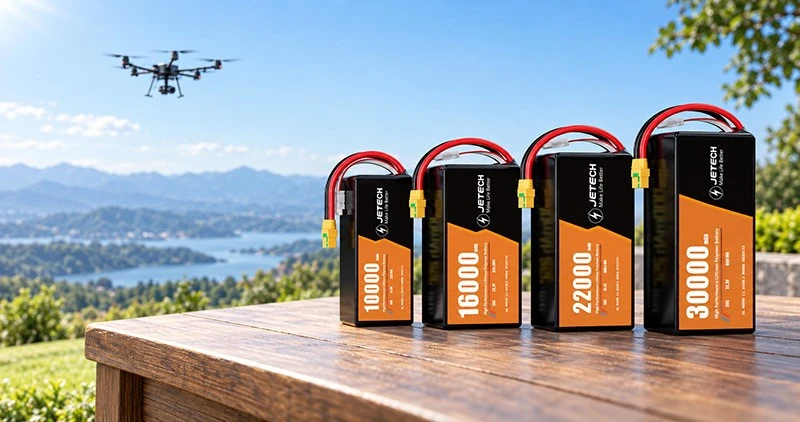
While the S‑number defines voltage, battery capacity (marked in mAh) defines how much energy your pack can store. Capacity is not changed by series connection.
If you have a 6S 5000mAh LiPo battery:
6S sets total voltage to 22.2V nominal
5000mAh tells you the total charge capacity of this whole pack
Key takeaway:
Changing S (series) → changes voltage
Changing mAh capacity → changes runtime, not voltage
To increase both voltage and capacity at once, you need a combination of series and parallel configuration like 6S2P.

ESC Matching for S‑Number LiPo Batteries
Your ESC (Electronic Speed Controller) is the bridge between LiPo battery and motors. ESC must support the maximum cell count of your LiPo pack. Using a 6S LiPo with an ESC only rated up to 4S will destroy your speed controller instantly from over‑voltage.
Follow these practical rules for ESC matching:
Confirm ESC specification sheet for maximum supported LiPo cell count
3S system: choose ESC rated minimum 3S
4S LiPo battery: your ESC must accept up to 4S or higher
6S LiPo pack: your ESC needs explicit 6S rating
Even if your motor physically spins for a few seconds, over‑voltage beyond ESC rating causes permanent component burnout. If you are sourcing complete power system solutions, Greatech Energy can offer consultation on battery‑motor‑ESC matching for drone projects.
Common Mistakes When Using S‑Rated LiPo Batteries
Many RC and drone operators run into avoidable issues caused by misunderstanding S‑markings on LiPo batteries. Here is a list of frequent errors to watch out for:
Confusing S(series) and P(parallel) Believing higher S means bigger battery capacity. Remember: LiPo series cells raise voltage only. Parallel configuration increases capacity.
Wrong ESC for S‑count Running a 6S LiPo on a 4S‑only ESC. This is the top cause of ESC burnout in drone fleets.
Cross‑mixing different S‑count packs Do not swap 3S LiPo voltage packs with 6S packs on same equipment. Voltage mismatch damages motors and onboard electronics.
Balancing charger incompatibility 6S battery requires a charger supporting six‑cell balance charging. A 3S‑only charger cannot properly balance a 6S LiPo pack, creating safety hazards.
Mixing old and new cells inside one series pack Uneven cell degradation leads to over‑discharge of weaker individual cells during use.
When you see "6S" printed on your LiPo battery, you now understand what does 6S mean on a LiPo battery. It represents six cells wired in series for 22.2V nominal voltage. Always cross‑check three core specs: S‑count for voltage, mAh for capacity, and ESC rating before power‑on. For custom LiPo pouch and battery pack solutions for drones, visit Greatech Energy.


