


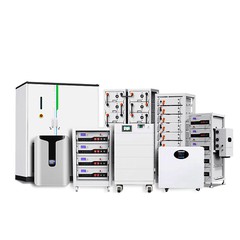


Yo, what's up everyone! I'm an 80v battery supplier, and today I wanna dig into a question that's been floating around a lot: Are 80v batteries affected by electromagnetic interference?
First off, let's quickly go over what 80v batteries are all about. At our place, we offer some pretty cool options like the 80V 100Ah LiFePo4 Battery, 80V 50Ah Lithium Ion Battery, and 80V 200Ah LiFePo4 Battery. These batteries are used in a bunch of different things, from electric motorcycles to some industrial equipment. They're powerful and reliable, but the question of electromagnetic interference is still a big deal.
So, what is electromagnetic interference (EMI) anyway? Well, EMI is basically the disruption that can happen when an electromagnetic field messes with an electrical circuit. It can come from all sorts of sources, like power lines, radio waves, or even other electronic devices. When EMI hits a battery, it can potentially cause some problems.


Now, let's talk about how 80v batteries might be affected. In general, 80v batteries are designed to be pretty robust. The materials and construction methods we use in making these batteries are meant to withstand a certain amount of external interference. For example, the lithium iron phosphate (LiFePo4) batteries we offer have a stable chemical structure. This stability helps them resist the effects of EMI to some extent.
However, that doesn't mean they're completely immune. High levels of electromagnetic interference can still have an impact. One of the main issues could be with the battery management system (BMS). The BMS is like the brain of the battery. It monitors things like the battery's voltage, temperature, and state of charge. If EMI disrupts the BMS, it might give inaccurate readings or even malfunction. This could lead to problems like overcharging or undercharging the battery, which can shorten its lifespan.
Another thing to consider is the electrical components inside the battery. The wiring and connectors can act as antennas, picking up electromagnetic signals. If these signals are strong enough, they can cause electrical noise in the battery's circuitry. This noise can interfere with the normal operation of the battery and might even cause it to shut down unexpectedly.
But don't worry too much. There are ways to minimize the effects of electromagnetic interference on 80v batteries. One common method is shielding. We use special materials to shield the battery and its components from EMI. These shields can block or absorb the electromagnetic waves, reducing the amount of interference that reaches the battery.
Proper grounding is also crucial. By grounding the battery correctly, we can provide a path for the electrical noise to flow away from the battery. This helps keep the battery's electrical environment stable and reduces the chances of EMI causing problems.
In some cases, we also use filters in the battery's circuitry. These filters can remove the unwanted electrical noise caused by EMI, allowing the battery to operate smoothly.
Now, let's look at some real - world scenarios. In industrial settings, there are often a lot of electrical devices and machinery that generate electromagnetic fields. For example, in a factory with a lot of motors and generators, the 80v batteries used in some of the equipment might be exposed to high levels of EMI. In these situations, it's even more important to take the necessary precautions to protect the batteries.
On the other hand, in consumer applications like electric motorcycles, the level of EMI is usually lower. But there are still potential sources, like the radio systems on the bike or the electromagnetic fields generated by the motor. So, even in these cases, we need to make sure the batteries are well - protected.
To sum it up, 80v batteries can be affected by electromagnetic interference, but with the right design and protection measures, we can keep these effects to a minimum. At our company, we're constantly working on improving the performance and reliability of our 80v batteries. We test them under different electromagnetic conditions to make sure they can handle whatever comes their way.
If you're in the market for an 80v battery, whether it's for your electric vehicle or some industrial equipment, we've got you covered. Our batteries are designed to be high - quality and resistant to EMI as much as possible. And if you have any questions or want to learn more about how we protect our batteries from EMI, just reach out to us. We're always happy to have a chat and help you find the right battery for your needs. So, don't hesitate to contact us for more information and to start the procurement process.
References
- "Electromagnetic Compatibility Engineering" by Henry W. Ott
- "Battery Management Systems: Design by Principles" by Isidor Buchmann


