




When it comes to powering your devices with a 60V battery, selecting the right charger is crucial for ensuring optimal performance, safety, and longevity of the battery. As a trusted 60V battery supplier, I understand the importance of providing accurate information to help you make an informed decision. In this blog post, I'll delve into the key factors you need to consider when choosing a charger for your 60V battery, and also introduce some of our high - quality 60V battery products.


Understanding 60V Batteries
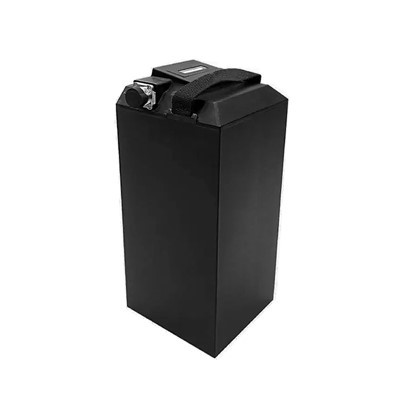
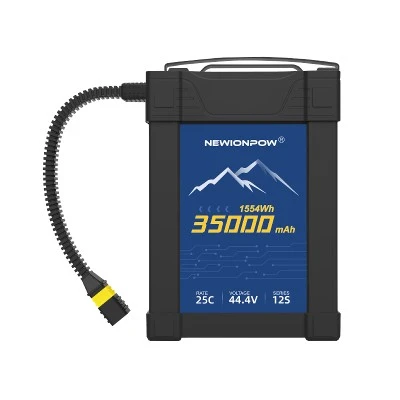
Before discussing the chargers, let's briefly understand 60V batteries. These batteries are commonly used in a variety of applications, such as electric motorcycles, electric scooters, and some industrial equipment. They offer a relatively high voltage, which can deliver the power needed to run these devices efficiently. We offer different capacities of 60V lithium - ion power batteries, including the 60V 55Ah Lithium Ion Power Battery, 60V 30Ah Lithium Ion Power Battery, and 60V 20Ah Lithium Ion Power Battery. Each capacity is designed to meet different power requirements and usage scenarios.
Key Factors in Selecting a Charger
Voltage Compatibility
The most fundamental requirement for a charger is that it must be compatible with the voltage of the battery. For a 60V battery, you need a charger that is specifically designed to output 60V. Using a charger with an incorrect voltage can lead to overcharging or undercharging, both of which can cause serious damage to the battery. Overcharging can generate excessive heat, which may lead to thermal runaway, a dangerous condition where the battery can catch fire or explode. Undercharging, on the other hand, can result in reduced battery capacity and shorter battery life.
Charging Current
The charging current of the charger is another important factor. It determines how quickly the battery will charge. A higher charging current will charge the battery faster, but it also generates more heat. Excessive heat can degrade the battery over time. As a general rule, the charging current should be within the range recommended by the battery manufacturer. For example, for our 60V lithium - ion batteries, we usually recommend a charging current that is a fraction of the battery's amp - hour (Ah) rating. A common guideline is to use a charging current of around 0.2C to 0.5C, where C is the battery's capacity. For a 60V 30Ah battery, a charging current of 6A to 15A would be appropriate.
Charging Algorithm
Modern chargers often use advanced charging algorithms to optimize the charging process. These algorithms can adjust the charging current and voltage based on the battery's state of charge, temperature, and other factors. For lithium - ion batteries, a typical charging process consists of three stages: constant - current (CC) charging, constant - voltage (CV) charging, and trickle charging. In the CC stage, the charger supplies a constant current to the battery until it reaches a certain voltage. Then, in the CV stage, the charger maintains a constant voltage while the current gradually decreases as the battery approaches full charge. Finally, in the trickle charging stage, a small amount of current is supplied to keep the battery fully charged without overcharging it.
Safety Features
Safety should always be a top priority when choosing a charger. A good charger should have several safety features, such as over - voltage protection, over - current protection, short - circuit protection, and over - temperature protection. Over - voltage protection prevents the charger from supplying a voltage higher than the battery's rated voltage. Over - current protection limits the charging current to a safe level. Short - circuit protection ensures that the charger shuts off immediately if there is a short circuit in the charging circuit. Over - temperature protection monitors the temperature of the charger and the battery and reduces the charging current or shuts off the charger if the temperature gets too high.
Types of Chargers for 60V Batteries
Linear Chargers
Linear chargers are the simplest type of chargers. They use a linear regulator to convert the input voltage to the desired output voltage. Linear chargers are relatively inexpensive and easy to design, but they are not very efficient. They generate a lot of heat during the charging process, which can waste energy and reduce the charger's lifespan. They are also less suitable for high - current charging.
Switch - Mode Chargers
Switch - mode chargers, also known as switching power supplies, are more efficient than linear chargers. They use a switching regulator to convert the input voltage to the output voltage. Switch - mode chargers can adjust the output voltage and current more precisely, and they generate less heat. They are commonly used for charging lithium - ion batteries, including our 60V lithium - ion power batteries.
Smart Chargers
Smart chargers are the most advanced type of chargers. They incorporate microcontrollers and sensors to monitor and control the charging process. Smart chargers can adjust the charging parameters based on the battery's state of charge, temperature, and other factors. They can also communicate with the battery to ensure that the charging process is optimized for the specific battery chemistry and capacity. Smart chargers often have additional features, such as battery health monitoring and diagnostic functions.
Choosing the Right Charger for Our 60V Batteries
As a 60V battery supplier, we recommend using chargers that are specifically designed for our lithium - ion batteries. Our chargers are carefully selected to ensure compatibility with our batteries in terms of voltage, charging current, and charging algorithm. They also come with a full range of safety features to protect your battery and ensure a long and safe charging process.
When choosing a charger for your 60V battery, you should also consider your specific needs. If you need to charge your battery quickly, you may want to choose a charger with a higher charging current. However, if you are more concerned about battery longevity, a charger with a lower charging current and advanced charging algorithm may be a better choice.
Conclusion
Selecting the right charger for your 60V battery is essential for maintaining the battery's performance and safety. By considering factors such as voltage compatibility, charging current, charging algorithm, and safety features, you can make an informed decision. As a reliable 60V battery supplier, we are committed to providing you with high - quality batteries and the right chargers to meet your needs.
If you are interested in our 60V lithium - ion power batteries or have any questions about choosing the right charger, please feel free to contact us for more information and to discuss potential procurement opportunities. We look forward to working with you to meet your power needs.
References
- Battery University. "How to Charge Lithium - Ion Batteries".
- IEEE Transactions on Power Electronics. Various articles on battery charging technologies.