




Hey there! As a battery cells supplier, I've been getting a lot of questions lately about how high - altitude environments affect battery cells. So, I thought I'd dive into this topic and share some insights.


Let's start with the basics. High - altitude areas are characterized by lower air pressure and lower temperatures compared to sea - level regions. These two factors play a significant role in how battery cells perform.
Impact of Low Air Pressure
Low air pressure at high altitudes can have a direct impact on the physical structure of battery cells. Most battery cells, especially lithium - ion ones, are sealed units. The lower air pressure outside the battery can create a pressure differential between the inside and outside of the cell.
For instance, in a lithium - ion battery, the electrolyte inside the cell is in a sealed environment. When the external air pressure drops, the pressure inside the battery can cause the battery casing to expand slightly. This expansion might not seem like a big deal at first, but over time, it can lead to stress on the internal components of the battery.
The expansion can cause the electrodes to shift or the separator between the electrodes to become misaligned. This can lead to a decrease in the battery's performance, such as reduced capacity and lower charge - discharge efficiency. In extreme cases, it could even lead to internal short - circuits, which are a major safety hazard.
Impact of Low Temperatures
Low temperatures are another key factor at high altitudes. Batteries are sensitive to temperature changes, and cold temperatures can significantly affect their performance.
When the temperature drops, the chemical reactions inside the battery slow down. In a lithium - ion battery, for example, the movement of lithium ions between the electrodes becomes less efficient. This means that the battery can't deliver as much power as it would at normal temperatures.
The cold can also cause the electrolyte in the battery to thicken. A thicker electrolyte makes it more difficult for the lithium ions to move through it, further reducing the battery's performance. As a result, the battery's capacity decreases, and it takes longer to charge.
Specific Examples of Battery Cells at High Altitudes
Let's take a look at some of the battery cells we supply and how they might be affected by high - altitude conditions.
The High Rate A Grade 3.7V 1800mAh Lithium Battery Cell is a popular choice for many applications. At high altitudes, the low air pressure could cause the battery casing to expand slightly, as mentioned earlier. And the low temperatures would slow down the chemical reactions, reducing the battery's capacity and charge - discharge rate.
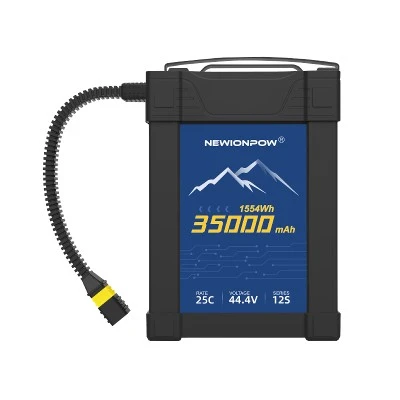
The 3.7V 35Ah Lipo Battery is a larger capacity battery. The same issues apply here. The pressure differential due to low air pressure can put stress on the battery's internal components, and the cold temperatures can make it less efficient.
The 3.2v 314ah lifepo4 battery cell is a lithium - iron - phosphate battery. These batteries are generally more stable than lithium - ion batteries, but they're still affected by high - altitude conditions. The low temperatures can slow down the movement of lithium ions, reducing the battery's performance.
Mitigating the Effects
So, what can be done to mitigate the effects of high - altitude on battery cells?
One solution is to use battery thermal management systems. These systems can regulate the temperature of the battery, keeping it within an optimal range even in cold environments. For example, heaters can be used to warm up the battery when the temperature drops.
Another approach is to design the battery casing to be more resistant to pressure changes. This can help prevent the expansion of the battery due to the pressure differential at high altitudes.
Applications at High Altitudes
There are many applications where battery cells are used at high altitudes. For example, in aviation, batteries are used to power various systems on aircraft. These batteries need to be able to perform reliably in the low - pressure and cold conditions at high altitudes.
In mountainous regions, battery - powered devices such as GPS trackers, flashlights, and communication devices are essential. These devices rely on battery cells that can withstand the harsh high - altitude environment.
Conclusion
In conclusion, high - altitude environments can have a significant impact on battery cells. The low air pressure and cold temperatures can affect the physical structure and performance of the batteries. However, with proper design and management, the negative effects can be mitigated.
If you're in the market for high - quality battery cells that can perform well in high - altitude conditions, we're here to help. Whether you need the High Rate A Grade 3.7V 1800mAh Lithium Battery Cell, the 3.7V 35Ah Lipo Battery, or the 3.2v 314ah lifepo4 battery cell, we've got you covered. Contact us to discuss your specific requirements and let's work together to find the best battery solution for you.
References
- "Lithium - Ion Batteries: Science and Technologies" by Y. Wang and J. Zhang
- "Battery Management Systems for Electric Vehicles" by P. Pillay and E. Kockelman