




Hey there! As an 80V battery supplier, I often get asked whether 80V batteries are compatible with solar chargers. It's a question that touches on the intersection of renewable energy and battery technology, and the answer isn't as straightforward as you might think.
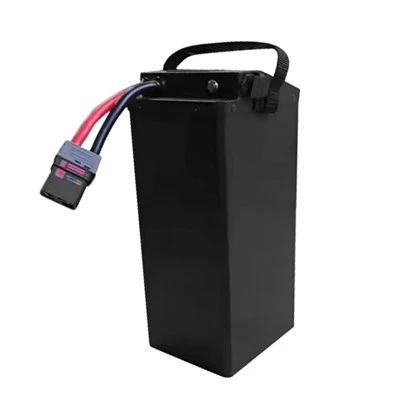
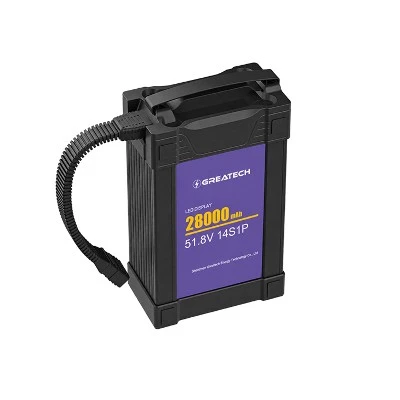
First off, let's talk a bit about 80V batteries. We offer a range of these high - voltage powerhouses, like the 80V 100Ah LiFePo4 Battery, 80V 50Ah Lithium Ion Battery, and 80V 200Ah LiFePo4 Battery. These batteries are used in a variety of applications, from electric motorcycles to some industrial equipment. They pack a lot of power and are known for their long - lasting performance.
Now, onto solar chargers. Solar chargers work by converting sunlight into electricity. They come in different sizes, power ratings, and voltage outputs. The key to compatibility between an 80V battery and a solar charger lies in a few important factors.
Voltage Compatibility
The most obvious factor is voltage. An 80V battery needs a charger that can supply a voltage that's appropriate for charging. Solar chargers typically have a maximum output voltage. You need to make sure that the solar charger can reach a voltage high enough to charge the 80V battery. Some solar chargers are designed to work with a wide range of voltages, but not all can handle 80V.
For example, if a solar charger has a maximum output voltage of 60V, it won't be able to fully charge an 80V battery. You'd need a solar charger with an output voltage that's at least close to 80V or higher. However, it's not just about reaching the right voltage. You also need to ensure that the charger can regulate the voltage properly during the charging process. Over - voltage can damage the battery, leading to reduced lifespan and even safety hazards.
Charge Controller
A charge controller is an essential component when using a solar charger to charge a battery. It helps regulate the voltage and current going into the battery. When it comes to 80V batteries, you need a charge controller that can handle the high voltage.
Some charge controllers are designed for low - voltage applications, like charging 12V or 24V batteries. Using such a charge controller with an 80V battery would be a disaster. You need a high - voltage charge controller that can manage the charging process safely and efficiently. It'll prevent over - charging, which can cause the battery to overheat and potentially catch fire, and under - charging, which can lead to reduced battery capacity over time.
Current and Power
Another important aspect is the current and power output of the solar charger. The current determines how quickly the battery will charge. A higher current means a faster charge, but the battery also needs to be able to handle the current. If the solar charger supplies too much current, it can damage the battery.


The power output of the solar charger is related to both voltage and current (Power = Voltage x Current). You need a solar charger with enough power to charge the 80V battery in a reasonable amount of time. For instance, a large 80V 200Ah battery will require more power to charge compared to a smaller 80V 50Ah battery.
Battery Chemistry
The chemistry of the 80V battery also plays a role in compatibility. Different battery chemistries, like LiFePo4 and lithium - ion, have different charging requirements.
LiFePo4 batteries, for example, have a relatively flat charging curve. They need a charger that can maintain a stable voltage during the charging process. Lithium - ion batteries, on the other hand, may have different charging profiles. A solar charger that's compatible with one type of 80V battery chemistry may not be suitable for another.
Practical Considerations
In real - world scenarios, there are a few other things to think about. The amount of sunlight available in your area affects the performance of the solar charger. If you live in an area with limited sunlight, you may need a larger solar panel array to generate enough power to charge the 80V battery.
Also, the installation of the solar charger and battery system needs to be done correctly. The wiring should be able to handle the high voltage and current. Poor wiring can lead to power losses and safety issues.
Compatibility Solutions
So, is it possible to make an 80V battery work with a solar charger? Absolutely! But you need to do your homework.
First, look for a solar charger with a high enough output voltage and power rating. There are some high - end solar chargers on the market that are designed for high - voltage applications. Pair it with a suitable high - voltage charge controller.
You can also consider using multiple solar panels in series to increase the output voltage. By connecting solar panels in series, the voltages add up. For example, if you have four 20V solar panels connected in series, you'll get an output voltage of 80V. However, you still need to make sure that the overall power output is sufficient and that the charge controller can handle the setup.
Conclusion
In conclusion, 80V batteries can be compatible with solar chargers, but it's not a simple plug - and - play situation. You need to carefully consider the voltage, current, power, charge controller, and battery chemistry. With the right combination of components and proper installation, you can use solar energy to charge your 80V batteries, which is not only cost - effective but also environmentally friendly.
If you're interested in purchasing our 80V batteries or have questions about their compatibility with solar chargers, feel free to reach out. We're here to help you find the best solutions for your power needs. Whether you're looking for a battery for your electric motorcycle or an industrial application, we've got you covered.
References
- Battery University: A great resource for understanding battery technologies and charging requirements.
- Solar Energy Industries Association: Provides information on solar chargers and related components.