




Hey there, fellow solar power enthusiasts! I'm a supplier of 4s batteries, and I often get asked if a 4s battery can be used in a solar power system. So, I thought I'd write this blog post to share my insights on this topic.


First off, let's quickly understand what a 4s battery is. The "4s" stands for four cells in series. In a lithium - polymer (Lipo) battery, each cell typically has a nominal voltage of around 3.7V. So, a 4s battery has a nominal voltage of about 3.7V x 4 = 14.8V. This voltage is important when considering its use in a solar power system.
Compatibility with Solar Power Systems
One of the main things to think about when using a 4s battery in a solar power system is voltage compatibility. Solar charge controllers are designed to work with specific battery voltages. Many small - scale solar power systems, especially those for off - grid applications like powering small cabins, RVs, or charging small electronic devices, can work well with a 12V battery bank. Since a 4s battery has a nominal voltage of 14.8V, it's a bit higher than the typical 12V battery used in these systems, but it can still be compatible in some cases.
You'll need to find a solar charge controller that can handle the 14.8V output of the 4s battery. Some modern charge controllers are adjustable and can be set to work with different battery voltages, which is great news. If you've got such a charge controller, you're more likely to integrate a 4s battery into your solar power setup.
Capacity and Power Requirements
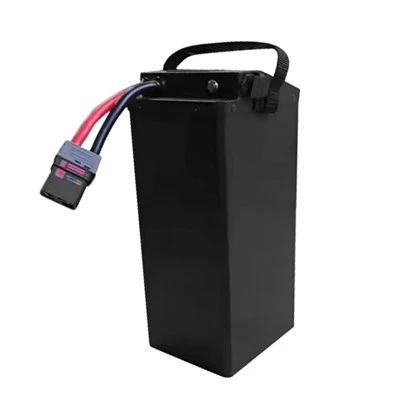
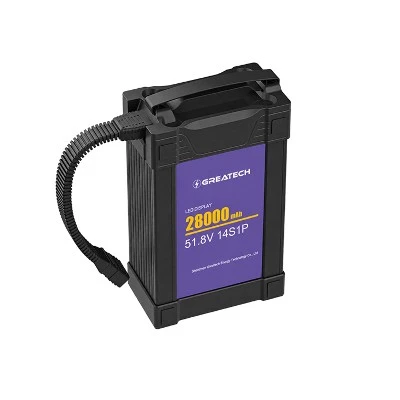
Another crucial factor is the capacity of the battery, which is measured in milliamp - hours (mAh). For example, we offer batteries like the 14.8V 22000mAh Lipo Battery, 14.8V 16000mAh Lipo Battery, and 14.8V 10000mAh Lipo Battery. The capacity you need depends on your power consumption.
Let's say you're powering a small LED light that consumes 10W. If you use a 14.8V battery, you can calculate the current drawn (using the formula P = VI, where P is power, V is voltage, and I is current). So, I = P/V = 10W / 14.8V ≈ 0.68A or 680mA. If you have a 10000mAh battery, it can theoretically power this light for 10000mAh / 680mA ≈ 14.7 hours (ignoring battery inefficiencies).
For larger power requirements, like running a small fridge or a TV, you'll need a higher - capacity battery. You might also consider connecting multiple 4s batteries in parallel to increase the overall capacity. When connecting batteries in parallel, the voltage remains the same, but the capacity adds up.
Advantages of Using a 4s Battery in a Solar System
There are several advantages to using a 4s battery in a solar power system. Firstly, Lipo batteries, which are often used in 4s configurations, are known for their high energy density. This means they can store a lot of energy in a relatively small and lightweight package. If you're building a portable solar power system, like one for camping or a small outdoor project, the compact size of a 4s Lipo battery is a huge plus.
Secondly, 4s batteries typically have a relatively low self - discharge rate. This means that when the battery is not in use, it loses less energy over time compared to some other battery types. So, if you have a solar system that's not used continuously, the 4s battery will hold its charge better.
Challenges and Considerations
However, there are also some challenges to using a 4s battery in a solar power system. One of the biggest concerns is safety. Lipo batteries can be sensitive to overcharging and over - discharging. Overcharging can cause the battery to swell, overheat, or even catch fire, while over - discharging can damage the battery cells and reduce their lifespan.
To mitigate these risks, you need to use a proper battery management system (BMS). A BMS monitors the voltage of each cell in the battery and ensures that it stays within safe limits. It also protects against short - circuits and balances the charge among the cells. Some solar charge controllers may have built - in BMS functionality, but in some cases, you may need to add an external BMS.
Another consideration is the cost. Lipo batteries are generally more expensive than lead - acid batteries, which are commonly used in solar power systems. However, if you consider their longer lifespan, higher energy density, and better performance in certain applications, the extra cost may be justified.
Conclusion and Call to Action
So, can a 4s battery be used in a solar power system? The answer is yes, but with some careful planning. You need to ensure voltage compatibility with your charge controller, choose the right battery capacity for your power requirements, and take proper safety precautions.
If you're interested in using 4s batteries for your solar power project, I'd love to have a chat with you. We can discuss your specific needs and figure out which of our 14.8V 22000mAh Lipo Battery, 14.8V 16000mAh Lipo Battery, or 14.8V 10000mAh Lipo Battery is the best fit. Don't hesitate to reach out for a procurement discussion.
References
- Battery University: A great resource for understanding battery technology and safety.
- Solar Power World: Offers in - depth articles on solar power systems and components.