




Hey there! As a supplier of 80V batteries, I often get asked about what goes into these power - packed energy sources. So, let's dig into the chemical composition of an 80V battery.


First off, it's important to note that there are different types of 80V batteries out there, but the most common ones are lithium - based. Lithium batteries have become super popular because they offer a great balance of high energy density, long life, and relatively low self - discharge rate.
Let's start with Lithium Iron Phosphate (LiFePO4) batteries. These are a type of lithium - ion battery and are widely used in various applications, including electric vehicles and energy storage systems.
Chemical Composition of LiFePO4 Batteries
The cathode of a LiFePO4 battery is made of lithium iron phosphate (LiFePO4). This compound is known for its excellent thermal stability and safety features. The structure of LiFePO4 consists of a three - dimensional framework of PO4 tetrahedra and FeO6 octahedra. Lithium ions (Li+) are located in the interstitial spaces within this framework. When the battery is discharging, lithium ions move from the anode to the cathode through the electrolyte, and electrons flow through the external circuit, generating an electric current.
The anode in a LiFePO4 battery is typically made of graphite. Graphite has a layered structure that can intercalate lithium ions. During charging, lithium ions are inserted (intercalated) into the graphite layers, and during discharging, they are extracted. This process is reversible, which allows the battery to be recharged multiple times.
The electrolyte in a LiFePO4 battery is a lithium salt dissolved in an organic solvent. A common lithium salt used is lithium hexafluorophosphate (LiPF6). The organic solvents are usually a mixture of carbonates, such as ethylene carbonate (EC), dimethyl carbonate (DMC), and ethyl methyl carbonate (EMC). The electrolyte serves as a medium for the transport of lithium ions between the anode and the cathode.
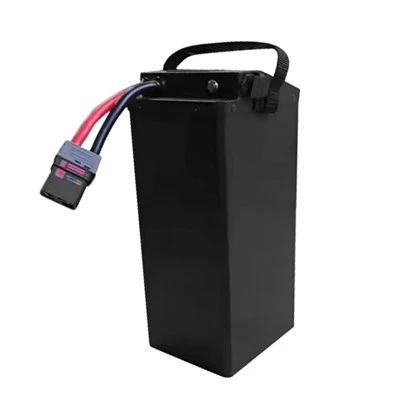
Now, let's talk about some of our products. We offer an 80V 200Ah LiFePo4 Battery that's perfect for high - power applications. With its LiFePO4 chemistry, it provides a stable and long - lasting power source.
Lithium - Ion Batteries (Other than LiFePO4)
There are also other types of 80V lithium - ion batteries. For example, some use lithium cobalt oxide (LiCoO2) as the cathode material. LiCoO2 has a high energy density, which means it can store a large amount of energy in a relatively small volume. However, it has some drawbacks, such as lower thermal stability compared to LiFePO4.
The anode in these lithium - ion batteries is also usually graphite, similar to LiFePO4 batteries. The electrolyte is also a lithium salt in an organic solvent, with LiPF6 being a common choice.
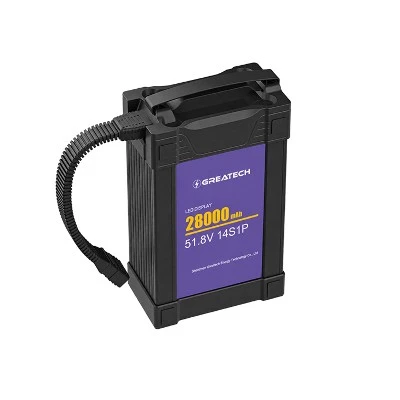
We have an 80V 50Ah Lithium Ion Battery that uses a different lithium - ion chemistry. It's suitable for applications where a smaller capacity but still high - voltage power source is needed.
Another Option: 80V 100Ah LiFePo4 Battery
Our 80V 100Ah LiFePo4 Battery is a great middle - ground option. It combines the safety and stability of LiFePO4 chemistry with a decent capacity. This battery is ideal for applications like small - scale energy storage systems or certain types of electric vehicles.
Why the Chemical Composition Matters
The chemical composition of a battery has a huge impact on its performance. For example, the choice of cathode material affects the energy density, voltage, and safety of the battery. LiFePO4 batteries are known for their safety, which is crucial in applications where there's a risk of overheating or short - circuiting. On the other hand, lithium - ion batteries with different cathode materials might offer higher energy densities but could be more prone to safety issues.
The anode material also plays a role in the battery's performance. Graphite is a popular choice because it's relatively inexpensive and has good lithium - intercalation properties. However, researchers are constantly looking for new anode materials that can offer even better performance, such as higher capacity or faster charging times.
The electrolyte is also important. The choice of lithium salt and organic solvents can affect the battery's conductivity, stability, and lifespan. For example, LiPF6 is a common lithium salt because it has good ionic conductivity, but it can decompose at high temperatures, which can lead to the formation of harmful by - products.
Wrapping Up and Looking for Business
So, there you have it - a breakdown of the chemical composition of 80V batteries. Whether you're in the market for an 80V battery for an electric vehicle, an energy storage system, or any other application, understanding the chemistry behind it can help you make an informed decision.
If you're interested in our 80V batteries, whether it's the 80V 200Ah LiFePo4 Battery, the 80V 50Ah Lithium Ion Battery, or the 80V 100Ah LiFePo4 Battery, feel free to reach out for more details and to start a procurement discussion. We're always happy to talk about how our batteries can meet your specific needs.
References
- "Lithium - Ion Batteries: Science and Technologies" by Y. Wang, et al.
- "Handbook of Batteries" by D. Linden and T. Reddy.