




When it comes to 4S batteries, one of the most frequently asked questions is, "What is the maximum continuous discharge current of a 4S battery?" As a 4S battery supplier, I am here to provide you with a comprehensive answer to this question.
Understanding 4S Batteries
Before we delve into the maximum continuous discharge current, let's first understand what a 4S battery is. A 4S battery refers to a battery pack that consists of four lithium - polymer (LiPo) cells connected in series. Each LiPo cell typically has a nominal voltage of 3.7V. When four such cells are connected in series, the nominal voltage of the 4S battery pack is 3.7V x 4 = 14.8V.
These batteries are widely used in various applications, including drones, remote - controlled cars, and some high - power portable devices. Their high energy density and relatively lightweight make them a popular choice for applications where power - to - weight ratio is crucial.
Factors Affecting the Maximum Continuous Discharge Current
The maximum continuous discharge current of a 4S battery is not a fixed value and is influenced by several factors:
1. Battery Capacity
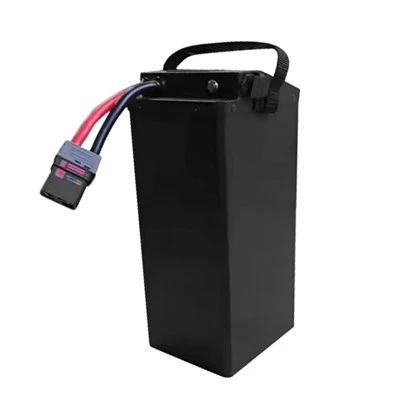
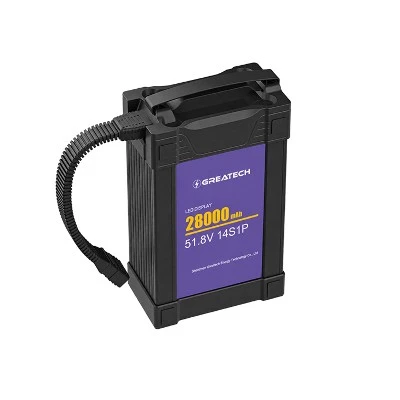
Battery capacity, measured in milliampere - hours (mAh), plays a significant role. Generally, a battery with a higher capacity can handle a higher continuous discharge current. For example, our 14.8V 22000mAh Lipo Battery is likely to have a higher maximum continuous discharge current compared to our 14.8V 10000mAh Lipo Battery. This is because a larger capacity battery has more active material available to supply the current.
2. Battery Chemistry
The chemistry of the LiPo cells in the 4S battery also affects the discharge current. Different LiPo chemistries have different internal resistances. Batteries with lower internal resistance can handle higher discharge currents more efficiently. For instance, some advanced LiPo chemistries are designed specifically for high - power applications and can withstand higher continuous discharge currents without significant voltage drops.
3. Battery Construction
The physical construction of the battery, including the quality of the electrodes, the separator, and the connection between the cells, can impact the maximum continuous discharge current. Well - constructed batteries with low - resistance connections and high - quality materials are better able to handle high currents.
4. Temperature
Temperature has a significant impact on battery performance. In general, as the temperature increases, the internal resistance of the battery decreases, allowing for a higher continuous discharge current. However, operating the battery at extremely high temperatures can also lead to safety issues and reduced battery life. Conversely, at low temperatures, the internal resistance increases, and the maximum continuous discharge current decreases.
How to Determine the Maximum Continuous Discharge Current
Manufacturers usually specify the maximum continuous discharge current of a 4S battery in the product datasheet. This value is often given in terms of a "C - rate". The C - rate is a measure of the discharge current relative to the battery's capacity. For example, a 1C discharge rate means that the battery is being discharged at a current equal to its capacity. So, for a 10000mAh battery, a 1C discharge current would be 10000mA or 10A.
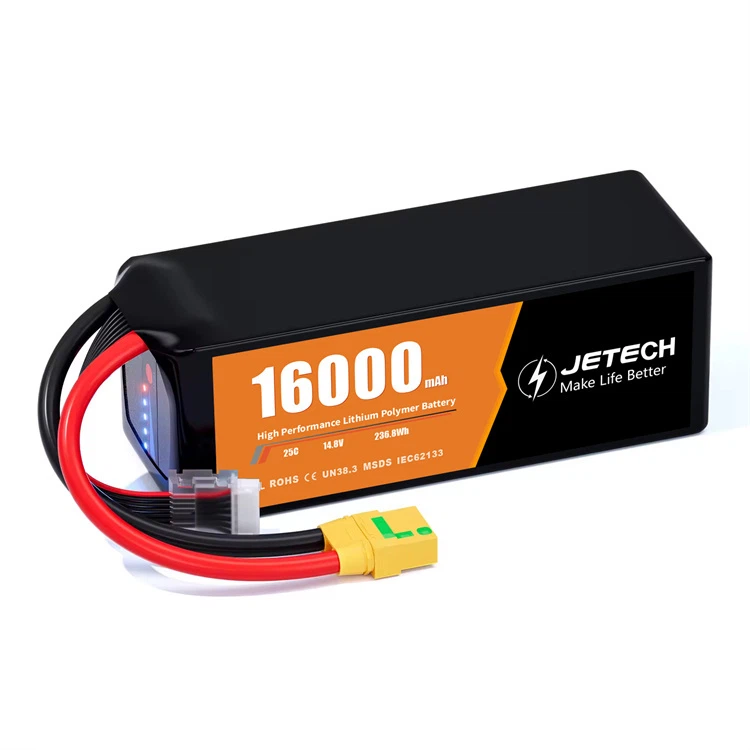
Let's take our 14.8V 16000mAh Lipo Battery as an example. If the manufacturer specifies a maximum continuous discharge rate of 20C, then the maximum continuous discharge current can be calculated as follows:
Maximum continuous discharge current = Capacity x C - rate
= 16000mAh x 20
= 320000mA or 320A
Importance of Knowing the Maximum Continuous Discharge Current
Understanding the maximum continuous discharge current of a 4S battery is crucial for several reasons:
1. Application Compatibility
It helps ensure that the battery is compatible with the device it is powering. If the device requires a high - current draw, using a battery with a low maximum continuous discharge current can lead to poor performance, such as voltage drops, reduced power output, and even damage to the battery.
2. Safety
Exceeding the maximum continuous discharge current can cause the battery to overheat, which can lead to thermal runaway, swelling, or even explosion in extreme cases. By knowing the maximum continuous discharge current, users can operate the battery safely within its rated limits.
3. Battery Life
Operating the battery within its maximum continuous discharge current specification helps prolong the battery life. High - current discharges beyond the rated limit can cause accelerated degradation of the battery, reducing its overall capacity and cycle life.
Selecting the Right 4S Battery Based on Discharge Current
When selecting a 4S battery for your application, you need to consider the power requirements of the device. First, determine the maximum current draw of the device under normal operating conditions. Then, choose a battery with a maximum continuous discharge current that is equal to or greater than this value.
For example, if your drone requires a continuous current of 50A during flight, you should select a 4S battery with a maximum continuous discharge current of at least 50A. Our product range offers a variety of 4S batteries with different capacities and discharge rates to meet the diverse needs of our customers.
Conclusion
In conclusion, the maximum continuous discharge current of a 4S battery is a complex parameter that is affected by factors such as battery capacity, chemistry, construction, and temperature. As a 4S battery supplier, we are committed to providing high - quality batteries with clear specifications regarding the maximum continuous discharge current.
If you are in the market for a 4S battery and need help selecting the right one for your application, or if you have any other questions about our products, we encourage you to contact us for procurement and further discussion. Our team of experts is ready to assist you in making the best choice for your specific needs.

References
- Battery University: A comprehensive resource on battery technology and performance.
- Manufacturer datasheets of our 4S LiPo batteries.