






Comparison of Cylinder Battery, Prismatic Battery and Lipo Battery: How to Choose the Best Fit?
For those involved in equipment procurement or R&D, choosing lithium batteries often involves a dilemma: which type-cylindrical, prismatic, or pouch-is best suited for their needs? What are the differences between them?
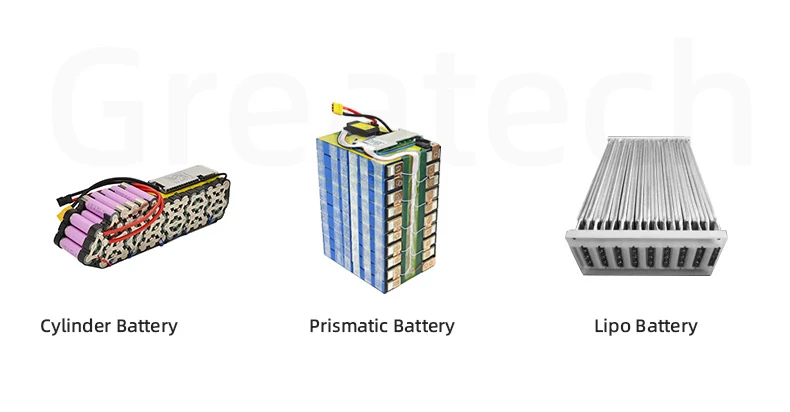
Cylindrical, prismatic, and pouch batteries are the three mainstream packaging forms of lithium-ion batteries. They each have their own emphasis in terms of structure, performance, and application. They are not simply superior or inferior, but depend on the specific needs of the product (such as space constraints, safety requirements, cost budget, energy density priority, etc.).
Based on industry analysis, we can summarize their advantages, disadvantages, and applicable scenarios. If you can provide more product details (such as whether it's for electric vehicles, consumer electronics, or energy storage? Usage environment? Space requirements? Budget?), I can provide more precise recommendations. Please feel free to contact us.
Advantages and disadvantages comparison table:
| Battery Type | advantage | shortcoming | Energy density | cost | Security |
| Cylinder Battery (such as models 18650 and 21700, steel-cased wound type) |
1. High standardization, good consistency, and high degree of automation in production 2. Low cost and easy mass production 3. High mechanical strength and impact resistance 4. Uniform heat dissipation and simple PACK assembly |
1. Low space utilization (circular shape leads to gaps) 2. Small single-cell capacity, requiring more cells to assemble, increasing BMS complexity 3. Relatively heavy weight, medium energy density |
Medium (~250-300Wh/kg) | Low | High (strong shell provides good protection, but high energy density makes it prone to thermal runaway) |
| Prismatic Battery (aluminum/steel casing, wound or stacked type) |
1. High space utilization, easy to customize dimensions 2. High energy density, simple structure, easy expansion 3. High grouping efficiency, mature domestic supply chain 4. Good stability, suitable for large capacity |
1. Diverse models, inconsistent manufacturing processes, and poor consistency. 2. Low level of automation in production, resulting in significant variations between individual units. 3. High cooling requirements; PACK heat dissipation needs optimization. 4. Poor chemical reactivity at edges and corners, leading to significant long-term degradation. |
High (~300-350Wh/kg) | medium | Medium to high (reliable packaging, but risk of poor soldering) |
| Lipo Battery (aluminum-plastic film encapsulation, stacked type) |
1. Lightest weight (40% lighter than steel shell, 20% lighter than aluminum shell) 2. Flexible design, customizable to thin/irregular shapes 3. Highest energy density, long cycle life (4-7% less degradation) 4. High safety threshold (explodes upon gas bursting in case of an anomaly) |
1. Susceptible to mechanical damage, requiring additional protection 2. High cost (expensive packaging materials) 3. Expansion issues, posing a long-term reliability challenge 4. Complex manufacturing process, risk of leakage |
Maximum (~350-400Wh/kg) | high | Medium (thin and light but fragile, with great potential in the era of solid-state batteries) |
Recommended applicable scenarios:
Choose Cylinder Battery:
If your product emphasizes cost control and standardization, such as power tools, shared bicycles, energy storage modules, or entry-level electric motorcycles. Common specifications include 18500, 21700, 26650, and 32650 models. They use steel casings, and the bare cells are manufactured using a winding process. They are highly versatile, have high production efficiency, and are suitable for multi-series and multi-parallel, high-voltage applications.
Choosing Prismatic Battery:
This option is suitable for products requiring high capacity and space efficiency, such as new energy vehicles (passenger/commercial vehicles), industrial and commercial energy storage, golf carts, and home energy storage. Mainstream options (such as BYD Blade Battery and CATL) account for over 80% of the market and are suitable for products with a moderate budget and a focus on range.
Choosing Lipo Battery:
If your product prioritizes thinness and high density, such as mobile phones, digital cameras, drones, wearable devices, or high-end electric vehicles, pouch batteries will have an advantage in the future era of all-solid-state batteries, but currently, you need to pay attention to protection costs.
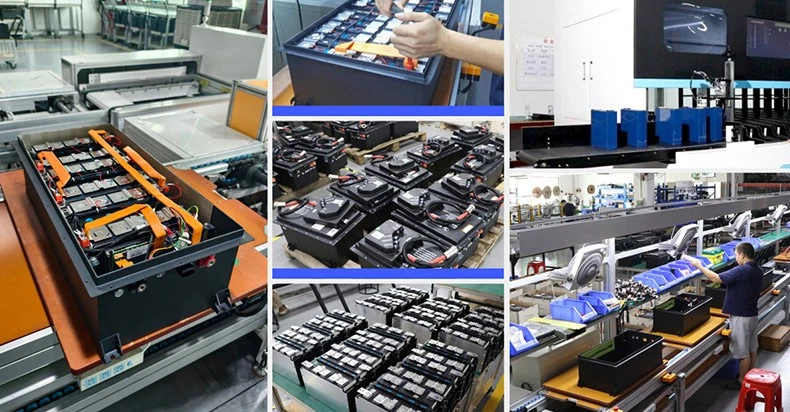
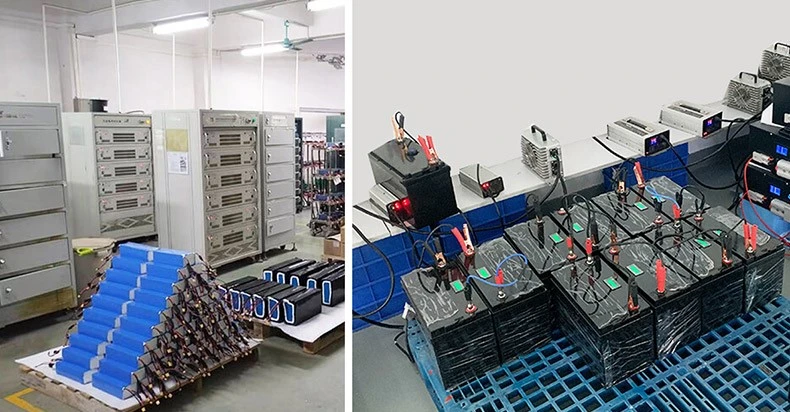
There is no "absolutely best" type; the key is to look at your product's pain points: if space is limited and lightweight is required, choose Lipo Battery; if you are looking for cost-effectiveness and durability, choose Cylinder Battery or Prismatic Battery.


