







Can a 24V 150Ah Battery be used for a street light system?
As a supplier of 24V 150Ah batteries, I often get asked whether this particular battery can be used for a street light system. This is a crucial question, as the right battery can ensure the efficient and reliable operation of street lights, which are essential for public safety and visibility at night. In this blog post, I'll delve into the factors that determine whether a 24V 150Ah battery is suitable for a street light system, and provide some insights to help you make an informed decision.
Understanding the Basics: 24V 150Ah Battery
Before we discuss its applicability to street light systems, let's understand what a 24V 150Ah battery means. The "24V" refers to the battery's voltage, which is the electrical potential difference that drives the flow of current. A 24V battery is commonly used in various applications where a relatively higher voltage is required compared to a 12V battery. The "150Ah" stands for ampere - hours, which is a measure of the battery's capacity. It indicates the amount of charge the battery can store and deliver over a period of time. In simple terms, a 24V 150Ah battery can theoretically supply a current of 150 amperes for one hour, or 1 ampere for 150 hours at a constant 24V.
Factors to Consider for Street Light Systems
- Power Requirements of the Street Lights
The first and most important factor is the power consumption of the street lights. Different types of street lights, such as LED, halogen, or high - pressure sodium lights, have different power ratings. LED street lights are the most energy - efficient option, typically consuming anywhere from 10W to 100W per light. Halogen and high - pressure sodium lights, on the other hand, can consume significantly more power, ranging from 100W to 400W or more.
To calculate the energy required to run a street light for a certain period, we use the formula: Energy (Wh) = Power (W) x Time (h). For example, if you have a 30W LED street light and you want it to run for 8 hours a night, the energy required is 30W x 8h = 240Wh. - Autonomy Requirements
Autonomy refers to the number of consecutive days the street lights should be able to operate without recharging. This is especially important in areas with inconsistent sunlight (for solar - powered street lights) or unreliable power sources. A higher autonomy requirement means that the battery needs to store more energy. For example, if you want the street lights to have a 3 - day autonomy, you need to calculate the total energy required for 3 days of operation. - Charging Source
The charging source for the battery is also a critical factor. In the case of street light systems, solar panels are a popular choice. The size and efficiency of the solar panels will determine how quickly the battery can be recharged. If the solar panels are too small or inefficient, the battery may not be fully charged, leading to reduced performance and a shorter lifespan.
Analyzing the Suitability of a 24V 150Ah Battery
Let's assume we have a solar - powered street light system with a 30W LED street light that needs to run for 8 hours a night with a 3 - day autonomy.
The daily energy requirement for the street light is 30W x 8h = 240Wh.
For a 3 - day autonomy, the total energy requirement is 240Wh x 3 = 720Wh.
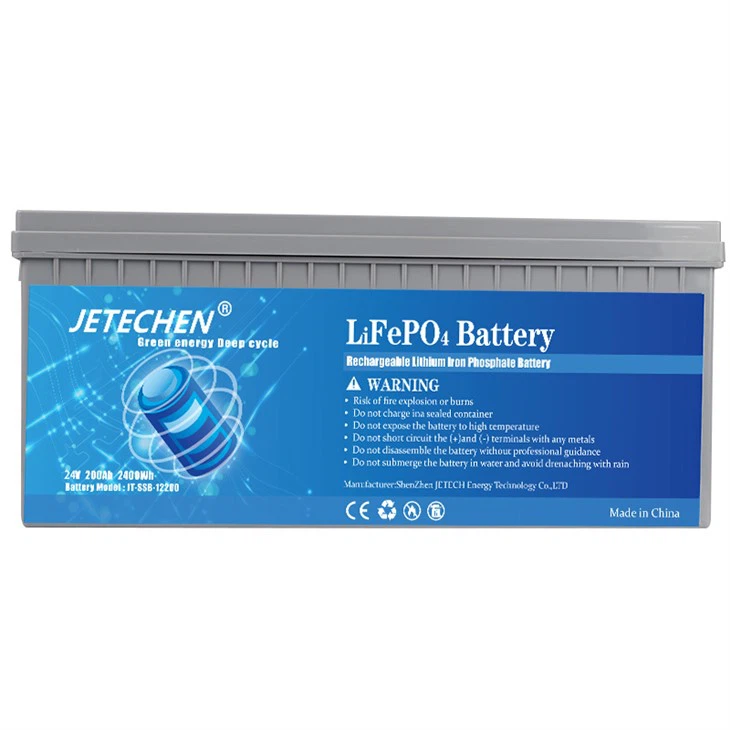
The energy stored in a 24V 150Ah battery is calculated as follows: Energy (Wh) = Voltage (V) x Capacity (Ah). So, for a 24V 150Ah battery, the energy is 24V x 150Ah = 3600Wh.
At first glance, it seems that the 24V 150Ah battery has more than enough capacity to meet the energy requirements of the street light system. However, we also need to consider the efficiency of the battery and the charging system. Batteries are not 100% efficient, and there are losses during charging and discharging. A typical lead - acid battery may have an efficiency of around 80% - 90%. So, the usable energy from the 24V 150Ah battery may be around 3600Wh x 0.8 = 2880Wh (assuming 80% efficiency).
This still leaves a significant margin for the 720Wh required by the street light system. However, if you have multiple street lights or higher power - consuming lights, the situation may change. For example, if you have 5 street lights with the same power and autonomy requirements, the total energy required is 720Wh x 5 = 3600Wh. In this case, the usable energy from the 24V 150Ah battery may not be sufficient, and you may need to consider a battery with a higher capacity, such as a 24V 500Ah Battery, 24V 200Ah Battery, or 24V 400Ah Battery.

Other Considerations
- Battery Type
There are different types of batteries available, such as lead - acid, lithium - ion, and nickel - cadmium. Lead - acid batteries are the most commonly used in street light systems due to their relatively low cost and high availability. However, they have a shorter lifespan compared to lithium - ion batteries and require more maintenance. Lithium - ion batteries, on the other hand, are more expensive but offer higher energy density, longer lifespan, and better performance in extreme temperatures. - Environmental Conditions
The environmental conditions where the street light system is installed can also affect the battery's performance. Extreme temperatures, both hot and cold, can reduce the battery's capacity and lifespan. For example, in very cold temperatures, the chemical reactions inside the battery slow down, reducing its ability to deliver power. In hot temperatures, the battery may overheat, leading to accelerated aging.
Conclusion
In conclusion, a 24V 150Ah battery can be used for a street light system, especially for small - scale systems with low - power LED lights and relatively low autonomy requirements. However, for larger systems or those with higher power - consuming lights and longer autonomy needs, a battery with a higher capacity may be necessary.
If you are considering using a 24V 150Ah battery or any other battery for your street light system, I encourage you to contact us for a detailed consultation. We have a team of experts who can help you analyze your specific requirements and recommend the most suitable battery solution. Whether you need a single battery or a large - scale battery installation, we are here to assist you in making the right choice for your street light system.
References
- Battery University: A comprehensive resource for battery knowledge and technology.
- Lighting Research Center: Provides research and information on lighting technologies, including street lights.
- International Electrotechnical Commission (IEC) standards for batteries and lighting systems.


