







As a supplier of 6S batteries, I often get asked about the various ways to charge these power - packed units. One common question that pops up is whether a 6S battery can be charged in a car. In this blog post, I'll delve into the technical aspects, safety considerations, and practicalities of charging a 6S battery in a vehicle.
Understanding 6S Batteries
Before we discuss car charging, let's briefly understand what a 6S battery is. The "6S" refers to a battery configuration with six cells connected in series. In the case of lithium - polymer (LiPo) batteries, which are commonly used in applications like drones and high - performance RC vehicles, each cell typically has a nominal voltage of 3.7V. So, a 6S LiPo battery has a nominal voltage of 6 x 3.7V = 22.2V.
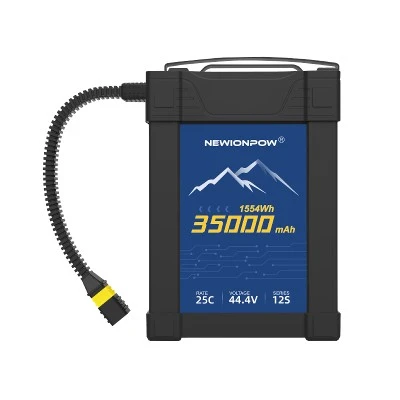
Our company offers a range of 6S batteries, such as the Lipo 22000mAh 6S Battery, 22.2V 16000mAh Lipo Battery, and 22.2V 30000mAh Drone Battery. These batteries are designed to provide high - energy output for extended periods, making them ideal for power - hungry devices.
Car Charging Basics
Cars typically have a 12V electrical system. The alternator in a car generates electricity to charge the car's battery and power other electrical components. To charge a 6S battery (22.2V) in a car, we need to step up the 12V voltage to the required 22.2V. This is where a DC - DC converter comes into play.
A DC - DC converter is an electronic device that can change the voltage level of a direct - current (DC) power source. When using a DC - DC converter to charge a 6S battery in a car, it takes the 12V power from the car's cigarette lighter or auxiliary power outlet and converts it to the appropriate 22.2V for the battery.
Technical Feasibility
From a technical perspective, it is entirely possible to charge a 6S battery in a car using a suitable DC - DC converter. However, there are several factors to consider:
Power Requirements
The power output of the car's electrical system needs to be sufficient to charge the 6S battery. The power (P) required to charge a battery is calculated using the formula P = V x I, where V is the voltage and I is the current. For example, if you want to charge a 6S battery at a rate of 5A, the power required is P = 22.2V x 5A = 111W. The car's electrical system must be able to supply this amount of power without overloading.


Charging Time
The charging time of a 6S battery in a car will depend on the charging current and the battery's capacity. A higher charging current will reduce the charging time, but it also requires a more powerful DC - DC converter and a car electrical system that can handle the load. For instance, a 22.2V 30000mAh Drone Battery will take longer to charge compared to a 22.2V 16000mAh Lipo Battery at the same charging current.
Safety Considerations
Charging a 6S battery in a car involves some safety risks that need to be addressed:
Overheating
LiPo batteries can generate a significant amount of heat during charging. In a confined space like a car, there is a risk of overheating, which can lead to battery damage or even a fire. It is essential to use a charger with proper thermal management and ensure adequate ventilation.
Short - Circuit
A short - circuit can occur if the battery terminals are accidentally connected incorrectly or if there is a fault in the charging equipment. This can cause a large current to flow, potentially damaging the battery and the car's electrical system. Always double - check the connections and use high - quality charging cables.
Battery Balancing
6S batteries require proper cell balancing during charging to ensure that each cell is charged to the same voltage level. An unbalanced battery can lead to reduced performance and a shorter lifespan. Use a charger that has a built - in battery balancing function.
Practicalities
Charging a 6S battery in a car can be convenient, especially for users who are on the go. It allows you to charge your battery while traveling to a remote location for a drone flight or an RC event. However, it is important to note that you should not leave the battery unattended while charging in the car.
Conclusion
In conclusion, it is possible to charge a 6S battery in a car using a suitable DC - DC converter. However, it is crucial to consider the technical requirements, safety aspects, and practicalities. As a 6S battery supplier, we always recommend using high - quality charging equipment and following the manufacturer's instructions.
If you are interested in purchasing our 6S batteries or have any questions about charging them, feel free to reach out to us. We are more than happy to assist you in finding the right battery for your needs and providing guidance on proper charging methods.
References
- Battery University: A comprehensive resource for battery - related information.
- RC hobbyist forums: Where enthusiasts share their experiences and knowledge about charging and using 6S batteries.


