




Can I use an 80v battery in a communication device?
As a supplier of 80V batteries, I often encounter inquiries from customers about the compatibility of our high - voltage batteries with various devices, especially communication devices. This blog aims to comprehensively explore the feasibility of using an 80V battery in a communication device from multiple perspectives.
Understanding Communication Device Power Requirements
Communication devices come in a wide range of types, including smartphones, tablets, base stations, and satellite communication terminals. Each type has its own specific power requirements.
Smartphones and tablets typically operate on relatively low - voltage batteries, usually around 3.7V to 5V. These devices are designed with power management circuits that are optimized for such low - voltage input. The internal components, like the processor, display, and communication modules, are built to function within this narrow voltage range. Using an 80V battery directly in these devices would be catastrophic. The high voltage would far exceed the tolerance of the components, leading to immediate and irreversible damage.
On the other hand, base stations and satellite communication terminals have more complex power needs. Base stations, which are responsible for transmitting and receiving signals over a large area, often require a stable and relatively high - power supply. However, their standard operating voltages are usually in the range of 24V to 48V. The power systems of these base stations are engineered to handle these specific voltage levels, and any significant deviation can disrupt their normal operation.
Satellite communication terminals, which are used for long - distance and high - reliability communication, also have well - defined power requirements. They are designed to work with specific power sources, and an 80V battery may not be a suitable choice without proper adaptation.
Advantages of 80V Batteries
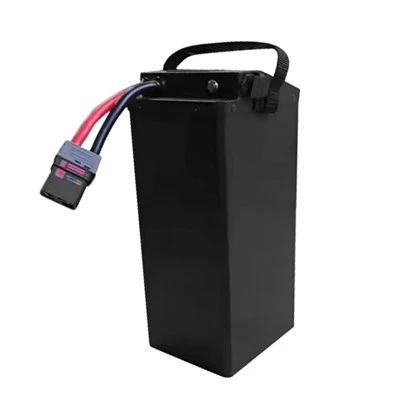
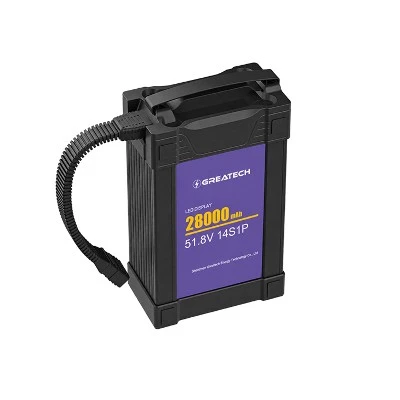
Before delving deeper into the compatibility issue, it's important to understand the advantages of 80V batteries. Our company offers a variety of 80V batteries, such as the 80V 50Ah Lithium Ion Battery, 80V 100Ah LiFePo4 Battery, and 80V 200Ah LiFePo4 Battery.
One of the main advantages of 80V batteries is their high energy density. Lithium - ion and LiFePo4 chemistries used in our batteries can store a large amount of energy in a relatively small and lightweight package. This makes them ideal for applications where space and weight are critical factors. For example, in some mobile communication scenarios where portability is essential, a high - energy - density 80V battery could potentially provide a longer operating time compared to lower - voltage batteries.
Another advantage is the ability to deliver high power. 80V batteries can supply a large amount of current, which is beneficial for devices that require a sudden surge of power, such as some high - speed data transmission equipment.


Compatibility Challenges and Solutions
If we consider using an 80V battery in a communication device, the first and most significant challenge is the voltage mismatch. As mentioned earlier, most communication devices are designed to work with lower voltages. To overcome this, a voltage conversion system is necessary.
A DC - DC converter can be used to step down the 80V voltage to the appropriate level for the communication device. However, this conversion process is not without its drawbacks. There will be some energy loss during the conversion, which reduces the overall efficiency of the power supply system. Additionally, the DC - DC converter adds complexity and cost to the setup. It also requires careful design and selection to ensure stable and reliable operation.
Another challenge is the charging and discharging management. Communication devices often have specific charging algorithms and requirements. The 80V battery needs to be charged and discharged in a way that is compatible with the device's power management system. This may involve developing custom charging circuits or modifying the existing ones.
In some cases, if the communication device has a modular design, it may be possible to integrate the 80V battery with appropriate voltage conversion and management modules. However, this requires a high level of technical expertise and may not be feasible for all types of devices.
Special Cases and Applications
There are some special cases where using an 80V battery in a communication device may be more viable. For example, in some military or aerospace communication systems, the requirements for high - power and long - duration operation are extremely high. These systems may be designed to be more flexible in terms of power supply and can potentially accommodate an 80V battery with proper adaptation.
In remote or off - grid communication setups, where access to a stable power grid is limited, an 80V battery can be used in combination with a renewable energy source, such as solar panels. The high - energy density of the 80V battery allows it to store more energy from the solar panels, providing a reliable power supply for the communication device over an extended period.
Conclusion and Call to Action
In conclusion, using an 80V battery in a communication device is a complex issue that requires careful consideration of the device's power requirements, the advantages and challenges of the battery, and the available solutions for voltage conversion and management. While it may not be suitable for most common communication devices, there are some special cases where it can be a viable option.
If you are interested in exploring the possibility of using our 80V batteries in your communication devices or have any questions about battery compatibility and power management, we encourage you to contact us for further discussion. Our team of experts is ready to provide you with professional advice and customized solutions based on your specific needs.
References
- Battery Technology Handbook, Third Edition. Edited by Ionel Stroe, et al.
- Power Electronics: Converters, Applications, and Design, Third Edition. By Ned Mohan, et al.
- Communication System Engineering, Second Edition. By John G. Proakis and Masoud Salehi.