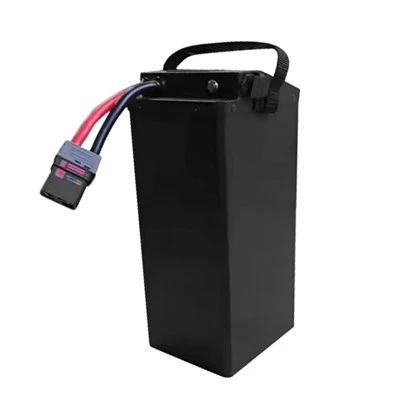



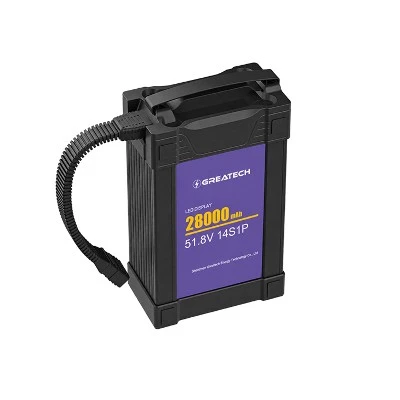


Hey there! As a supplier of 3s batteries, I often get asked about how to measure the state of charge (SOC) of these batteries. It's a crucial aspect, especially for those who rely on our 11.1V 10000mAh Lipo Battery, 11.1V 6000mAh Lipo Battery, or 11.1V 5000mAh Lipo Battery. So, I thought I'd share some insights on this topic.
First off, let's understand what a 3s battery is. The "3s" stands for 3 cells in series. In a lithium - polymer (LiPo) battery, each cell typically has a nominal voltage of around 3.7V. So, a 3s battery has a nominal voltage of about 11.1V (3 x 3.7V). The state of charge is basically how much energy is left in the battery compared to its full capacity.
Measuring Voltage
One of the simplest ways to measure the SOC of a 3s battery is by measuring its voltage. When a 3s LiPo battery is fully charged, its voltage can go up to around 12.6V (4.2V per cell x 3 cells). As the battery discharges, the voltage drops. When it reaches around 9V (3V per cell x 3 cells), it's considered almost completely discharged.
You can use a multimeter to measure the voltage. Just set the multimeter to the DC voltage setting and connect the positive and negative leads to the corresponding terminals of the battery. However, it's important to note that voltage alone isn't always a perfect indicator of SOC. The relationship between voltage and SOC can be affected by factors like the battery's temperature, the rate of discharge, and its age.
For example, if you measure the voltage right after a high - current discharge, the voltage might be lower than the actual SOC because of the internal resistance of the battery. So, it's best to let the battery rest for a while before taking a voltage measurement for a more accurate result.
Coulomb Counting
Another method is coulomb counting. This technique involves measuring the amount of charge that has flowed in and out of the battery. A coulomb counter keeps track of the current flowing through the battery over time. By integrating the current (amps) with respect to time (hours), you can calculate the amount of charge (amp - hours) that has been used or added to the battery.
To use coulomb counting, you need a device called a coulomb counter or a battery management system (BMS) that has coulomb - counting capabilities. These devices are usually more accurate than just measuring voltage, especially when it comes to tracking the SOC over multiple charge - discharge cycles.
However, coulomb counting also has its limitations. The accuracy can be affected by factors like current measurement errors and self - discharge of the battery. Over time, these errors can accumulate, leading to inaccurate SOC readings.
Impedance Spectroscopy
Impedance spectroscopy is a more advanced method for measuring the SOC of a battery. It involves applying a small AC signal to the battery and measuring the impedance (a combination of resistance, capacitance, and inductance) at different frequencies.
The impedance of a battery changes as its SOC changes. By analyzing the impedance spectrum, you can get an estimate of the SOC. This method is quite accurate and can also provide information about the health of the battery.


But the downside is that it requires specialized equipment, and the analysis of the impedance spectrum can be complex. It's not something that the average user can do easily at home.
Using a Battery Management System (BMS)
Most of our 3s batteries come with a built - in BMS. A BMS is a smart device that monitors and manages the battery. It can measure the voltage of each cell, balance the cells to ensure they are charged and discharged evenly, and provide an estimate of the SOC.
The BMS uses a combination of methods, such as voltage measurement and coulomb counting, to calculate the SOC. It also has safety features like over - charge and over - discharge protection, which helps to extend the life of the battery.
When you're using a battery with a BMS, you can usually get the SOC information from a display on the BMS or through a connection to a device like a smartphone or a drone controller.
Temperature Considerations
Temperature plays a big role in the performance and SOC measurement of a 3s battery. At low temperatures, the battery's capacity decreases, and its internal resistance increases. This means that the voltage might drop more quickly, giving a false impression of a lower SOC.
On the other hand, at high temperatures, the battery can experience increased self - discharge and may have a shorter lifespan. So, when measuring the SOC, it's important to take the temperature into account. If possible, try to measure the SOC at a moderate temperature (around 20 - 25°C) for the most accurate results.
Why Measuring SOC is Important
Knowing the SOC of your 3s battery is crucial for several reasons. If you're using the battery in a drone, for example, you need to know how much energy is left so that you can plan your flight and avoid crashing due to a dead battery. In other applications, like portable power banks, it helps you know when to recharge the battery to keep your devices running.
It also helps in battery maintenance. By monitoring the SOC, you can avoid over - charging and over - discharging the battery, which can damage the battery and reduce its lifespan.
Conclusion
Measuring the state of charge of a 3s battery can be done in several ways, each with its own pros and cons. Voltage measurement is simple but not always accurate. Coulomb counting is more precise but can have cumulative errors. Impedance spectroscopy is accurate but requires specialized equipment. And using a BMS is a convenient and reliable way to get an estimate of the SOC.
If you're in the market for high - quality 3s batteries, we've got you covered with our 11.1V 10000mAh Lipo Battery, 11.1V 6000mAh Lipo Battery, and 11.1V 5000mAh Lipo Battery. If you have any questions about our products or need help with measuring the SOC of our batteries, feel free to reach out to us for a procurement discussion.
References
- Linden, D., & Reddy, T. B. (2002). Handbook of Batteries. McGraw - Hill.
- Chen, Z., & Evans, D. J. (2006). "State of charge determination of lithium - ion batteries using AC impedance spectroscopy". Journal of Power Sources.