




Hey there! As a supplier of 80v batteries, I often get asked, "How do I choose the right charger for an 80v battery?" Well, you've come to the right place. In this blog, I'm gonna break down all the key factors you need to consider when picking out a charger for your 80v battery.
First off, let's talk about voltage compatibility. This is a no - brainer. The charger you choose has to match the voltage of your battery. Since we're dealing with 80v batteries here, you need an 80v charger. Using a charger with a different voltage can lead to some serious problems. If the charger voltage is too low, your battery won't charge fully. On the other hand, if it's too high, it can overcharge the battery, which might damage it or even pose a safety risk. So, always double - check that the charger's voltage rating is exactly 80v.
Next up is the charging current. The charging current, measured in amperes (A), determines how fast your battery will charge. A higher charging current means a quicker charge, but it's not always the best option. Batteries have a maximum charging current they can handle safely. If you use a charger with a current that's too high for your battery, it can cause overheating, reduce the battery's lifespan, and even lead to a fire in extreme cases.
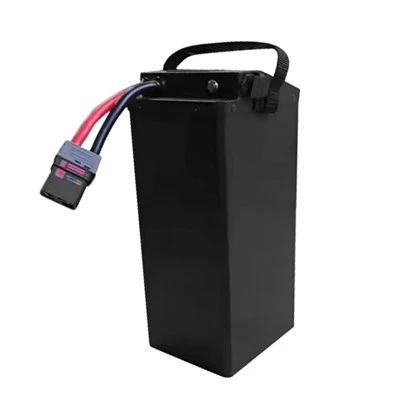
Let's say you have an 80V 100Ah LiFePo4 Battery. You need to know its recommended charging current. Usually, for LiFePO4 batteries, a charging current of around 0.2C to 0.5C is considered safe. Here, C is the battery's capacity in amp - hours. For a 100Ah battery, 0.2C would be 20A, and 0.5C would be 50A. So, you'd want to choose a charger with a charging current within this range.
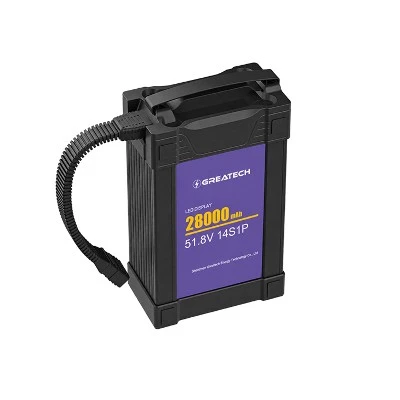
If you've got an 80V 50Ah Lithium Ion Battery, the same principle applies. Calculate the safe charging current based on the battery's capacity. For a 50Ah battery, a 0.2C charging current would be 10A, and 0.5C would be 25A. Make sure the charger you select has a current output that suits your battery's needs.
Another important factor is the type of battery. Different battery chemistries, like LiFePO4 and lithium - ion, have different charging requirements. LiFePO4 batteries are known for their long lifespan, high safety, and good thermal stability. They require a specific charging profile to maintain their performance. Chargers for LiFePO4 batteries usually have a three - stage charging process: constant current, constant voltage, and float charging.
Lithium - ion batteries, on the other hand, also need a carefully controlled charging process to prevent overcharging and overheating. Some lithium - ion batteries may require a charger with a built - in protection circuit to safeguard against these issues. So, make sure the charger you choose is specifically designed for the type of 80v battery you have.
The charger's safety features are also crucial. A good charger should have over - charge protection, which stops the charging process when the battery reaches its full capacity. Over - discharge protection is also important, especially if you plan to use the charger for battery maintenance. It prevents the battery from discharging too much, which can damage the battery cells.
Short - circuit protection is another must - have feature. It protects both the charger and the battery in case of a short - circuit, which could otherwise cause a fire or other serious damage. Look for chargers that are certified by recognized safety standards organizations, like UL (Underwriters Laboratories) or CE (Conformité Européene). This ensures that the charger has been tested and meets certain safety requirements.
Now, let's talk about the charger's efficiency. An efficient charger converts more of the electrical energy it uses into charging energy for the battery. This means less energy is wasted as heat, which not only saves you money on your electricity bill but also reduces the risk of overheating. Chargers with a high efficiency rating (usually expressed as a percentage) are generally better. You can usually find the efficiency rating in the charger's product specifications.
The charger's build quality and durability are also important. You want a charger that can withstand regular use and last for a long time. Look for chargers made with high - quality components and a sturdy housing. Chargers with a good warranty are also a plus, as they give you some peace of mind in case something goes wrong.


Portability might be a factor for you, especially if you need to charge your 80v battery on the go. If that's the case, look for a charger that's lightweight and easy to carry. Some chargers are designed specifically for portable use, with features like a compact size and a long power cord.
If you have an 80V 200Ah LiFePo4 Battery, charging it might take a while. In this case, you might want to consider a charger with a higher charging current (within the safe range, of course) to speed up the process. But remember, always prioritize the battery's safety and lifespan over a quick charge.
Customer reviews can also be a great help when choosing a charger. Check out what other people who have used the charger have to say. Look for reviews that mention things like charging speed, reliability, and any issues they might have had. This can give you a better idea of what to expect from the charger.
In conclusion, choosing the right charger for an 80v battery involves considering several factors, including voltage compatibility, charging current, battery type, safety features, efficiency, build quality, and portability. By taking the time to research and choose the right charger, you can ensure that your 80v battery charges safely and efficiently, and has a long lifespan.
If you're in the market for an 80v battery or a suitable charger, we're here to help. We've got a wide range of 80v batteries and can offer expert advice on choosing the right charger for your specific needs. Whether you're a hobbyist, a professional, or just someone looking for a reliable power source, we've got you covered. Reach out to us for more information and to start the procurement process. We're looking forward to working with you to find the perfect solution for your power needs.
References
- Battery University: A comprehensive resource for battery knowledge, including charging requirements for different battery chemistries.
- Manufacturer's product specifications: Always refer to the specifications provided by the battery and charger manufacturers for accurate information.