




Hey there! As a supplier of 24V 150Ah batteries, I often get asked about the charging efficiency of these power - packs. So, I thought I'd write this blog to share some insights on the topic.
First off, let's understand what charging efficiency means. Charging efficiency is basically the ratio of the energy stored in the battery to the energy input during the charging process. In simpler terms, it tells us how well the battery can take in and store the electrical energy we're giving it.
For a 24V 150Ah battery, the theoretical capacity is calculated by multiplying the voltage by the amp - hour rating. So, 24 volts times 150 amp - hours gives us 3600 watt - hours (Wh). But in the real world, things aren't always that straightforward.
One of the main factors affecting the charging efficiency of a 24V 150Ah battery is the type of battery chemistry. Most of these batteries are lead - acid, which are known for their reliability and cost - effectiveness. However, lead - acid batteries have some inherent inefficiencies. During the charging process, some of the energy is lost as heat. This is due to the internal resistance of the battery. The chemical reactions that occur inside the battery also aren't 100% efficient.
Typically, the charging efficiency of a lead - acid 24V 150Ah battery ranges from about 80% to 90%. That means if you're putting in 1000 Wh of energy to charge the battery, only 800 - 900 Wh will actually be stored in the battery. The rest is lost as heat.
Another factor that plays a big role is the charging rate. If you charge the battery too quickly, the efficiency can drop. When you use a high - current charger, the battery heats up more, and the chemical reactions inside can become less efficient. It's like trying to rush a cake in the oven; you might end up with a half - baked mess. A slower, more controlled charging rate usually results in better efficiency.
The state of charge (SOC) of the battery also matters. When the battery is almost empty, it can accept a charge more efficiently. As it gets closer to being fully charged, the charging efficiency starts to decline. This is because the battery's internal resistance increases as it approaches full charge, and more energy is wasted as heat.
The temperature also has a significant impact on charging efficiency. Batteries perform best within a certain temperature range. If it's too cold, the chemical reactions inside the battery slow down, and the charging efficiency drops. On the other hand, if it's too hot, the battery can overheat, which not only reduces efficiency but can also damage the battery over time.
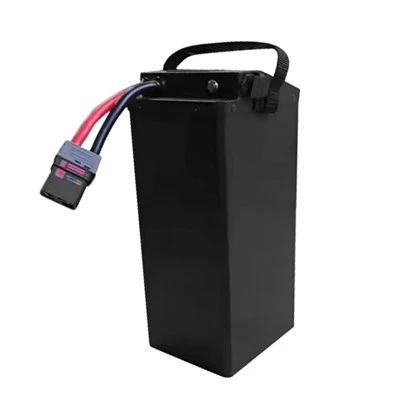
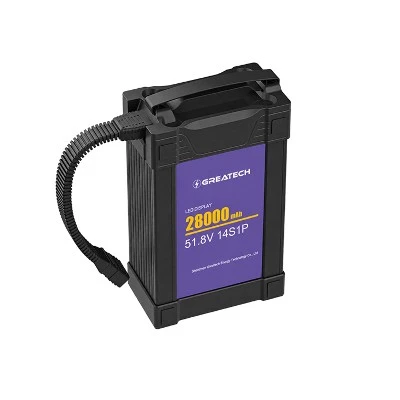
Now, let's talk about how this all relates to our products. At our company, we offer high - quality 24V 150Ah batteries. We've worked hard to optimize the design and manufacturing process to improve charging efficiency. Our batteries are built with advanced lead - acid technology that minimizes internal resistance, reducing heat loss during charging.
If you're in the market for a battery with different capacities, we also have 24V 500Ah Battery and 24V 100Ah Battery. These batteries also have similar factors affecting their charging efficiency, but the capacity and usage requirements might be different.
When it comes to charging these batteries, we recommend using a charger specifically designed for lead - acid batteries. A good charger will be able to adjust the charging rate based on the battery's state of charge and temperature. It'll also have features to prevent overcharging, which can damage the battery and reduce its lifespan.
If you're using a 24V 150Ah battery in a solar power system, for example, you need to make sure the solar charge controller is properly sized and configured. The charge controller regulates the power from the solar panels to the battery, ensuring that the battery is charged efficiently and safely.
In conclusion, understanding the charging efficiency of a 24V 150Ah battery is crucial for getting the most out of your investment. By considering factors like battery chemistry, charging rate, state of charge, and temperature, you can optimize the charging process and extend the life of your battery.


If you're interested in our 24V 150Ah Battery or have any questions about charging efficiency, feel free to reach out. We're here to help you make the best choice for your power needs. Whether you're powering a small off - grid cabin or a large industrial application, our batteries are up to the task. Let's start a conversation about how we can meet your battery requirements!
References
- Battery University: A great resource for understanding battery technology and performance.
- Various industry reports on lead - acid battery performance and efficiency.