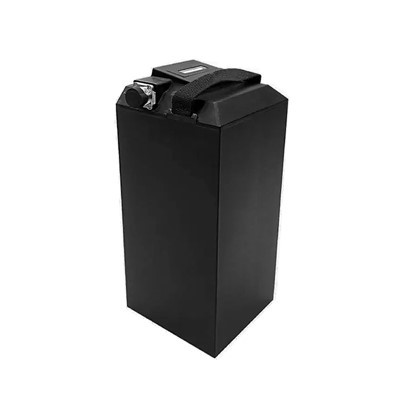



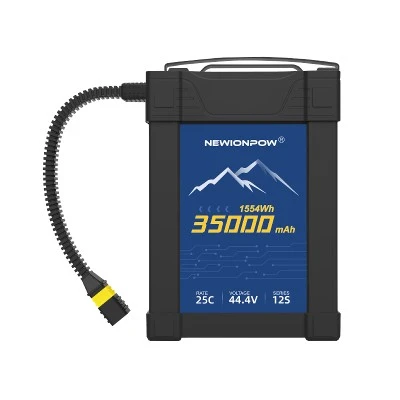


When it comes to power storage solutions, the 24V 500Ah battery stands out as a robust and reliable option. As a supplier of [link text="24V 500Ah Battery" url="/lead-acid-battery-replacement/24v-battery/24v-500ah-battery.html"]24V 500Ah batteries[/link], I often get asked the question: "How long can a 24V 500Ah battery last?" In this blog post, I'll delve into the factors that influence the battery's lifespan and provide you with a comprehensive understanding of its performance.
Understanding Battery Capacity and Voltage
Before we discuss the battery's runtime, it's essential to understand the concepts of capacity and voltage. The voltage of a battery, in this case, 24V, represents the electrical potential difference between its positive and negative terminals. It determines the force with which the electrical current flows through a circuit. The ampere-hour (Ah) rating, on the other hand, indicates the battery's capacity to store electrical charge. A 500Ah battery can theoretically supply a current of 500 amperes for one hour, or 1 ampere for 500 hours.
Factors Affecting Battery Runtime
Several factors can influence how long a 24V 500Ah battery will last. These include the load connected to the battery, the depth of discharge (DoD), the battery's state of charge (SoC), and the ambient temperature.
Load
The load refers to the electrical device or devices connected to the battery. The power consumption of the load, measured in watts (W), plays a crucial role in determining the battery's runtime. The higher the power consumption of the load, the shorter the battery's lifespan. For example, if you connect a 1000W load to a 24V 500Ah battery, the battery will discharge faster compared to a 500W load.
To calculate the approximate runtime of the battery, you can use the following formula:
[ \text{Runtime (hours)} = \frac{\text{Battery Capacity (Ah) x Battery Voltage (V)}}{\text{Load Power (W)}} ]
Let's take an example. Suppose you have a 24V 500Ah battery and a 1000W load. Using the formula, the approximate runtime would be:
[ \text{Runtime} = \frac{500 \text{Ah} \times 24 \text{V}}{1000 \text{W}} = 12 \text{ hours} ]
However, this is a theoretical calculation and does not take into account other factors such as the battery's efficiency and the depth of discharge.
Depth of Discharge (DoD)
The depth of discharge refers to the percentage of the battery's capacity that has been discharged. Most batteries, especially lead-acid batteries, have a recommended maximum DoD to ensure a long and healthy lifespan. For example, a lead-acid battery may have a recommended maximum DoD of 50%. This means that you should not discharge the battery beyond 50% of its total capacity.
If you discharge the battery beyond its recommended DoD, it can lead to a reduced lifespan and potentially damage the battery. Therefore, when calculating the battery's runtime, it's important to consider the DoD. For instance, if you have a 24V 500Ah battery with a recommended maximum DoD of 50%, the effective capacity for use would be 250Ah.
State of Charge (SoC)
The state of charge refers to the amount of charge remaining in the battery at any given time. A fully charged battery has an SoC of 100%, while a completely discharged battery has an SoC of 0%. The SoC can affect the battery's performance and runtime. As the battery discharges, its voltage and capacity gradually decrease. Therefore, a battery with a lower SoC will have a shorter runtime compared to a fully charged battery.
Ambient Temperature
The ambient temperature can also have a significant impact on the battery's performance and lifespan. Batteries generally perform best at moderate temperatures, typically between 20°C and 25°C. At higher temperatures, the battery's self-discharge rate increases, which can lead to a shorter lifespan. At lower temperatures, the battery's capacity and performance may decrease.
Comparing with Other Battery Capacities
To better understand the capabilities of a 24V 500Ah battery, let's compare it with [link text="24V 100Ah Battery" url="/lead-acid-battery-replacement/24v-battery/24v-100ah-battery.html"]24V 100Ah[/link] and [link text="24V 300Ah Battery" url="/lead-acid-battery-replacement/24v-battery/24v-300ah-battery.html"]24V 300Ah[/link] batteries.
A 24V 100Ah battery has a lower capacity compared to a 24V 500Ah battery. Using the same load and assuming all other factors are equal, the 24V 100Ah battery will have a shorter runtime. For example, with a 1000W load, a 24V 100Ah battery would have an approximate runtime of:
[ \text{Runtime} = \frac{100 \text{Ah} \times 24 \text{V}}{1000 \text{W}} = 2.4 \text{ hours} ]
On the other hand, a 24V 300Ah battery has a higher capacity than a 24V 100Ah battery but lower than a 24V 500Ah battery. With a 1000W load, a 24V 300Ah battery would have an approximate runtime of:
[ \text{Runtime} = \frac{300 \text{Ah} \times 24 \text{V}}{1000 \text{W}} = 7.2 \text{ hours} ]
Real-World Applications
The 24V 500Ah battery is suitable for a wide range of applications, including off-grid solar power systems, backup power supplies for homes and businesses, and electric vehicles. In an off-grid solar power system, the battery stores the energy generated by the solar panels during the day and supplies it to the electrical loads at night or during periods of low sunlight. A 24V 500Ah battery can provide a significant amount of power for several hours, depending on the load.
In a backup power supply scenario, the battery can keep essential electrical devices running during a power outage. For example, it can power a refrigerator, lights, and a small computer for an extended period.
Conclusion
In conclusion, the runtime of a 24V 500Ah battery depends on several factors, including the load, depth of discharge, state of charge, and ambient temperature. By understanding these factors and using the appropriate calculations, you can estimate the battery's runtime for your specific application.
If you're considering purchasing a 24V 500Ah battery or have any questions about its performance and suitability for your needs, I encourage you to contact me for a detailed discussion. We can explore your requirements and find the best battery solution for you.


References
- Battery University: A comprehensive resource for battery knowledge and information.
- Electrical Engineering textbooks for fundamental concepts of battery capacity and voltage.