




Hey there! As a 60V battery supplier, I've seen firsthand how important it is to balance the cells in a 60V battery pack. A well - balanced battery pack not only ensures optimal performance but also extends the battery's lifespan. So, let's dive into how you can achieve that balance.
Why Balancing Cells is Crucial
Before we get into the how - to, let's talk about why cell balancing matters. In a 60V battery pack, multiple cells are connected in series. Over time, these cells can start to vary in their state of charge (SOC). Some cells might charge faster or discharge slower than others. If left unbalanced, this can lead to several issues.
One major problem is reduced capacity. When one or more cells are over - charged or under - charged compared to the others, the overall capacity of the battery pack is limited by the weakest cell. This means you won't get the full range or power output that the battery is supposed to provide.
Another issue is safety. Over - charging a cell can cause it to overheat, which might lead to swelling, leakage, or even a fire in extreme cases. On the other hand, under - charging can cause irreversible damage to the cell, reducing its lifespan.
Methods of Cell Balancing
Passive Balancing
Passive balancing is one of the most common methods. It works by using resistors to bleed off excess charge from the cells that are at a higher state of charge. When a cell reaches a certain voltage threshold, a resistor is connected across it, allowing the excess energy to be dissipated as heat.
The advantage of passive balancing is that it's relatively simple and inexpensive. It doesn't require complex electronics. However, it has its drawbacks. Since it dissipates energy as heat, it's not very efficient. This means that some of the energy stored in the battery is wasted, and it can also cause the battery to heat up during the balancing process.
Active Balancing
Active balancing, on the other hand, is a more advanced method. It uses electronic circuits to transfer energy from cells with a higher state of charge to those with a lower state of charge. This is done through techniques like DC - DC converters or inductive coupling.
The main advantage of active balancing is its efficiency. It doesn't waste energy as heat, so more of the stored energy can be used. It also balances the cells more quickly and accurately compared to passive balancing. But the downside is that it's more complex and expensive. You need sophisticated electronics and control systems to implement active balancing.
Steps to Balance Cells in a 60V Battery Pack
Step 1: Measure the Voltage of Each Cell
The first step is to measure the voltage of each individual cell in the battery pack. You can use a multimeter for this. Make sure to measure the voltage when the battery is at rest, not while it's being charged or discharged. This will give you an accurate reading of the state of charge of each cell.
Step 2: Identify the Imbalanced Cells
Once you have the voltage readings, compare them. If there's a significant difference in voltage between cells, those are the imbalanced cells. For example, if most cells are around 3.7V, but one cell is at 3.9V and another is at 3.5V, these cells need to be balanced.
Step 3: Choose the Balancing Method
Based on your requirements and budget, choose either passive or active balancing. If you're on a tight budget and don't need extremely fast or efficient balancing, passive balancing might be a good option. But if you want maximum efficiency and performance, active balancing is the way to go.
Step 4: Implement the Balancing
If you're using passive balancing, connect the appropriate resistors across the cells that need to be balanced. Make sure to use resistors with the right resistance value to ensure safe and effective balancing.
For active balancing, you'll need to install the active balancing circuit. This might involve soldering components and programming the control system. It's a more complex process, so if you're not experienced, it's best to get help from a professional.
Step 5: Monitor the Balancing Process
Once you've started the balancing process, monitor the voltage of the cells regularly. This will help you ensure that the cells are being balanced correctly. If you notice any issues, such as a cell not reaching the desired voltage or overheating, stop the process and troubleshoot.
Our 60V Battery Products
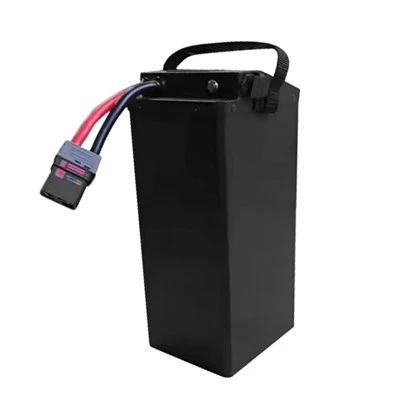
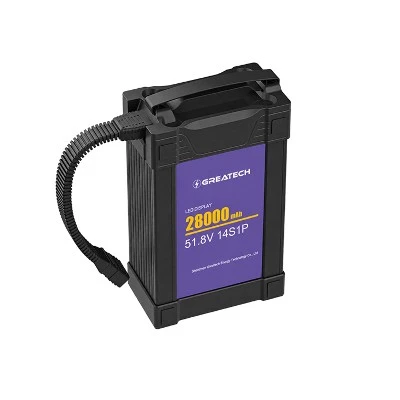
As a 60V battery supplier, we offer a range of high - quality battery products. Check out our 60V 27Ah Lithium Battery For Electric Motorcycle. It's perfect for electric motorcycles, providing reliable power and long - lasting performance.


We also have the 60V 30Ah Lithium Battery For Electric Vehicles. This battery is designed for various electric vehicles, offering a good balance between capacity and power.
And if you're looking for a high - performance option, our 60V 30Ah Lithium Ion Power Battery is a great choice. It's built to deliver high - power output and has a long lifespan.
Contact Us for Purchasing
If you're interested in our 60V battery products or have any questions about cell balancing, don't hesitate to reach out. We're here to help you find the right battery solution for your needs. Whether you're an individual looking for a battery for your electric vehicle or a business in need of bulk orders, we've got you covered.
References
- Battery Management Systems: Design by Example, by Robert B. MacKay
- Lithium - Ion Batteries: Science and Technology, by Gholam - Ali Nazri and Gianfranco Pistoia