


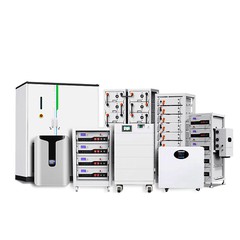


Hey there! As a supplier of 24V 500Ah batteries, I often get asked about how to calculate the energy of these power - packed units. So, let's dive right in and break it down in a simple way.
First off, we need to understand the basic concepts. Voltage (V) and amp - hours (Ah) are two key terms you'll come across when dealing with batteries. Voltage is like the "push" that makes the electric current flow, while amp - hours tell you how much charge the battery can hold.
The formula to calculate the energy (E) of a battery is super straightforward. It's E = V × Ah. In the case of our 24V 500Ah battery, we just need to multiply the voltage (24 volts) by the amp - hours (500 Ah).
So, E = 24V × 500Ah = 12000 watt - hours (Wh). But wait, you might be thinking, "What does watt - hours really mean?" Well, a watt - hour is a unit of energy. It tells you how much energy the battery can deliver over a period of time. For example, if you have a device that uses 100 watts of power, a 12000 Wh battery could theoretically power that device for 120 hours (since 12000 Wh÷100 W = 120 h).
Now, let's talk about some real - world applications. Our 24V 500Ah batteries are used in a wide range of scenarios. They're great for off - grid solar power systems. In these systems, the battery stores the energy collected by the solar panels during the day so that you can use it at night or on cloudy days.
Say you have a small off - grid cabin. You've got some lights, a small refrigerator, and a few other basic appliances. The 24V 500Ah battery can store enough energy to keep these things running smoothly. And because it's a 24V system, it's more efficient for larger power demands compared to a 12V system.
If you're in the market for a battery with a different capacity, we also offer 24V 200Ah Battery and 24V 300Ah Battery. The energy calculation for these batteries follows the same formula. For the 24V 200Ah battery, E = 24V × 200Ah = 4800 Wh. And for the 24V 300Ah battery, E = 24V × 300Ah = 7200 Wh.
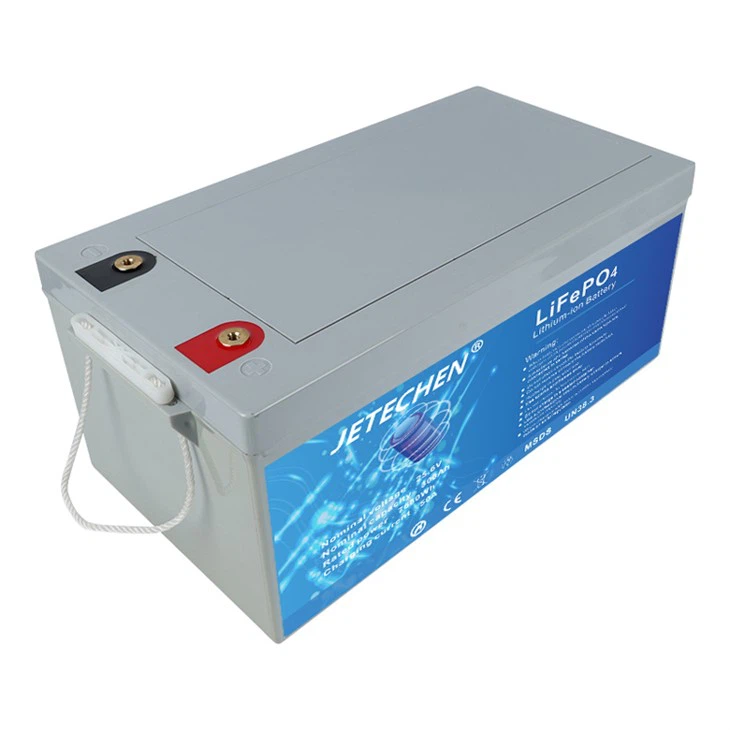
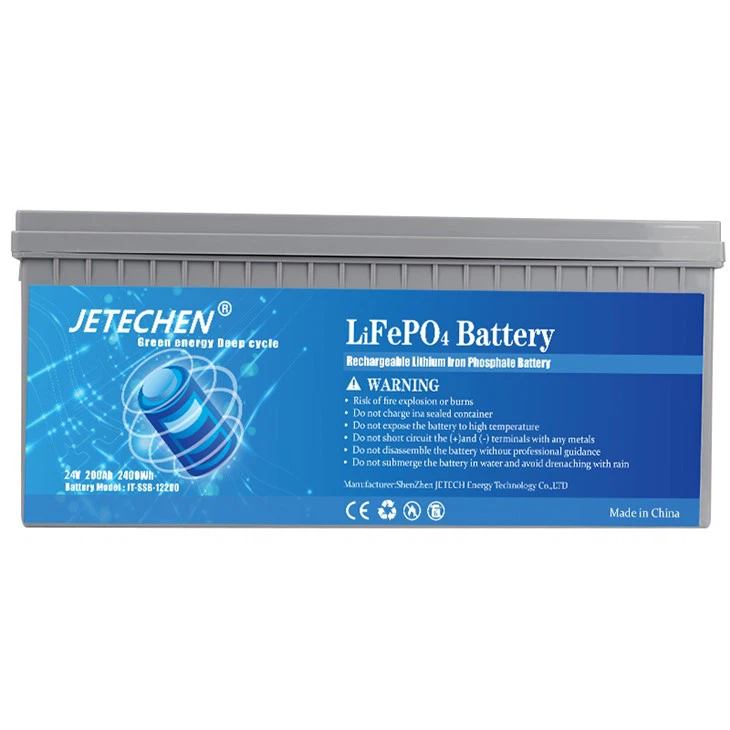
When it comes to the actual calculation, it's important to note that the numbers we get are theoretical. In real life, there are some factors that can affect the actual usable energy of the battery. One of these factors is the battery's efficiency. No battery is 100% efficient. There are losses due to internal resistance, heat generation, and other things. Generally, lead - acid batteries, like the ones we supply, have an efficiency of around 80 - 90%. So, for our 24V 500Ah battery with a theoretical energy of 12000 Wh, the actual usable energy might be around 9600 - 10800 Wh if we assume an efficiency of 80 - 90%.
Another factor is the depth of discharge (DoD). This refers to how much of the battery's capacity you can use before you need to recharge it. For lead - acid batteries, it's usually recommended to keep the DoD around 50 - 80% to prolong the battery's lifespan. If we assume a 50% DoD for our 24V 500Ah battery, the usable energy would be 0.5 × 12000 Wh = 6000 Wh.
Now, let's talk about the maintenance of these batteries. Lead - acid batteries need some basic care to ensure they last a long time. You need to keep an eye on the electrolyte levels. The electrolyte is a mixture of sulfuric acid and water, and it plays a crucial role in the battery's operation. If the levels get too low, it can damage the battery. You also need to make sure the battery is charged properly. Overcharging or undercharging can reduce the battery's lifespan.
When it comes to charging, you need a charger that's compatible with the battery's voltage and capacity. A good charger will have features like over - charge protection and temperature compensation to ensure the battery is charged safely and efficiently.
In terms of safety, lead - acid batteries contain sulfuric acid, which is a corrosive substance. So, you need to handle them with care. Always wear protective gloves and goggles when working with the batteries. And make sure the area where the batteries are stored is well - ventilated to prevent the buildup of hydrogen gas, which is produced during the charging process.
If you're interested in learning more about our 24V 500Ah Battery, or if you have any questions about energy calculations, battery applications, or maintenance, don't hesitate to reach out. We're here to help you make the right choice for your power needs. Whether you're a DIY enthusiast setting up a small off - grid system or a professional installer working on a large project, we've got the expertise and the products to meet your requirements.
If you're in the market for a reliable battery solution, we'd love to have a chat with you about your specific needs. Our team can provide you with detailed information, answer all your questions, and help you choose the best battery for your situation. So, why not get in touch and start the conversation today?
References:
- Basic Electrical Engineering textbooks for battery energy calculation concepts.
- Industry standards and guidelines for lead - acid battery maintenance and safety.


