




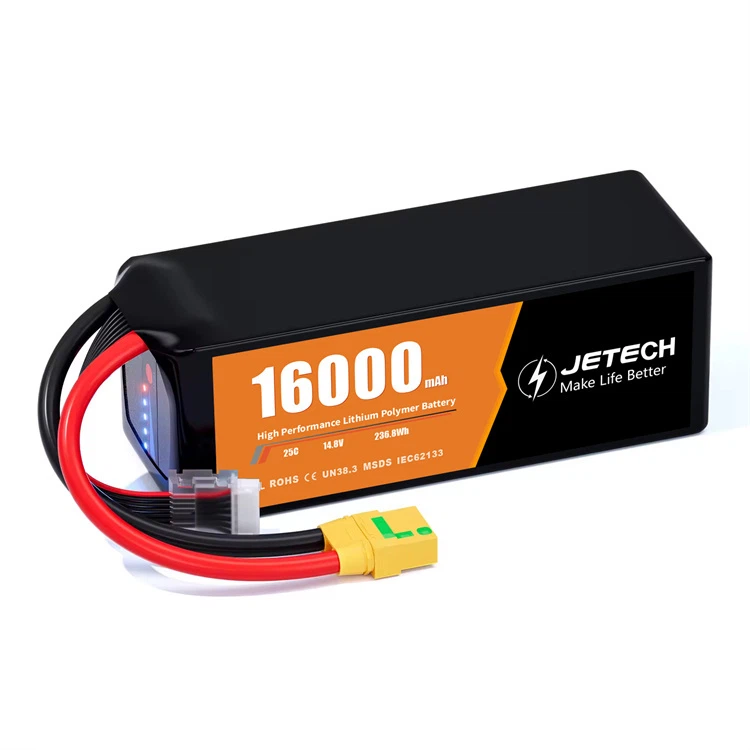
Hey there! As a 4s battery supplier, I've seen firsthand how important proper heat dissipation is for these batteries. Whether you're using a 14.8V 16000mAh Lipo Battery, a 14.8V 10000mAh Lipo Battery, or a 14.8V 22000mAh Lipo Battery, keeping them cool is crucial for performance and longevity.
Why Heat Dissipation Matters
Let's start by understanding why heat dissipation is such a big deal. When a 4s battery is in use, it generates heat. This heat is a by - product of the chemical reactions happening inside the battery as it discharges and charges. If this heat isn't dissipated properly, it can lead to a bunch of problems.
First off, high temperatures can reduce the battery's capacity. You know how annoying it is when your battery doesn't last as long as it should? Well, excessive heat could be the culprit. It can also cause the battery to age faster. Just like us, batteries don't like being over - heated, and it takes a toll on their lifespan.

In extreme cases, overheating can even be dangerous. There's a risk of thermal runaway, which is when the battery gets so hot that it starts a self - sustaining reaction that can lead to swelling, venting, or even fire. Yikes! So, clearly, we need to find ways to keep our 4s batteries cool.
Ways to Improve Heat Dissipation
1. Good Ventilation
One of the simplest and most effective ways to improve heat dissipation is to ensure good ventilation around the battery. When you're using your battery in a device, make sure there's enough space for air to flow. If it's in a tight enclosure, consider adding vents or holes.
For example, if you're using a 14.8V 16000mAh Lipo Battery in a drone, the drone's design should allow for proper air circulation around the battery compartment. You can also use fans to help move the air. Small, low - power fans can be added to the battery area to create a constant flow of cool air.
2. Heat Sinks
Heat sinks are another great option. A heat sink is a device that absorbs heat from the battery and transfers it to the surrounding environment. They're usually made of materials like aluminum or copper, which are good conductors of heat.
You can attach a heat sink to the surface of the battery. Make sure it has a large surface area to maximize heat transfer. There are different types of heat sinks available, from simple finned designs to more complex ones with heat pipes. Using a heat sink can significantly reduce the temperature of the battery during operation.
3. Cooling Pads
Cooling pads are similar to heat sinks but are often more flexible. They can be placed under or around the battery. Some cooling pads are gel - based, which can absorb and dissipate heat effectively.
These pads are easy to use and can be a great solution, especially for portable devices. Just make sure the cooling pad you choose is compatible with the size and shape of your 4s battery.
4. Battery Management System (BMS)
A good Battery Management System is essential for heat dissipation. The BMS monitors the battery's temperature and can take steps to prevent overheating. For example, it can reduce the charging or discharging current if the temperature gets too high.
When you're choosing a 4s battery, look for one with a high - quality BMS. It can make a huge difference in how well the battery handles heat and how long it lasts.
5. Operating Conditions
The way you use the battery also affects its heat generation. Try to avoid using the battery in high - temperature environments. If it's a hot day, take breaks between using the battery to let it cool down.
Also, don't over - charge or over - discharge the battery. These actions can cause the battery to heat up more than normal. Follow the manufacturer's guidelines for charging and discharging to keep the battery in good shape.
Testing and Monitoring
Once you've implemented these heat - dissipation methods, it's important to test and monitor the battery's temperature. You can use a thermal camera or a temperature sensor to measure the temperature of the battery during operation.
Keep an eye on the temperature readings and make adjustments as needed. If you notice that the battery is still getting too hot, you may need to try a different heat - dissipation method or make some changes to the operating conditions.
Conclusion
Improving the heat dissipation of a 4s battery is essential for its performance, longevity, and safety. By ensuring good ventilation, using heat sinks and cooling pads, having a reliable BMS, and being mindful of the operating conditions, you can keep your 14.8V 16000mAh Lipo Battery, 14.8V 10000mAh Lipo Battery, or 14.8V 22000mAh Lipo Battery in top condition.
If you're in the market for high - quality 4s batteries and want to learn more about how to keep them cool, don't hesitate to reach out. We're here to help you make the best choice for your needs. Whether you're a hobbyist or a professional, we can provide you with the right battery solutions.
References
- Linden, D., & Reddy, T. B. (2002). Handbook of Batteries. McGraw - Hill.
- Chen, Z., & Evans, D. J. (2012). Electrochemical Power Sources: Fundamentals, Systems, and Applications. John Wiley & Sons.


