




Hey there! As a supplier of 48V batteries, I often get asked about how to use a 48V battery to power multiple devices. It's a pretty common question, especially for those who are looking to set up a small off - grid system or power a bunch of gadgets at once. So, I thought I'd share some tips and tricks on how to make this happen.


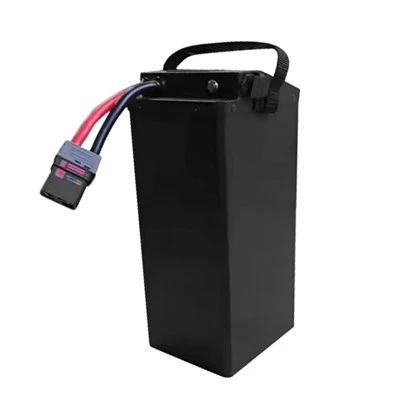
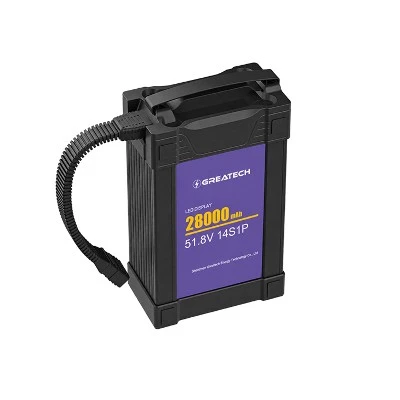
First off, let's talk about the types of 48V batteries we offer. We have some great options like the 48V 24Ah Lithium Ion Battery, the 48V 20Ah Lithium Ion Battery, and the 48V 45Ah Lithium Ion Battery. Each of these batteries has its own capacity, which means they can power your devices for different lengths of time.
Understanding Your Devices' Power Requirements
The first step in using a 48V battery to power multiple devices is to understand the power requirements of each device. You need to know how much voltage and current each device needs to operate properly. You can usually find this information on the device's label or in its user manual.
For example, if you have a small LED light that requires 12V and 1A of current, and a small fan that requires 24V and 0.5A of current, you'll need to figure out how to step down the 48V from the battery to the appropriate voltage for each device.
Using Voltage Converters
One of the most common ways to power multiple devices with a 48V battery is by using voltage converters. These are devices that can step down the voltage from the battery to the voltage required by your devices. There are two main types of voltage converters: linear regulators and switching regulators.
- Linear Regulators: These are simple and inexpensive, but they're not very efficient. They work by dissipating the excess voltage as heat. So, if you're using a linear regulator to step down from 48V to 12V, a lot of the power will be wasted as heat.
- Switching Regulators: These are more complex and expensive, but they're much more efficient. They work by rapidly switching the input voltage on and off and then filtering it to get the desired output voltage. Switching regulators are a better choice if you're powering multiple devices or if you need to conserve power.
Calculating the Total Power Consumption
Before you start connecting your devices to the battery, you need to calculate the total power consumption of all the devices. This will help you determine if your battery has enough capacity to power all the devices for the desired amount of time.
To calculate the power consumption of a device, you simply multiply the voltage by the current. For example, if a device requires 12V and 1A of current, its power consumption is 12W (12V x 1A = 12W).
Once you've calculated the power consumption of each device, you can add them up to get the total power consumption. Then, you need to compare this total with the capacity of your battery. The capacity of a battery is usually measured in amp - hours (Ah). To convert the battery capacity to watt - hours (Wh), you multiply the voltage of the battery by its amp - hour rating. For example, a 48V 20Ah battery has a capacity of 960Wh (48V x 20Ah = 960Wh).
Connecting the Devices in Parallel or Series
When you're connecting multiple devices to a 48V battery, you can connect them in parallel or series.
- Parallel Connection: When you connect devices in parallel, the voltage across each device is the same as the battery voltage, but the total current is the sum of the currents of all the devices. This is a good option if all your devices require the same voltage as the battery.
- Series Connection: When you connect devices in series, the current through each device is the same, but the total voltage is the sum of the voltages of all the devices. This is a good option if you want to increase the voltage across your devices or if you're using devices that require different voltages.
Safety Precautions
Using a 48V battery to power multiple devices can be dangerous if you're not careful. Here are some safety precautions you should take:
- Use Proper Wiring: Make sure you're using the right gauge of wire for the current you're carrying. Using a wire that's too thin can cause it to overheat and start a fire.
- Install Fuses: Fuses are a simple and effective way to protect your devices and your battery from over - current. You should install a fuse in the circuit for each device or for the entire circuit.
- Avoid Short Circuits: A short circuit can cause a large amount of current to flow through the battery, which can damage the battery and your devices. Make sure all your connections are secure and that there are no loose wires.
Monitoring the Battery
It's important to monitor the state of charge of your battery when you're using it to power multiple devices. You can use a battery monitor to keep track of the battery voltage, current, and state of charge. This will help you avoid over - discharging the battery, which can damage it and reduce its lifespan.
Choosing the Right Battery
As I mentioned earlier, we offer different types of 48V batteries with different capacities. When choosing a battery, you need to consider the total power consumption of your devices and how long you need to power them.
If you have a high - power device or if you need to power your devices for a long time, you'll need a battery with a high capacity, like the 48V 45Ah Lithium Ion Battery. On the other hand, if you have low - power devices and you only need to power them for a short time, a battery with a lower capacity, like the 48V 20Ah Lithium Ion Battery, might be sufficient.
Conclusion
Using a 48V battery to power multiple devices is definitely doable, but it requires some planning and understanding of your devices' power requirements. By using voltage converters, calculating the total power consumption, connecting the devices correctly, and taking the necessary safety precautions, you can successfully power multiple devices with a 48V battery.
If you're interested in purchasing a 48V battery for your multiple - device setup, feel free to reach out to us. We're here to help you choose the right battery and provide you with all the information you need. Whether you're a DIY enthusiast or a professional looking for a reliable power source, our 48V batteries are a great option.
References
- "Battery Basics" - Battery University
- "Electronics for Dummies" - For Dummies series
- Manufacturer's manuals for voltage converters and devices.