


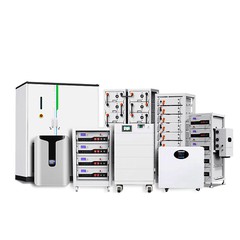


As a supplier of 48V batteries, I've had the privilege of working closely with these power sources, understanding their intricacies, and witnessing their widespread applications. While 48V batteries offer numerous advantages, such as high energy density, longer lifespan, and better performance in certain scenarios, it's essential to acknowledge that they also come with a set of disadvantages. In this blog post, I'll delve into the drawbacks of 48V batteries to provide a comprehensive view for potential users and decision-makers.
High Initial Cost
One of the most significant disadvantages of 48V batteries is their high initial cost. Compared to lower-voltage batteries, 48V batteries require more cells to achieve the desired voltage, which increases the manufacturing cost. Additionally, the components used in 48V battery systems, such as battery management systems (BMS) and chargers, are often more expensive due to the higher voltage requirements. This high upfront investment can be a deterrent for many consumers and businesses, especially those on a tight budget.
For example, a 48V 24Ah Lithium Ion Battery may cost significantly more than a lower-voltage battery with the same capacity. This price difference can make it challenging for small businesses or individuals to justify the purchase, even though the long-term benefits of a 48V battery may outweigh the initial cost.


Safety Concerns
Another drawback of 48V batteries is the increased safety risks associated with higher voltages. Higher voltages can pose a greater risk of electric shock, especially if the battery is not handled properly. In addition, 48V batteries are more prone to thermal runaway, a phenomenon where the battery overheats and can potentially lead to a fire or explosion. This is particularly true for lithium-ion batteries, which are commonly used in 48V applications.
To mitigate these safety risks, 48V battery systems require more sophisticated safety features, such as overcharge protection, over-discharge protection, and short-circuit protection. These safety features add to the cost and complexity of the battery system, further increasing the overall expense. Moreover, proper training and handling procedures are essential when working with 48V batteries to ensure the safety of users and the surrounding environment.
Compatibility Issues
48V batteries may also face compatibility issues with existing equipment and systems. Many older devices and appliances are designed to operate on lower voltages, such as 12V or 24V. Using a 48V battery with these devices may require additional converters or adapters, which can add to the cost and complexity of the system. In some cases, it may not be possible to retrofit existing equipment to work with a 48V battery, requiring the purchase of new devices.
For instance, if you want to use a 48V 20Ah Lithium Ion Battery in a vehicle that was originally designed for a 12V battery, you may need to install a voltage converter to step down the voltage. This converter not only adds to the cost but also introduces potential points of failure in the system.
Charging Infrastructure
The availability of a suitable charging infrastructure is another challenge for 48V batteries. Unlike lower-voltage batteries, which can be easily charged using standard household outlets or simple chargers, 48V batteries require specialized chargers that are designed to handle the higher voltage. These chargers are often more expensive and may not be as widely available as lower-voltage chargers.
In addition, the charging time for 48V batteries is typically longer than that of lower-voltage batteries. This is because the higher voltage requires a more controlled charging process to prevent overcharging and damage to the battery. As a result, users may need to plan their charging schedules more carefully and may experience longer downtime when the battery needs to be recharged.
Environmental Impact
While 48V batteries, especially lithium-ion batteries, are often considered more environmentally friendly than traditional lead-acid batteries, they still have an environmental impact. The production of lithium-ion batteries requires the extraction of rare earth metals, such as lithium, cobalt, and nickel, which can have significant environmental consequences, including habitat destruction, water pollution, and greenhouse gas emissions.
Moreover, the disposal of 48V batteries at the end of their lifespan can also pose environmental challenges. If not properly recycled, these batteries can release toxic chemicals into the environment, contaminating soil and water sources. Therefore, it's crucial to ensure that 48V batteries are recycled or disposed of in an environmentally responsible manner.
Limited Energy Storage Capacity
Despite their relatively high energy density, 48V batteries may still have limited energy storage capacity compared to larger battery systems. This can be a limitation for applications that require a large amount of energy storage, such as off-grid solar power systems or electric vehicles with long-range requirements.
For example, a 48V 35Ah Lithium Ion Battery may not be sufficient to power a large electric vehicle for an extended period. In such cases, multiple batteries may need to be connected in series or parallel to increase the energy storage capacity, which adds to the cost and complexity of the system.
Conclusion
In conclusion, while 48V batteries offer many advantages, they also come with a set of disadvantages that need to be carefully considered. The high initial cost, safety concerns, compatibility issues, charging infrastructure requirements, environmental impact, and limited energy storage capacity are all factors that can affect the suitability of 48V batteries for specific applications.
As a 48V battery supplier, I understand the importance of providing our customers with accurate and comprehensive information about the pros and cons of our products. We are committed to helping our customers make informed decisions based on their specific needs and requirements. If you have any questions or need further information about our 48V batteries, please feel free to contact us for a detailed discussion. We look forward to working with you to find the best battery solution for your application.
References
- Battery University. (n.d.). Lithium-ion Battery Basics. Retrieved from https://batteryuniversity.com/learn/article/lithium_ion_basics
- International Renewable Energy Agency. (2019). Renewable Energy and Electricity Storage. Retrieved from https://www.irena.org/publications/2019/May/Renewable-Energy-and-Electricity-Storage
- U.S. Department of Energy. (n.d.). Battery Charging Basics. Retrieved from https://www.energy.gov/eere/vehicles/articles/battery-charging-basics


