


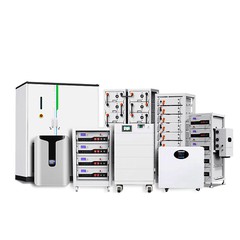



What are the safety features of battery cells?
As a leading supplier of battery cells, I understand the paramount importance of safety in the design and production of these essential energy storage devices. Battery cells are used in a wide range of applications, from small consumer electronics to large-scale energy storage systems, and ensuring their safety is crucial to protect users and the environment. In this blog post, I will discuss the key safety features of battery cells and how we incorporate them into our products.
1. Chemical Composition and Stability
The chemical composition of a battery cell plays a significant role in its safety. Different types of battery chemistries have varying levels of stability and potential risks. For example, lithium-ion batteries are widely used due to their high energy density and long cycle life, but they can be prone to thermal runaway if not properly managed.
We use advanced lithium iron phosphate (LiFePO4) chemistry in many of our battery cells, such as the 12V 4.5Ah LiFePO4 Lithium Battery. LiFePO4 is known for its excellent thermal stability and low risk of thermal runaway compared to other lithium-ion chemistries. It has a higher decomposition temperature, which means it is less likely to overheat and catch fire even under extreme conditions.


In addition to the choice of chemistry, we also carefully control the purity and quality of the raw materials used in our battery cells. Impurities in the materials can lead to internal short circuits or other safety issues, so we implement strict quality control measures to ensure the consistency and reliability of our products.
2. Separator Design
The separator is a critical component in a battery cell that separates the positive and negative electrodes and prevents short circuits. It is typically made of a porous polymer material that allows the flow of lithium ions while blocking the passage of electrons.
We use high-quality separators with excellent mechanical strength and thermal stability in our battery cells. These separators are designed to withstand high temperatures and prevent the growth of lithium dendrites, which can cause internal short circuits and lead to thermal runaway. In addition, our separators have a shutdown mechanism that activates at a certain temperature, closing the pores and stopping the flow of ions to prevent further overheating.
3. Overcharge and Overdischarge Protection
Overcharging and overdischarging are common causes of battery failure and safety issues. When a battery is overcharged, it can cause the electrodes to degrade, generate excessive heat, and even lead to a fire or explosion. Similarly, overdischarging can damage the battery and reduce its performance and lifespan.
To prevent overcharging and overdischarging, we incorporate built-in protection circuits in our battery cells. These circuits monitor the voltage and current of the battery and automatically cut off the charging or discharging process when the battery reaches its maximum or minimum voltage limits. Our protection circuits also include features such as overcurrent protection and short circuit protection to ensure the safety of the battery under various operating conditions.
4. Thermal Management
Thermal management is another important aspect of battery safety. High temperatures can accelerate the degradation of the battery materials, reduce the performance and lifespan of the battery, and increase the risk of thermal runaway. Therefore, it is essential to control the temperature of the battery during operation.
We use advanced thermal management systems in our battery cells to dissipate heat and maintain a stable operating temperature. These systems include cooling plates, heat sinks, and thermal insulation materials to transfer heat away from the battery and prevent overheating. In addition, we also monitor the temperature of the battery in real-time and adjust the charging and discharging rates to ensure the battery operates within a safe temperature range.
5. Packaging and Enclosure Design
The packaging and enclosure of a battery cell also play a role in its safety. The packaging is designed to protect the battery from physical damage, moisture, and other environmental factors, while the enclosure provides additional protection and containment in case of a battery failure.
We use robust and durable packaging materials that can withstand impact, vibration, and other mechanical stresses. Our packaging also includes features such as flame retardant materials and explosion-proof designs to prevent the spread of fire or explosion in case of a thermal runaway. In addition, our enclosures are designed to be leak-proof and prevent the release of hazardous materials in case of a battery failure.
6. Safety Testing and Certification
Before our battery cells are released to the market, they undergo rigorous safety testing and certification to ensure they meet the highest safety standards. We conduct a series of tests, including thermal abuse tests, overcharge tests, overdischarge tests, short circuit tests, and mechanical abuse tests, to evaluate the safety performance of our battery cells under various conditions.
Our battery cells are also certified by international standards organizations such as UL, CE, and IEC, which demonstrate their compliance with the relevant safety regulations and requirements. These certifications provide our customers with confidence in the safety and reliability of our products.
Conclusion
In conclusion, safety is a top priority in the design and production of battery cells. By incorporating the key safety features discussed above, we ensure that our battery cells are reliable, durable, and safe to use in a wide range of applications. As a battery cell supplier, we are committed to providing our customers with high-quality products that meet their energy storage needs while ensuring the safety of their users and the environment.
If you are interested in learning more about our battery cells or have any questions about their safety features, please feel free to contact us. We would be happy to discuss your specific requirements and provide you with a customized solution. Let's work together to power a safer and more sustainable future.
References
- [1] Wang, X., & Zhang, J. (2019). Safety issues and challenges of lithium-ion batteries. Journal of Power Sources, 433, 226727.
- [2] Chen, Z., & Liu, J. (2020). Thermal management of lithium-ion batteries for electric vehicles. Energy Storage Materials, 26, 362-377.
- [3] Zhang, S., & Wang, H. (2021). Advances in lithium-ion battery safety: A review. Journal of Energy Chemistry, 60, 1-21.


