


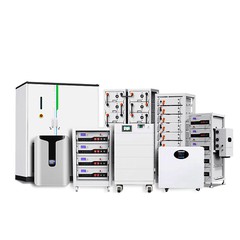


The amp - hour (Ah) rating of a 48V battery is a crucial parameter that determines its capacity and performance. As a 48V battery supplier, I've encountered numerous inquiries about this rating, and I'm here to shed light on what it means, how it impacts battery usage, and why it matters for different applications.
Understanding Amp - Hour Rating
The amp - hour rating of a battery represents the amount of charge the battery can deliver over a specified period. In simple terms, it's a measure of the battery's storage capacity. For example, a 48V battery with a 10Ah rating can theoretically supply a current of 10 amps for one hour, or 1 amp for 10 hours, or any other combination that multiplies to 10 amp - hours.
Mathematically, the relationship between current (I in amps), time (t in hours), and amp - hour rating (Ah) is given by the formula: Ah = I × t. This means that if you know the current draw of a device and the desired operating time, you can calculate the minimum amp - hour rating required for the battery.


Factors Affecting Amp - Hour Rating
Several factors can influence the actual amp - hour rating of a 48V battery. One of the most significant factors is the discharge rate. Batteries typically have a rated amp - hour capacity at a specific discharge rate, usually referred to as the C - rate. The C - rate is a measure of the rate at which the battery is discharged relative to its rated capacity. For instance, a 1C discharge rate means the battery is discharged at a current equal to its rated amp - hour capacity in one hour.
As the discharge rate increases, the effective amp - hour capacity of the battery decreases. This is because higher discharge rates generate more heat and cause internal resistance to increase, leading to a loss of available energy. For example, a 48V battery rated at 20Ah at a 0.2C discharge rate may only deliver 15Ah or less when discharged at a 1C rate.
Temperature also plays a crucial role in determining the amp - hour rating of a battery. Batteries perform best within a specific temperature range, typically between 20°C and 25°C (68°F and 77°F). At lower temperatures, the chemical reactions inside the battery slow down, reducing its capacity. Conversely, high temperatures can accelerate chemical reactions but also lead to increased self - discharge and reduced battery life.
Importance of Amp - Hour Rating in Different Applications
The amp - hour rating is a critical consideration for various applications that use 48V batteries. In electric vehicles, such as motorcycles and scooters, a higher amp - hour rating means longer range and less frequent charging. For example, a Motorcycle Battery 48V 22.5Ah can provide more power and a longer riding distance compared to a battery with a lower amp - hour rating.
In renewable energy systems, such as solar power storage, the amp - hour rating determines how much energy can be stored and used during periods of low sunlight or at night. A 48V 20Ah Lithium Ion Battery can store a significant amount of energy generated by solar panels, ensuring a continuous power supply for homes or small businesses.
For backup power systems, like uninterruptible power supplies (UPS), the amp - hour rating dictates how long the system can provide power in the event of a power outage. A 48V Motorcycle Charging Battery can be used as a reliable backup power source for motorcycles or other small - scale applications.
Choosing the Right Amp - Hour Rating
When selecting a 48V battery, it's essential to choose the right amp - hour rating based on your specific needs. Consider the following steps:
- Determine the power requirements of your device: Calculate the total power consumption of the device in watts by multiplying the voltage (48V) by the current draw in amps.
- Estimate the operating time: Decide how long you need the device to run on battery power.
- Calculate the required amp - hour rating: Use the formula Ah = (Power in watts × Operating time in hours) / Voltage (48V) to determine the minimum amp - hour rating needed.
- Consider safety margins: It's always a good idea to add a safety margin of 20 - 30% to the calculated amp - hour rating to account for factors like discharge rate and temperature effects.
Our Product Range
As a 48V battery supplier, we offer a wide range of batteries with different amp - hour ratings to meet the diverse needs of our customers. Our Motorcycle Battery 48V 22.5Ah is designed for high - performance motorcycles, providing reliable power and long - lasting performance. The 48V 20Ah Lithium Ion Battery is ideal for renewable energy storage and backup power applications, offering high energy density and fast charging capabilities. And our 48V Motorcycle Charging Battery is a cost - effective solution for motorcycle charging and short - term power needs.
Contact Us for Procurement
If you're in the market for a 48V battery and need assistance in choosing the right amp - hour rating for your application, we're here to help. Our team of experts can provide you with detailed product information, technical support, and competitive pricing. Whether you're a small business owner, an individual consumer, or a large - scale distributor, we can meet your battery needs. Contact us today to start the procurement process and find the perfect 48V battery for your requirements.
References
- Linden, D., & Reddy, T. B. (2002). Handbook of Batteries. McGraw - Hill.
- Berndt, D. (2000). Battery Technology Handbook. McGraw - Hill.
- Gregory, T. (2013). Electric Vehicle Technology Explained. John Wiley & Sons.


