




What is the amp - hour rating of a 60V battery?
As a supplier of 60V batteries, I often encounter questions from customers regarding the amp - hour (Ah) rating of these batteries. Understanding the amp - hour rating is crucial for anyone looking to purchase a 60V battery, whether it's for an electric vehicle, a power tool, or other applications.
Defining Amp - Hour Rating
The amp - hour rating of a battery is a measure of its charge capacity. In simple terms, it tells you how much current a battery can supply over a period of time. For example, a battery with a 1 - amp - hour rating can supply 1 ampere of current for 1 hour, or 0.5 amperes for 2 hours, or 2 amperes for 0.5 hours. Mathematically, the relationship between current (I in amperes), time (t in hours), and amp - hour rating (Ah) is given by the formula: Ah = I × t.
Let's take a real - world scenario. Suppose you have a 60V battery with a 10Ah rating. If you connect a device that draws a current of 2 amperes, the battery can theoretically power this device for 5 hours (since 10Ah / 2A = 5h). However, in practice, the actual runtime may be slightly less due to factors such as battery efficiency, temperature, and the age of the battery.
Importance of Amp - Hour Rating for 60V Batteries
For 60V batteries, the amp - hour rating is especially important because it directly impacts the performance and usability of the devices they power. In the case of electric vehicles, a higher amp - hour rating means a longer driving range. An electric scooter or motorcycle powered by a 60V battery with a larger Ah rating can travel farther on a single charge compared to one with a lower Ah rating.
In industrial applications, such as powering heavy - duty machinery, a 60V battery with a high amp - hour rating can ensure continuous operation for extended periods. This reduces downtime and increases productivity. For example, a forklift powered by a 60V battery with a large Ah rating can operate throughout a shift without the need for frequent recharging.
Different Amp - Hour Ratings Available for 60V Batteries
At our company, we offer a variety of 60V batteries with different amp - hour ratings to meet the diverse needs of our customers.
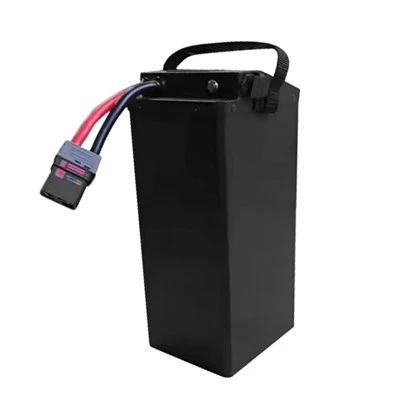
One of our popular products is the 60V 55Ah Lithium Ion Power Battery. This battery is ideal for high - performance electric vehicles, such as electric motorcycles. With its high amp - hour rating, it can provide a long driving range, making it suitable for both daily commuting and longer trips.
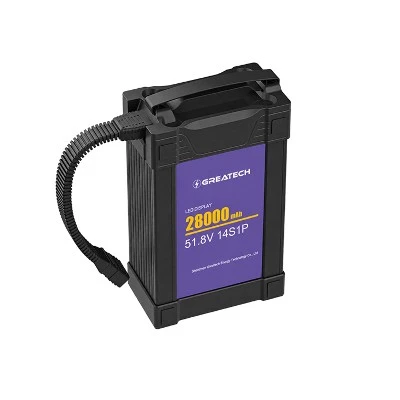
We also have the 60V 30Ah Lithium Battery For Electric Vehicles. This battery is a more budget - friendly option for those who don't require an extremely long range. It is commonly used in smaller electric scooters and some light - duty electric vehicles.
Another option is the 60V 50Ah Lithium Ion Power Battery. This battery strikes a balance between range and cost. It can power medium - sized electric vehicles and is also suitable for some industrial applications where a moderate amount of power is required over a reasonable period.


Factors Affecting the Amp - Hour Rating
Several factors can affect the actual amp - hour rating of a 60V battery. Temperature is one of the most significant factors. Batteries tend to perform better at moderate temperatures. In cold weather, the chemical reactions inside the battery slow down, which can reduce the available amp - hour capacity. On the other hand, extremely high temperatures can also damage the battery and reduce its performance over time.
The rate of discharge also plays a role. If a battery is discharged at a very high rate (i.e., a large current is drawn from it), the effective amp - hour rating may be lower than the rated value. This is because the battery may not be able to deliver all of its stored energy at such a high rate.
The age and usage history of the battery are also important. As a battery ages, its capacity gradually decreases. Frequent deep discharges and overcharging can also accelerate this process. Therefore, it's important to follow proper charging and usage guidelines to maintain the battery's amp - hour rating over time.
How to Choose the Right Amp - Hour Rating
When choosing a 60V battery, you need to consider your specific requirements. If you need a battery for an electric vehicle, think about your typical driving distance. If you usually take short trips around the city, a lower amp - hour rating may be sufficient. However, if you plan to take longer rides, a battery with a higher Ah rating is recommended.
In industrial applications, consider the power requirements of the machinery and the duration of operation. If the machinery needs to run continuously for long periods, a high - amp - hour battery is essential. You also need to consider your budget, as higher - amp - hour batteries generally cost more.
Contact Us for Your 60V Battery Needs
If you're in the market for a 60V battery, we're here to help. Our team of experts can assist you in choosing the right amp - hour rating for your specific application. We offer a wide range of high - quality 60V batteries with different amp - hour ratings to meet your needs. Whether you're an individual looking for a battery for your electric vehicle or a business in need of industrial - grade batteries, we have the solutions for you. Contact us to start the procurement process and let us help you find the perfect 60V battery for your requirements.
References
- Linden, D., & Reddy, T. B. (2002). Handbook of Batteries. McGraw - Hill.
- Rand, D. A. J., Moseley, P. T., Garche, J., & Ogumi, Z. (2004). Lithium Batteries: Science and Technology. Springer.