




What is the charging time for a 3s battery at different currents?
As a 3s battery supplier, I often receive inquiries from customers about the charging time of 3s batteries at different currents. Understanding this relationship is crucial for ensuring optimal battery performance, longevity, and safety. In this blog post, I'll delve into the factors affecting the charging time of 3s batteries and provide insights into how different charging currents can impact this process.
Understanding 3s Batteries
First, let's clarify what a 3s battery is. The "3s" designation refers to the number of cells connected in series within the battery pack. In a lithium - polymer (LiPo) battery, which is commonly used in robotics, drones, and RC vehicles, each cell has a nominal voltage of approximately 3.7V. Thus, a 3s LiPo battery has a nominal voltage of 3×3.7V = 11.1V.
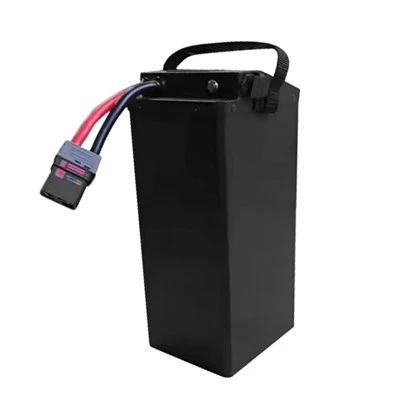
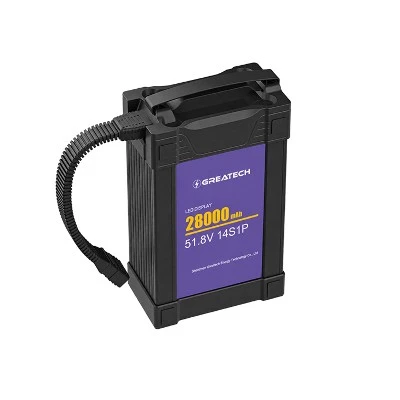
Some of the popular 3s battery products we offer include the 11.1V 5000mAh Lipo Battery, the 11.1V 6000mAh Lipo Battery, and the 11.1V 10000mAh Lipo Battery. These batteries vary in capacity, which is measured in milliamp - hours (mAh). The capacity indicates how much charge the battery can store, and it plays a significant role in determining the charging time.
The Basics of Charging Time Calculation
The basic formula for calculating the charging time of a battery is:
[T=\frac{C}{I}]
where (T) is the charging time in hours, (C) is the battery capacity in amp - hours (Ah), and (I) is the charging current in amperes (A).
It's important to note that this is a simplified formula. In reality, the charging process is more complex due to factors such as the charger's efficiency, the battery's state of charge when charging begins, and the charging algorithm used by the charger.
Let's take an example. Suppose we have a 11.1V 5000mAh Lipo Battery. First, we need to convert the capacity from milliamp - hours to amp - hours. Since 1Ah = 1000mAh, a 5000mAh battery has a capacity of (C = 5Ah).
If we charge this battery at a current of (I = 1A), using the formula (T=\frac{C}{I}), the theoretical charging time would be (T=\frac{5Ah}{1A}=5) hours. However, in practice, the charging time will be longer because the charger is not 100% efficient. Chargers typically have an efficiency ranging from 80% - 95%. Let's assume the charger has an efficiency of 90%. Then the actual charging time (T_{actual}) would be (T_{actual}=\frac{5Ah}{1A\times0.9}\approx5.56) hours.
Charging at Different Currents
Low - Current Charging
Charging a 3s battery at a low current, such as 0.5C (where (C) is the battery's capacity), is often considered a safe and gentle way to charge the battery. For a 5000mAh battery, a 0.5C charge current would be (I = 0.5\times5A = 2.5A).
The advantages of low - current charging are numerous. Firstly, it generates less heat during the charging process. Excessive heat can damage the battery's internal structure and reduce its lifespan. Secondly, low - current charging is more accurate in reaching the full charge state, which helps to maintain the battery's capacity over time.
However, the main drawback of low - current charging is the long charging time. Using the previous example of a 5000mAh battery and a 2.5A charging current, the theoretical charging time would be (T=\frac{5Ah}{2.5A}=2) hours. With a 90% charger efficiency, the actual charging time would be approximately (2.22) hours.
High - Current Charging
On the other hand, high - current charging can significantly reduce the charging time. For example, if we charge a 5000mAh battery at a 2C rate, the charging current would be (I = 2\times5A = 10A).
The theoretical charging time using the formula (T=\frac{C}{I}) would be (T=\frac{5Ah}{10A}=0.5) hours or 30 minutes. After accounting for a 90% charger efficiency, the actual charging time would be around 33 minutes.
But high - current charging also has its drawbacks. It generates a large amount of heat, which can cause the battery to swell, reduce its capacity, and even pose a safety risk if the battery is not properly designed or cooled. Additionally, high - current charging can accelerate the degradation of the battery's electrodes, leading to a shorter overall lifespan.
Factors Affecting Charging Time
Apart from the charging current and battery capacity, several other factors can affect the charging time of a 3s battery.
Battery State of Charge (SOC): If the battery starts at a lower state of charge, it will generally take longer to reach a full charge compared to a battery that starts at a higher SOC. For example, if a battery is at 20% SOC, it has 80% of its capacity to be charged, while a battery at 50% SOC only needs to be charged with 50% of its capacity.
Charger Type: Different chargers have different charging algorithms and efficiencies. Some chargers are designed for fast charging, while others prioritize safety and battery longevity. Smart chargers can adjust the charging current based on the battery's SOC and temperature, which can optimize the charging process.


Temperature: Battery charging is affected by temperature. Charging at low temperatures can slow down the chemical reactions inside the battery, leading to a longer charging time. On the other hand, charging at high temperatures can be dangerous and may damage the battery.
Conclusion
In conclusion, the charging time of a 3s battery at different currents is determined by multiple factors, including the battery capacity, charging current, charger efficiency, battery state of charge, charger type, and temperature. As a 3s battery supplier, we recommend a balanced approach to charging. Using a charger that matches the battery's specifications and following the manufacturer's guidelines can ensure that the battery is charged safely and efficiently, while also maximizing its lifespan.
If you are in the market for high - quality 3s batteries or have specific questions about battery charging, we would be delighted to engage in procurement discussions tailored to your needs. Our team of experts is ready to provide comprehensive advice and support to help you make the best choices for your applications.
References
- Battery University. "How to Prolong Lithium - based Batteries."
- Manufacturer's manuals for various 3s LiPo batteries.