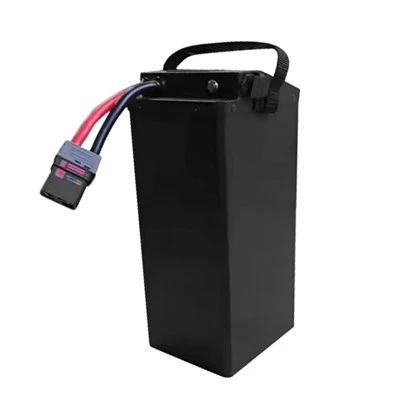



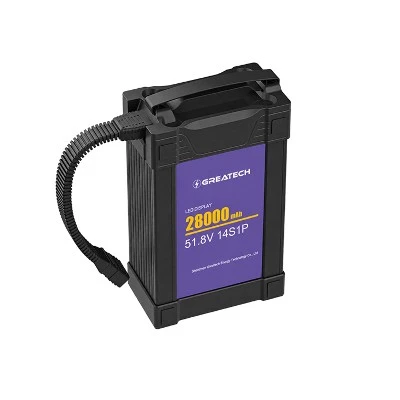


Hey there! As a supplier of 24V 150Ah batteries, I often get asked about the communication protocols supported by the battery management system (BMS) of these batteries. So, I thought I'd share some insights on this topic.
First off, let's understand why communication protocols are important for a BMS. A BMS is like the brain of a battery pack. It monitors and manages various parameters such as voltage, current, temperature, and state of charge (SOC) to ensure the safe and efficient operation of the battery. Communication protocols allow the BMS to exchange data with other devices, like chargers, inverters, or monitoring systems. This data exchange is crucial for optimizing the performance of the battery system and providing real - time information to the user.
Now, let's dive into the common communication protocols supported by a 24V 150Ah battery management system.
CAN (Controller Area Network)
CAN is one of the most popular communication protocols in the automotive and industrial sectors, and it's also widely used in battery management systems. The beauty of CAN lies in its robustness and high - speed data transfer capabilities. It can handle a large amount of data quickly, which is essential for a BMS that needs to monitor multiple battery cells and report their status in real - time.
CAN uses a differential signaling method, which means it's less susceptible to electromagnetic interference (EMI). This makes it suitable for use in environments where there are a lot of electrical noises, like in electric vehicles or industrial power systems.
For a 24V 150Ah battery, a CAN - enabled BMS can communicate with other CAN - compatible devices in the system, such as a vehicle's on - board computer or an industrial control unit. This allows for seamless integration and better control of the battery's charging and discharging processes. You can learn more about our 24V 150Ah Battery and how the CAN protocol enhances its performance.
Modbus
Modbus is another well - known communication protocol, especially in the industrial automation field. It's a simple and easy - to - implement protocol that uses a master - slave architecture. In a battery management system, the BMS can act as a slave device, and other devices like a monitoring system or a charger can act as the master.
Modbus supports both serial (RS - 232, RS - 485) and Ethernet communication. The serial version is often used in smaller systems where the distance between devices is relatively short, while the Ethernet version is suitable for larger, more distributed systems.


The advantage of Modbus is its wide compatibility. Many industrial devices and software applications support Modbus, so it's easy to integrate a 24V 150Ah battery with existing systems. It also has a simple data structure, which makes it easy to read and write data. For example, you can easily read the battery's voltage, current, and SOC values using a Modbus - compatible monitoring tool.
RS - 485
RS - 485 is a serial communication protocol that's commonly used for long - distance data transmission. It can support multiple slave devices on the same bus, which is useful in a battery system where you may have multiple BMS units or other sensors.
RS - 485 uses differential signaling, similar to CAN, which provides good immunity to EMI. It can transmit data over distances of up to several hundred meters, making it suitable for large - scale battery installations, such as in solar power storage systems or large industrial facilities.
In a 24V 150Ah battery management system, an RS - 485 interface allows the BMS to communicate with other devices located at a distance, like a central monitoring station. This enables remote monitoring and control of the battery system, which is very convenient for maintenance and troubleshooting.
Bluetooth
Bluetooth is a short - range wireless communication protocol that's widely used in consumer electronics. In recent years, it has also found its way into battery management systems. A Bluetooth - enabled BMS allows you to connect your smartphone or a tablet to the battery system using a dedicated app.
This gives you the ability to monitor the battery's status in real - time, set charging and discharging parameters, and receive alerts and notifications directly on your mobile device. It's a very user - friendly way to interact with the battery system, especially for small - scale applications like home energy storage systems or portable power packs.
However, the range of Bluetooth is limited, usually up to a few meters. So, it's more suitable for applications where you need to be in close proximity to the battery.
Comparison of Protocols
Each of these communication protocols has its own advantages and disadvantages. CAN is great for high - speed, high - volume data transfer in noisy environments. Modbus is simple and widely compatible, making it easy to integrate with existing systems. RS - 485 is suitable for long - distance communication, while Bluetooth offers a convenient way for users to interact with the battery system using a mobile device.
When choosing a 24V 150Ah battery, it's important to consider the communication protocol that best suits your application. If you're using the battery in an electric vehicle, CAN might be the best choice. For a home energy storage system, Bluetooth or Modbus could be more appropriate. And if you have a large - scale industrial installation, RS - 485 or CAN might be the way to go.
We also offer 24V 100Ah Battery and 24V 200Ah Battery options, which also come with various communication protocol support.
Conclusion
In conclusion, the communication protocol supported by a 24V 150Ah battery management system plays a crucial role in its performance and usability. Whether you need high - speed data transfer, long - distance communication, or user - friendly mobile access, there's a protocol that can meet your needs.
If you're in the market for a 24V 150Ah battery or have any questions about the communication protocols, feel free to reach out. We're here to help you choose the right battery and understand how the communication protocol can enhance its functionality. Contact us to start a procurement discussion and find the best solution for your power needs.
References
- "Controller Area Network (CAN) - A Tutorial", by Bosch.
- "Modbus Protocol Specification", Modbus Organization.
- "RS - 485 Standard", TIA/EIA.
- "Bluetooth Core Specification", Bluetooth Special Interest Group.