




Hey there! As a supplier of 24V 500Ah batteries, I often get asked about how these batteries stack up against other types. So, I thought I'd break it down for you in this blog post.
Capacity and Energy Storage
Let's start with the most obvious difference: capacity. A 24V 500Ah battery has a significantly higher capacity compared to many other common batteries. For example, a 24V 150Ah Battery has a much lower amp - hour rating. The amp - hour (Ah) rating basically tells you how much charge a battery can hold.
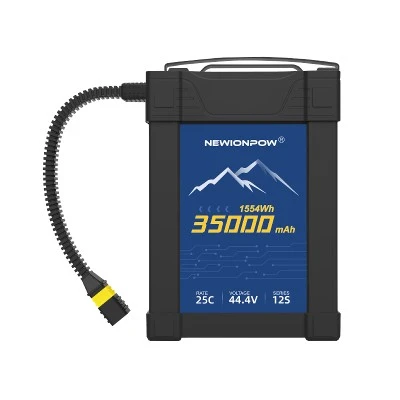
To calculate the energy stored in a battery, we use the formula E = V x Ah (where E is energy in watt - hours, V is voltage, and Ah is amp - hours). For a 24V 500Ah battery, the energy stored is E = 24V x 500Ah = 12000Wh or 12kWh. In contrast, a 24V 150Ah Battery stores E = 24V x 150Ah = 3600Wh or 3.6kWh. That's a huge difference!
This high energy storage capacity of the 24V 500Ah battery makes it ideal for applications that require a large amount of power over an extended period. Think of off - grid solar power systems, large electric vehicles, and industrial backup power supplies. On the other hand, a 24V 150Ah battery might be more suitable for smaller, less power - hungry applications like some small boats or certain types of RVs.
Physical Size and Weight
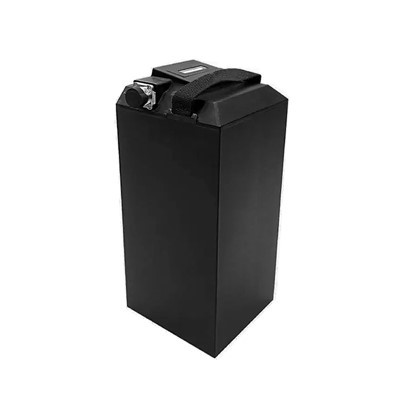
With a higher capacity, it's no surprise that a 24V 500Ah battery is generally larger and heavier than a 24V 150Ah battery. The physical size and weight can be a crucial factor, especially in applications where space and portability are important.
A 24V 500Ah battery might take up a significant amount of space in an installation. You'll need to make sure you have enough room to accommodate it safely. In comparison, a 24V 150Ah battery is much more compact and easier to handle. If you're working on a project with limited space, like a small mobile power setup, the smaller battery might be a better choice.


Discharge Rate
The discharge rate is another important aspect. Different batteries have different capabilities when it comes to how quickly they can release their stored energy. A 24V 500Ah battery can often handle higher discharge rates compared to a lower - capacity battery like the 24V 150Ah Battery.
In applications where there are sudden high - power demands, such as starting a large electric motor, the 24V 500Ah battery can provide the necessary power spike. The 24V 150Ah battery might struggle to deliver the same level of power in a short period, which could lead to issues like voltage drops or reduced performance.
Lifespan and Cycle Life
Battery lifespan is a big deal. A 24V 500Ah battery, when properly maintained, can have a relatively long lifespan. The cycle life, which is the number of charge - discharge cycles a battery can go through before its capacity significantly degrades, is also an important factor.
Higher - capacity batteries like the 24V 500Ah battery often have a better cycle life compared to lower - capacity ones. This means you can expect to use the 24V 500Ah battery for more charge - discharge cycles over its lifetime. For example, if you're using the battery in a solar power system where it gets charged and discharged daily, a 24V 500Ah battery will last longer and provide more reliable service in the long run.
Cost
Cost is always a consideration. Generally, a 24V 500Ah battery will cost more than a 24V 150Ah Battery. This is due to its higher capacity, larger size, and better performance characteristics. However, when you consider the long - term benefits, such as longer lifespan and higher energy storage, the 24V 500Ah battery can offer better value for money in certain applications.
If you need a battery for a large - scale project where you require a lot of power and long - term reliability, the initial investment in a 24V 500Ah battery might be well worth it. But if you're on a tight budget and only need a small amount of power, a 24V 150Ah battery could be a more cost - effective option.
Comparison with 24V 200Ah Battery
Let's also compare the 24V 500Ah battery with a 24V 200Ah Battery. The 24V 200Ah battery has a capacity of E = 24V x 200Ah = 4800Wh, which is still less than the 12000Wh of the 24V 500Ah battery.
In terms of physical size, the 24V 200Ah battery is likely to be smaller than the 24V 500Ah battery but larger than the 24V 150Ah battery. It can be a good middle - ground option for applications that need more power than a 24V 150Ah battery can provide but don't have the space or budget for a 24V 500Ah battery.
The discharge rate and cycle life of the 24V 200Ah battery will also fall somewhere between those of the 24V 150Ah and 24V 500Ah batteries. It might be suitable for medium - sized off - grid systems or some light industrial applications.
Applications
As mentioned earlier, the 24V 500Ah battery is great for large - scale applications. In off - grid solar power systems, it can store enough energy to power an entire home during the night or on cloudy days. In industrial settings, it can be used as a backup power source to keep critical equipment running in case of a power outage.
The 24V 150Ah Battery is more suited for smaller, mobile applications. It can power small appliances in an RV or a small electric boat. The 24V 200Ah Battery can be used in medium - sized off - grid cabins or some commercial vehicles that require a bit more power than a 24V 150Ah battery can offer.
Conclusion
So, there you have it! The 24V 500Ah battery stands out from other batteries in terms of capacity, energy storage, discharge rate, lifespan, and cost - effectiveness for certain applications. Whether you're looking for a battery for a large - scale project or a smaller mobile setup, it's important to understand these differences to make the right choice.
If you're interested in learning more about our 24V 500Ah Battery or have any questions about which battery is right for your needs, feel free to reach out. We're here to help you find the perfect battery solution for your project.
References
- Battery Technology Handbook
- Solar Power System Design Guides
- Industrial Battery Application Manuals