




Hey there! As a supplier of lipo batteries, I often get asked about the discharge rate of lipo batteries. So, I thought I'd take a few minutes to explain what it is, why it matters, and how it affects your battery's performance.
First things first, let's talk about what a lipo battery is. Lipo stands for lithium polymer, which is a type of rechargeable battery that uses a polymer electrolyte instead of a liquid one. This makes them lighter, more flexible, and more energy-dense than traditional lithium-ion batteries. Lipo batteries are commonly used in a variety of applications, including remote-controlled vehicles, drones, and portable electronics.
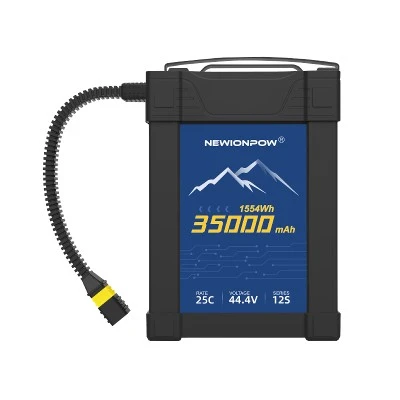
Now, let's get to the main topic: the discharge rate of a lipo battery. The discharge rate, also known as the C-rate, is a measure of how quickly a battery can discharge its energy. It's expressed as a multiple of the battery's capacity. For example, a 1C discharge rate means that the battery can discharge its entire capacity in one hour. A 2C discharge rate means that the battery can discharge its entire capacity in half an hour, and so on.
So, why does the discharge rate matter? Well, it all comes down to the application. Different devices have different power requirements, and the discharge rate of a battery determines how well it can meet those requirements. For example, if you're using a lipo battery to power a high-performance drone, you'll need a battery with a high discharge rate to provide the sudden bursts of power needed for takeoff, acceleration, and maneuvering. On the other hand, if you're using a lipo battery to power a low-power device like a remote control car, you can get away with a battery with a lower discharge rate.


Let's take a closer look at how the discharge rate affects a battery's performance. When a battery discharges at a high C-rate, it generates more heat and experiences more internal resistance. This can cause the battery to lose some of its capacity over time and can even damage the battery if it's pushed too hard. That's why it's important to choose a battery with a discharge rate that's appropriate for your application.
To give you a better idea of how the discharge rate works in real-world applications, let's look at some examples. Let's say you have a 3.7V 10000mAh Lipo Battery with a 2C discharge rate. This means that the battery can discharge at a rate of 20 amps (2 x 10 amps, since the battery's capacity is 10 amps per hour). If you're using this battery to power a device that requires a constant current of 10 amps, the battery will last for about an hour (since it's discharging at a 1C rate). However, if you're using the battery to power a device that requires a sudden burst of 20 amps, the battery will be able to provide that power for a short period of time, but it will discharge more quickly and may overheat if it's used for too long at that rate.
Another example is the 3.7V 5Ah Lipo Battery. Let's say this battery has a 5C discharge rate. This means that the battery can discharge at a rate of 25 amps (5 x 5 amps). If you're using this battery to power a device that requires a constant current of 5 amps, the battery will last for about an hour. But if you need a sudden burst of 25 amps, the battery will be able to provide that power for a short period of time.
Now, let's talk about high-rate lipo batteries. These are batteries that are designed to have a very high discharge rate, typically 10C or higher. High-rate lipo batteries are commonly used in applications that require a lot of power, such as racing drones, high-performance RC cars, and electric airplanes. One example of a high-rate lipo battery is the 3.7V 10Ah 15C High Rate Polymer Battery Soft Pack Lithium. With a 15C discharge rate, this battery can discharge at a rate of 150 amps (15 x 10 amps), making it suitable for applications that require a lot of power.
When choosing a lipo battery, it's important to consider not only the discharge rate but also other factors such as the battery's capacity, voltage, and cycle life. The capacity of a battery determines how much energy it can store, while the voltage determines the power output. The cycle life of a battery refers to the number of charge and discharge cycles it can withstand before its performance starts to degrade.
In addition to these factors, it's also important to follow proper charging and discharging procedures to ensure the safety and longevity of your lipo batteries. Always use a charger that's designed for lipo batteries and follow the manufacturer's instructions carefully. Overcharging or discharging a lipo battery can cause it to overheat, catch fire, or even explode, so it's crucial to take the necessary precautions.
If you're in the market for lipo batteries, whether it's for a hobby project or a commercial application, I'd love to help. As a supplier, I have a wide range of lipo batteries with different capacities, discharge rates, and voltages to meet your specific needs. We can work together to find the right battery for your application and ensure that you get the best performance and value for your money. If you're interested in learning more or discussing your requirements, feel free to reach out. We're here to assist you with all your lipo battery needs.
References
- Battery University: A great resource for in - depth information on battery technology, including lipo batteries.
- Various manufacturers' datasheets for lipo batteries which provide detailed specifications on discharge rates and other performance parameters.