


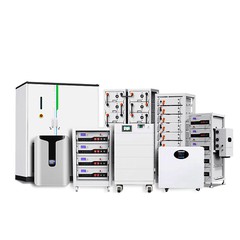


As a supplier of 5kWh batteries, I often encounter inquiries about the efficiency of these energy storage solutions. Understanding the efficiency of a 5kWh battery is crucial for consumers, businesses, and industries looking to optimize their energy usage and reduce costs. In this blog post, I will delve into the concept of battery efficiency, explore the factors that affect it, and highlight the benefits of our 5kWh batteries.
What is Battery Efficiency?
Battery efficiency refers to the ratio of the energy output of a battery to the energy input required to charge it. It is typically expressed as a percentage and is a measure of how effectively a battery can store and release energy. A higher efficiency means that less energy is lost during the charging and discharging process, resulting in more usable energy for the end - user.
Mathematically, battery efficiency (η) can be calculated using the formula:
η = (Energy output / Energy input) × 100%
For example, if a 5kWh battery requires 6kWh of energy to charge fully and can deliver 4.5kWh of energy when discharged, its efficiency would be:
η = (4.5kWh / 6kWh) × 100% = 75%


Factors Affecting the Efficiency of a 5kWh Battery
Several factors can influence the efficiency of a 5kWh battery. These include:
1. Battery Chemistry
Different battery chemistries have varying levels of efficiency. For instance, lithium - ion batteries are known for their high efficiency, typically ranging from 85% to 95%. They have low self - discharge rates and can charge and discharge quickly with minimal energy loss. On the other hand, lead - acid batteries, although more affordable, have lower efficiency, usually between 70% and 80%. This is due to their internal resistance, which causes heat generation and energy loss during charging and discharging.
2. Charging and Discharging Rates
The rate at which a battery is charged and discharged can significantly impact its efficiency. Charging a battery too quickly can lead to overheating and increased internal resistance, resulting in energy loss. Similarly, discharging a battery at a high rate can also reduce its efficiency. Our 5kWh batteries are designed to operate optimally within a specific range of charging and discharging rates, ensuring maximum efficiency.
3. Temperature
Temperature plays a crucial role in battery efficiency. Batteries tend to perform best within a certain temperature range. Extreme cold or hot temperatures can reduce the efficiency of a battery. In cold temperatures, the chemical reactions within the battery slow down, increasing internal resistance and reducing the available energy. In hot temperatures, the battery may experience accelerated degradation and increased self - discharge. Our 5kWh batteries are equipped with advanced thermal management systems to maintain an optimal operating temperature and ensure high efficiency.
4. Depth of Discharge (DoD)
The depth of discharge refers to the percentage of the battery's capacity that is used during a discharge cycle. A higher DoD can reduce the battery's efficiency and lifespan. Our 5kWh batteries are designed to be operated at a moderate DoD to maximize efficiency and longevity.
Benefits of Our 5kWh Batteries
Our 5kWh batteries offer several advantages in terms of efficiency and performance:
1. High Efficiency
Our batteries are based on advanced lithium - ion technology, which provides high efficiency, typically above 90%. This means that you can get more usable energy from each charge, reducing your overall energy costs.
2. Long Lifespan
Thanks to our innovative battery management system and optimized design, our 5kWh batteries have a long lifespan. They can withstand a large number of charge - discharge cycles without significant degradation in efficiency, ensuring a reliable and cost - effective energy storage solution.
3. Versatility
Our 5kWh batteries are suitable for a wide range of applications, including residential energy storage, off - grid power systems, and backup power for businesses. Whether you want to store excess solar energy during the day for use at night or have a reliable backup power source during outages, our batteries can meet your needs.
4. Safety
Safety is our top priority. Our batteries are equipped with multiple safety features, such as over - charge protection, over - discharge protection, and short - circuit protection. This ensures that the batteries operate safely and efficiently at all times.
Comparing with Other Battery Capacities
In addition to our 5kWh batteries, we also offer 3KWh Energy Storage Battery and 15KWh Energy Storage Battery. The choice of battery capacity depends on your specific energy requirements.
The 3kWh battery is a more compact and cost - effective option for small - scale applications, such as powering a few essential appliances in a residential setting. It has similar efficiency characteristics to our 5kWh battery but with a lower energy storage capacity.
The 15kWh battery, on the other hand, is suitable for larger energy storage needs, such as powering an entire household or a small business. It offers a higher energy storage capacity while maintaining high efficiency.
Conclusion
The efficiency of a 5kWh battery is a critical factor to consider when choosing an energy storage solution. Our 5kWh batteries, with their high efficiency, long lifespan, versatility, and safety features, are an excellent choice for various applications. Whether you are looking to reduce your energy bills, increase your energy independence, or have a reliable backup power source, our batteries can meet your requirements.
If you are interested in learning more about our 5KWh Energy Storage Battery or would like to discuss your specific energy storage needs, please feel free to contact us. We are ready to assist you in finding the best energy storage solution for your situation.
References
- Linden, D., & Reddy, T. B. (2002). Handbook of Batteries. McGraw - Hill.
- Kousksou, T., Jorio, A., & Dubé, L. (2014). Energy storage systems: Characteristics and comparisons. Renewable and Sustainable Energy Reviews, 39, 554 - 568.
- Tarascon, J. M., & Armand, M. (2001). Issues and challenges facing rechargeable lithium batteries. Nature, 414(6861), 359 - 367.


