




As a supplier of 72V batteries, I often encounter inquiries from customers about the open - circuit voltage of a 72V battery. In this blog, I'll delve into the concept of open - circuit voltage, explain what it means for a 72V battery, and provide some practical insights for those in the market for these batteries.
Understanding Open - Circuit Voltage
Open - circuit voltage (OCV), also known as the electromotive force (EMF), is the voltage of a battery when it is not connected to a load. In other words, it is the potential difference between the battery's positive and negative terminals when there is no current flowing through the circuit. This value is crucial as it gives an indication of the battery's state of charge and its overall health.
The open - circuit voltage of a battery is determined by the electrochemical reactions taking place within it. Different battery chemistries have different characteristic open - circuit voltages. For example, a fully charged lead - acid battery has an open - circuit voltage of around 2.1 volts per cell. Since a 12V lead - acid battery typically consists of six cells connected in series, its open - circuit voltage when fully charged is approximately 12.6 volts.
Open - Circuit Voltage of a 72V Battery
A 72V battery is not a single cell but rather a series - connected battery pack. The open - circuit voltage of a 72V battery depends on the type of battery chemistry. Let's take a look at some common battery chemistries used in 72V battery packs.
Lithium - Iron Phosphate (LiFePO4) Batteries
LiFePO4 batteries are widely used in various applications, including electric vehicles, solar energy storage, and electric motorcycles, due to their high energy density, long cycle life, and enhanced safety features.
A single LiFePO4 cell has an open - circuit voltage of around 3.2 - 3.3 volts when fully charged. To achieve a 72V battery pack, approximately 23 LiFePO4 cells are connected in series (since 23 * 3.2V = 73.6V). So, a fully charged 72V LiFePO4 battery pack will have an open - circuit voltage of around 73 - 75 volts. As the battery discharges, the open - circuit voltage will gradually decrease. When the battery is fully discharged, the open - circuit voltage of a LiFePO4 cell drops to about 2.5 volts. For a 72V LiFePO4 battery pack, the fully - discharged open - circuit voltage will be around 57.5 volts (2.5V * 23 cells).
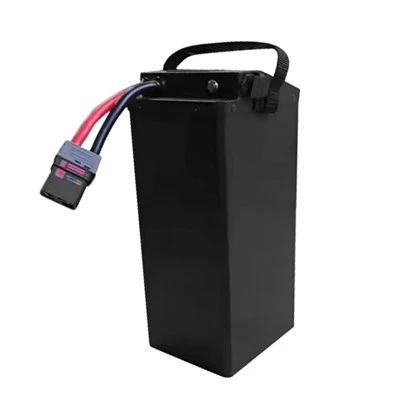
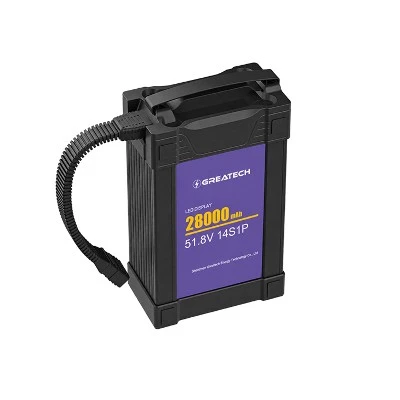
If you are interested in our 72V 100Ah LiFePo4 Battery, 72V 50Ah LiFePo4 Battery, or 72V 30Ah LiFePo4 Battery, you can find more detailed information on our website.
Lead - Acid Batteries
In the case of lead - acid batteries, a single cell has an open - circuit voltage of about 2.1 volts when fully charged. To get a 72V battery pack, 36 lead - acid cells need to be connected in series (36 * 2.1V = 75.6V). So, a fully charged 72V lead - acid battery pack will have an open - circuit voltage of around 75 - 76 volts. When the battery is fully discharged, the open - circuit voltage of a lead - acid cell drops to about 1.75 volts. For a 72V lead - acid battery pack, the fully - discharged open - circuit voltage will be around 63 volts (1.75V * 36 cells).
Importance of Measuring Open - Circuit Voltage
Measuring the open - circuit voltage of a 72V battery is an important diagnostic tool for several reasons:
State of Charge (SOC) Estimation
The open - circuit voltage is directly related to the state of charge of the battery. By measuring the open - circuit voltage, you can estimate how much charge is left in the battery. For example, in a LiFePO4 battery, if the open - circuit voltage is around 73 - 75 volts, the battery is fully charged. As the voltage drops, the state of charge decreases. However, it's important to note that the relationship between open - circuit voltage and state of charge is not always linear, especially in some battery chemistries.


Battery Health Assessment
A significant deviation from the expected open - circuit voltage can indicate a problem with the battery. For instance, if a fully charged 72V LiFePO4 battery has an open - circuit voltage much lower than the expected 73 - 75 volts, it could mean that one or more cells in the battery pack are faulty or have degraded. This could be due to overcharging, over - discharging, or internal short - circuits.
System Design and Compatibility
When designing a system that uses a 72V battery, it's essential to know the open - circuit voltage range. This information helps in selecting the appropriate components, such as chargers, inverters, and motors, that can handle the voltage levels of the battery.
How to Measure Open - Circuit Voltage
Measuring the open - circuit voltage of a 72V battery is a relatively straightforward process, but it should be done with caution:
- Ensure Safety: Before measuring the voltage, make sure the battery is disconnected from any load and charger. Wear appropriate safety gear, such as gloves and goggles, especially when dealing with lead - acid batteries, as they can contain corrosive electrolytes.
- Use a Multimeter: Set the multimeter to the DC voltage measurement mode with a range higher than the expected open - circuit voltage of the battery. Connect the positive probe of the multimeter to the positive terminal of the battery and the negative probe to the negative terminal.
- Take the Reading: Wait for a few seconds until the multimeter stabilizes and then record the voltage reading.
Conclusion
In conclusion, the open - circuit voltage of a 72V battery is a key parameter that provides valuable information about the battery's state of charge, health, and compatibility with electrical systems. The open - circuit voltage depends on the battery chemistry, with LiFePO4 and lead - acid batteries having different characteristic voltage ranges.
If you are in the market for high - quality 72V batteries, we are here to assist you. Our 72V 100Ah LiFePo4 Battery, 72V 50Ah LiFePo4 Battery, and 72V 30Ah LiFePo4 Battery are designed to meet the diverse needs of our customers. We welcome you to contact us for more information and to discuss your specific requirements. Our team of experts is ready to provide you with professional advice and support throughout the purchasing process.
References
- Linden, D., & Reddy, T. B. (2002). Handbook of Batteries (3rd ed.). McGraw - Hill.
- Tarascon, J. M., & Armand, M. (2001). Issues and challenges facing rechargeable lithium batteries. Nature, 414(6861), 359 - 367.