




Hey there, folks! As a supplier of 60V batteries, I often get asked about the output power of these bad boys. So, I thought I'd sit down and write a blog post to clear up any confusion and give you all the deets.
First things first, let's talk about what output power actually means. In simple terms, output power is the amount of energy a battery can deliver over a certain period of time. It's usually measured in watts (W) and is a crucial factor when it comes to determining how well a battery will perform in a particular application.
Now, when it comes to 60V batteries, the output power can vary depending on a few different factors. One of the main factors is the battery's capacity, which is typically measured in ampere-hours (Ah). The higher the capacity, the more energy the battery can store and deliver, which generally means a higher output power.
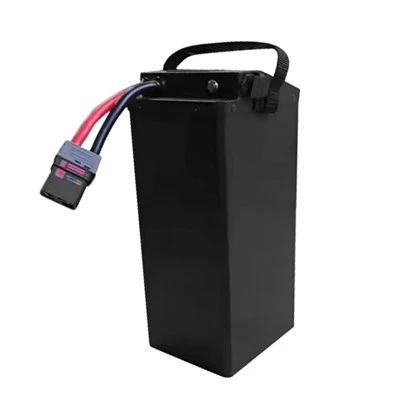
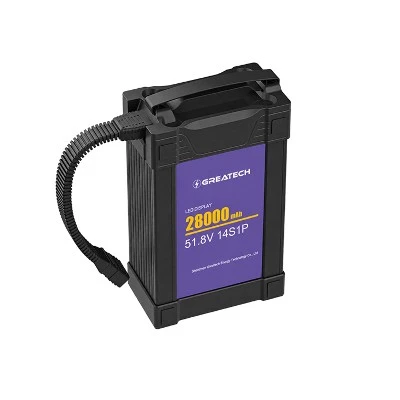
Let's take a look at a few examples of our 60V batteries and their output power. We have the 60V 30Ah Lithium Ion Power Battery, the 60V 50Ah Lithium Ion Power Battery, and the 60V 20Ah Lithium Ion Power Battery.
To calculate the output power of a battery, you can use the following formula: Power (W) = Voltage (V) x Current (A).
For the 60V 30Ah battery, if we assume a discharge rate of 1C (which means the battery is discharged at a rate equal to its capacity in one hour), the current would be 30A. Using the formula, the output power would be 60V x 30A = 1800W.
For the 60V 50Ah battery, with a 1C discharge rate, the current would be 50A, and the output power would be 60V x 50A = 3000W.
And for the 60V 20Ah battery, at a 1C discharge rate, the current would be 20A, and the output power would be 60V x 20A = 1200W.
It's important to note that these are just theoretical calculations based on a 1C discharge rate. In real-world applications, the discharge rate can vary depending on the device the battery is powering. For example, if a device requires a high current draw, the battery may discharge at a higher rate, which could affect the output power and the battery's overall performance.


Another factor that can affect the output power of a 60V battery is its internal resistance. A battery with a lower internal resistance can deliver power more efficiently, which means it can provide a higher output power. Our lithium-ion batteries are designed with low internal resistance to ensure optimal performance and high output power.
So, why is the output power of a 60V battery so important? Well, it all comes down to the application. Different devices have different power requirements, and choosing a battery with the right output power is crucial for ensuring that the device operates properly.
For example, if you're using a 60V battery to power an electric motorcycle, you'll need a battery with a high output power to provide enough energy to drive the motor and achieve the desired speed and performance. On the other hand, if you're using a 60V battery to power a small electronic device, a lower output power battery may be sufficient.
As a 60V battery supplier, we understand the importance of providing our customers with high-quality batteries that meet their specific power requirements. That's why we offer a range of 60V batteries with different capacities and output powers to suit a variety of applications.
Whether you're in the market for a 60V battery for your electric vehicle, power tool, or any other device, we've got you covered. Our batteries are built to last, with advanced lithium-ion technology that provides long cycle life, high energy density, and excellent performance.
If you're interested in learning more about our 60V batteries or have any questions about output power or battery selection, don't hesitate to reach out. We're here to help you find the perfect battery solution for your needs. Just drop us a line, and we'll be happy to assist you with your purchase and answer any questions you may have.
In conclusion, the output power of a 60V battery is an important factor to consider when choosing a battery for your application. By understanding how output power is calculated and the factors that can affect it, you can make an informed decision and select a battery that provides the right amount of power for your device.
Thanks for reading, and I hope this blog post has been helpful. If you have any more questions or need further information, feel free to leave a comment below or contact us directly. We look forward to hearing from you and helping you find the perfect 60V battery for your project.
References:
- Physics textbooks for basic electrical formulas
- Battery industry standards and research on lithium-ion battery performance