




As a supplier of 24V 500Ah batteries, I often encounter inquiries from customers about the response time of these batteries to load changes. Understanding this aspect is crucial for various applications, such as renewable energy systems, electric vehicles, and backup power supplies. In this blog post, I will delve into the factors influencing the response time of a 24V 500Ah battery and provide insights based on our experience in the industry.
Understanding Battery Response Time
The response time of a battery refers to the time it takes for the battery to adjust its output voltage and current to meet the changing demands of a load. When a load is suddenly connected or disconnected, the battery needs to react quickly to maintain a stable power supply. A fast response time is essential to prevent voltage drops or surges that could damage the connected equipment or disrupt the operation of the system.
Factors Affecting Response Time
Several factors can influence the response time of a 24V 500Ah battery. These include:
Battery Chemistry
The type of battery chemistry plays a significant role in determining the response time. Different chemistries have different charge and discharge characteristics, which affect how quickly the battery can deliver or absorb energy. For example, lithium-ion batteries generally have a faster response time compared to lead-acid batteries due to their higher power density and lower internal resistance.
State of Charge (SOC)
The state of charge of the battery also affects its response time. A battery that is fully charged or nearly fully charged can typically respond more quickly to load changes than a battery that is deeply discharged. This is because a fully charged battery has more available energy and can deliver it more efficiently.
Temperature
Temperature has a significant impact on battery performance, including response time. Batteries operate best within a specific temperature range, and extreme temperatures can slow down the chemical reactions inside the battery, reducing its ability to respond quickly to load changes. In cold temperatures, the internal resistance of the battery increases, which can lead to a slower response time.
Battery Age and Health
As a battery ages, its performance gradually deteriorates, including its response time. Over time, the internal components of the battery can degrade, leading to increased internal resistance and reduced capacity. A battery that is in poor health or has been subjected to excessive cycling may also have a slower response time.
Load Characteristics
The characteristics of the load, such as its power demand and the rate of change in power demand, can also affect the response time of the battery. A load that requires a large amount of power suddenly, such as a high-power motor or a large electronic device, may require a battery with a faster response time to avoid voltage drops.


Measuring Response Time
Measuring the response time of a 24V 500Ah battery can be challenging, as it requires specialized equipment and techniques. However, there are a few ways to estimate the response time:
Step Load Testing
Step load testing involves applying a sudden change in load to the battery and measuring the time it takes for the battery to reach a new steady-state voltage. This test can provide a rough estimate of the battery's response time.
Transient Response Analysis
Transient response analysis involves analyzing the battery's response to a short-duration, high-amplitude load pulse. This technique can provide more detailed information about the battery's dynamic behavior and response time.
Importance of Response Time in Different Applications
The response time of a 24V 500Ah battery is crucial in various applications. Here are a few examples:
Renewable Energy Systems
In renewable energy systems, such as solar or wind power systems, the battery is used to store excess energy generated during periods of low demand and release it during periods of high demand. A fast response time is essential to ensure that the battery can quickly absorb or deliver energy as needed to maintain a stable power supply.
Electric Vehicles
In electric vehicles, the battery is the primary source of power. A fast response time is necessary to provide instant acceleration and to handle sudden changes in power demand, such as when climbing a hill or passing another vehicle.
Backup Power Supplies
Backup power supplies, such as uninterruptible power supplies (UPS), are used to provide emergency power in the event of a power outage. A fast response time is critical to ensure that the backup power is available immediately and that the connected equipment is not damaged by a sudden loss of power.
Our 24V 500Ah Battery Offerings
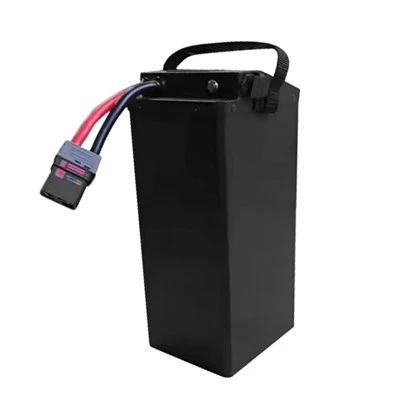
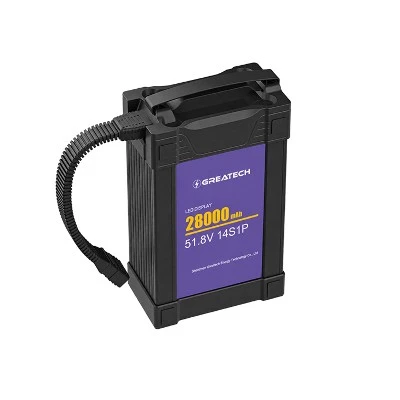
As a supplier of 24V 500Ah batteries, we offer a range of high-quality batteries designed to meet the needs of various applications. Our batteries are available in different chemistries, including lithium-ion and lead-acid, to provide customers with options based on their specific requirements.
In addition to our 24V 500Ah batteries, we also offer 24V 100Ah Battery, 24V 300Ah Battery, and 24V 400Ah Battery to provide customers with a wider range of options.
Conclusion
The response time of a 24V 500Ah battery is an important factor to consider when selecting a battery for your application. By understanding the factors that affect response time and choosing a battery that is suitable for your specific requirements, you can ensure that your battery can provide a stable and reliable power supply.
If you have any questions about our 24V 500Ah batteries or need help selecting the right battery for your application, please feel free to contact us. We are here to assist you and provide you with the best possible solutions.
References
- Battery University. (n.d.). Understanding Battery Response Time. Retrieved from [URL]
- IEEE Standards Association. (n.d.). IEEE Standard for Battery Energy Storage Systems. Retrieved from [URL]
- National Renewable Energy Laboratory. (n.d.). Battery Performance and Characterization. Retrieved from [URL]