






Battery Cells: The Heart of Lithium-Ion Technology
At the core of any battery are the cells, where electrochemical reactions occur. A cell consists of a positive electrode (cathode), negative electrode (anode), separator, and electrolyte. Lithium ions shuttle between the cathode and anode during charging and discharging.
Lithium-ion batteries are categorized by cathode materials:
Lithium Manganese Oxide (LMO): Affordable at $50-60 per kg, but with shorter lifespan (≥300 cycles) and higher monthly degradation (5%+).
Nickel Manganese Cobalt (NMC): Balanced performance, priced at $160-200 per kg, with ≥600 cycles and low degradation (1-2%). Popular variants like NMC 811 offer high energy density but require careful balancing for stability.
Lithium Iron Phosphate (LFP): Excellent safety and longevity (≥1500 cycles) at $150-180 per kg, though with lower energy density and poor cold-weather performance.
Here's a comparison table based on 2025 data:
| Battery Type | Price per Ton (USD) | Cycle Life | Monthly Degradation | Key Advantages | Key Drawbacks |
|---|---|---|---|---|---|
| LMO | 50,000-60,000 | ≥300 | 5%+ | Low cost, good high-temp performance | Poor longevity, safety risks |
| NMC | 160,000-200,000 | ≥600 | 1-2% | High energy density, balanced performance | Higher cost, cobalt dependency |
| LFP | 150,000-180,000 | ≥1500 | 3% | Superior safety, long life | Low energy density, poor low-temp |
| Characteristics of different lithium-ion battery systems | |||
| Positive electrode system | |||
| Material parameters | Lithium Manganese Oxide (LMO) | Lithium-ion ternary battery | lithium iron phosphate battery |
| Capacity mAh/g | 90~100 | 135~160 | 120~140 |
| Typical capacity of 18650 single unit | 1300 mAh | 2000 mAh | 1400mAh |
| Average battery discharge voltage | 3.70V | 3.60V | 3.20V |
| Battery pack cycle life | ≥3300 | ≥3600 | ≥1500 |
Cells come in shapes like cylindrical (e.g., 18650, 21700), prismatic (square), and pouch (soft-pack).
Battery degradation affects performance (e.g., reduced range) and safety. Real-world example: After 100,000 miles, an EV might see a 10-15% capacity loss, but advanced cells like LFP minimize this.
What Is a Battery Pack?
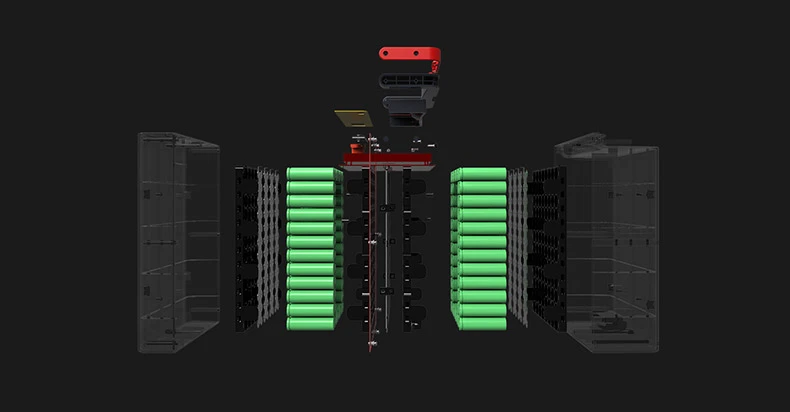
A battery pack is the complete assembly that powers an EV, integrating multiple components for optimal performance. It typically includes battery modules, a thermal management system, a battery management system (BMS), electrical systems, and structural elements. These work together to ensure safety, efficiency, and longevity.
Key benefits of modern battery packs:
Enhanced Safety: Built-in cooling systems prevent overheating.
Efficiency Gains: Optimized space utilization boosts energy density.
Sustainability: Recyclable materials align with global green initiatives.
Battery Modules: The Building Blocks
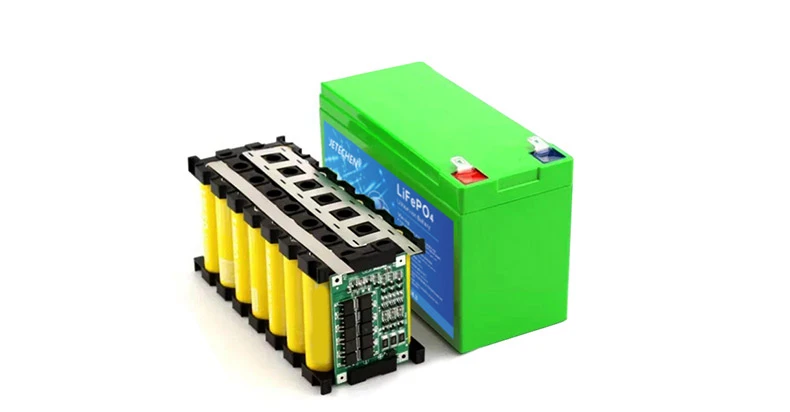
Battery modules serve as intermediate units between individual cells and the full pack. They combine lithium-ion cells in series or parallel configurations, incorporating monitoring devices for voltage and temperature control. Modules often include control boards (part of the BMS), conductive connectors, plastic frames, cooling plates, and fasteners.
Modules simplify maintenance and enhance safety by allowing easier cell management. For example, in high-volume production lines, modules enable quick swaps during repairs, reducing downtime for EV owners. Industry trends show that module designs are evolving to support higher energy densities, with some achieving up to 20% more efficiency through better thermal management.
Battery Cells: The Heart of Lithium-Ion Technology
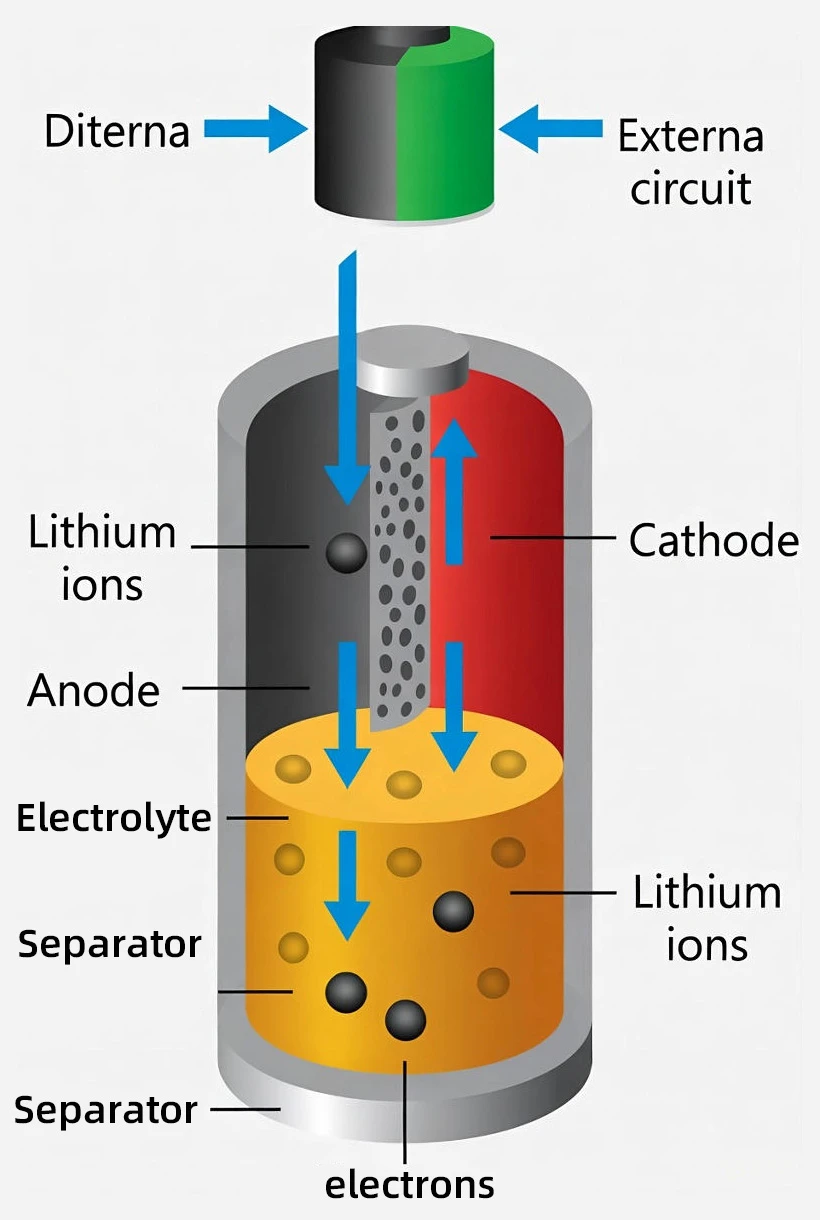
At the core of any battery are the cells, where electrochemical reactions occur. A cell consists of a positive electrode (cathode), negative electrode (anode), separator, and electrolyte. Lithium ions shuttle between the cathode and anode during charging and discharging.
Lithium-ion batteries are categorized by cathode materials:
Lithium Manganese Oxide (LMO): Affordable at $50-60 per kg, but with shorter lifespan (≥300 cycles) and higher monthly degradation (5%+).
Nickel Manganese Cobalt (NMC): Balanced performance, priced at $160-200 per kg, with ≥600 cycles and low degradation (1-2%). Popular variants like NMC 811 offer high energy density but require careful balancing for stability.
Lithium Iron Phosphate (LFP): Excellent safety and longevity (≥1500 cycles) at $150-180 per kg, though with lower energy density and poor cold-weather performance.
Cells come in shapes like cylindrical (e.g., 18650, 21700), prismatic (square), and pouch (soft-pack).
Battery degradation affects performance (e.g., reduced range) and safety. Real-world example: After 100,000 miles, an EV might see a 10-15% capacity loss, but advanced cells like LFP minimize this.
Battery Management System (BMS): The Brain Behind the Power
The BMS monitors and manages the battery's state of charge (SOC), temperature, and cell balancing. It provides drivers with remaining range estimates, prevents overcharging, and ensures even voltage distribution across cells despite manufacturing variances.
In scenarios like extreme weather, the BMS activates cooling fans or heaters. For instance, during a hot summer drive, it might limit power output to avoid thermal runaway. Data from the IEA highlights that effective BMS can extend battery life by 20-30%.
Emerging Trends in Battery Technology for 2025 and Beyond
Battery innovation is accelerating to meet demands for longer range, faster charging, and lower costs.
Cobalt-Free Batteries
Cobalt-free options, like LMFP (Lithium Manganese Iron Phosphate), reduce reliance on volatile cobalt supplies, mostly from the Democratic Republic of Congo. These batteries cut costs by 20-30% and improve thermal stability. Case study: Gotion High Tech's 2024 LMFP battery enters mass production in 2025, offering better safety for EVs.
Solid-State Batteries
Solid-state batteries replace liquid electrolytes with solids, boosting energy density to 400+ Wh/kg and enabling faster charging. They resist dendrite formation for safer operation. Developments: Toyota plans demo vehicles in 2025, while Chery announces breakthroughs for 400 Wh/kg densities. Challenges include high interface resistance, but projections show market entry by 2027.
Blade Batteries
BYD's Blade Battery uses long, thin LFP cells (960mm x 13.5mm x 90mm) in a module-free design, enhancing safety and density. In nail penetration tests, it avoids fires unlike traditional cells. Case study: Integrated into BYD's Seal EV, it delivers 700km range and has powered over 1 million vehicles, setting benchmarks for affordability.
Lamination (Stacking) Process
This method stacks electrode sheets like a "Z" for uniform cells, ideal for pouch batteries. It improves consistency but requires precise manufacturing. Used in high-end EVs for better energy distribution.
CTP, CTC, and CTB Technologies
CTP (Cell-to-Pack): Skips modules, directly integrating cells into packs for 15-20% higher density.
CTC (Cell-to-Chassis): Merges battery with vehicle chassis, as in Tesla's designs, reducing weight.
CTB (Cell-to-Body): BYD's variant integrates cells into the body for structural strength.
Example: BYD's CTB in the Seal model enhances rigidity, improving handling and safety. By 2025, 17 vehicle models use these, per ResearchAndMarkets.
Frequently Asked Questions (FAQ)
What is the structure of a lithium-ion battery cell? A lithium-ion cell includes a cathode (e.g., NMC), anode (e.g., graphite), separator, and electrolyte, enabling ion movement for power.
How do solid-state batteries differ from traditional lithium-ion batteries? Solid-state batteries use solid electrolytes for higher density and safety, unlike liquid ones in standard lithium-ion tech.
What are the advantages of cobalt-free batteries in EVs? They lower costs, reduce environmental impact, and improve stability, with examples like LMFP reaching mass production in 2025.
Is the Blade Battery safer than cylindrical cells? Yes, its design prevents thermal runaway, as shown in BYD's tests where it withstands extreme conditions without igniting.
What future trends should I watch for in EV batteries by 2030? Look for widespread solid-state adoption, with energy densities doubling and prices halving, per IEA projections.


