







Can a 4s battery be used in an electric vehicle? That's a question I've been getting a lot lately as a 4s battery supplier. So, I thought I'd sit down and write this blog to share my thoughts and insights on the matter.
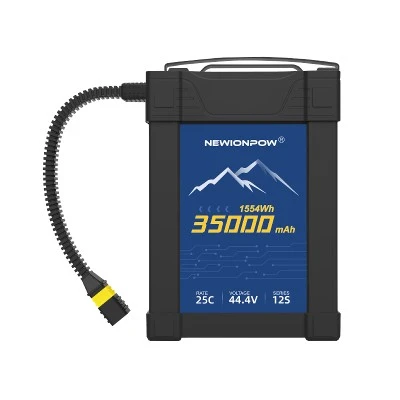
First off, let's quickly go over what a 4s battery is. A 4s battery is a lithium - polymer (LiPo) battery pack that consists of four cells connected in series. Each cell in a LiPo battery typically has a nominal voltage of around 3.7V. So, when you connect four of them in series, you get a nominal voltage of about 14.8V. We offer a range of 4s batteries on our site, like the 14.8V 22000mAh Lipo Battery, 14.8V 10000mAh Lipo Battery, and 14.8V 16000mAh Lipo Battery. These batteries are commonly used in drones, RC cars, and other small - scale electronic devices because of their high energy density and relatively lightweight.
Now, onto the big question: Can they be used in an electric vehicle? Well, it's a bit of a mixed bag.
The Pros of Using 4s Batteries in Electric Vehicles
One of the main advantages of 4s batteries is their energy density. LiPo batteries, in general, have a pretty high energy - to - weight ratio. This means that for a given weight, they can store a relatively large amount of energy. If you're looking to keep the weight of your electric vehicle down, 4s batteries could be a good option.
Another pro is the modularity. Since 4s batteries are made up of individual cells, it's relatively easy to add or remove cells to adjust the voltage and capacity of the battery pack. This gives you some flexibility in customizing the power source for your electric vehicle.
They're also quite common in the market. As a 4s battery supplier, I can tell you that there's a large supply of these batteries available. This means that if you need to replace a battery or expand your battery pack, you're likely to find what you need without too much hassle.
The Cons of Using 4s Batteries in Electric Vehicles
However, there are also some significant drawbacks. One of the biggest issues is the voltage. Most electric vehicles require a much higher voltage than what a single 4s battery can provide. For example, a typical electric car might need a battery pack with a voltage in the range of 200 - 400V or even higher. To reach these voltages using 4s batteries, you'd need to connect a large number of them in series. This not only adds complexity but also increases the risk of battery imbalance.
Battery imbalance is a serious problem. When you connect multiple batteries in series, each battery should ideally have the same state of charge. But in reality, there are always small differences between batteries. Over time, these differences can lead to some batteries being over - charged or under - charged, which can reduce the overall lifespan of the battery pack and even pose a safety risk.
Another concern is the capacity. While 4s batteries can have decent capacities, like the 22000mAh option we offer, for an electric vehicle, you'll likely need a much larger capacity to achieve a reasonable driving range. You'd have to connect many 4s batteries in parallel to increase the capacity, which again adds complexity and cost.
Safety is also a major factor. LiPo batteries are known to be more volatile compared to other types of batteries. They can catch fire or explode if they're over - charged, over - discharged, or physically damaged. In an electric vehicle, where there's a lot of vibration and potential for impact, this is a significant concern.
Real - World Applications and Considerations
Despite the limitations, there are some real - world scenarios where 4s batteries could potentially be used in electric vehicles. For small, low - power electric vehicles like electric scooters or some types of electric bicycles, a 4s battery might be sufficient. These vehicles typically have lower power requirements and shorter driving ranges, so a single or a small number of 4s batteries could provide enough power.
If you're building a custom electric vehicle, 4s batteries can also be a starting point. You can experiment with different configurations to see what works best for your specific needs. Just make sure you have a good understanding of battery management systems (BMS). A BMS is essential for monitoring and controlling the charging and discharging of the battery pack to prevent issues like battery imbalance and over - charging.
Cost - Benefit Analysis
When it comes to cost, 4s batteries are generally more affordable compared to high - voltage, high - capacity battery packs designed specifically for electric vehicles. However, when you factor in the cost of the additional components needed to make them work in an electric vehicle, like a BMS and the wiring to connect multiple batteries, the overall cost might not be as attractive.


You also need to consider the long - term cost. Since 4s batteries might have a shorter lifespan due to the potential for battery imbalance and other issues, you might end up spending more on battery replacements over the life of the vehicle.
Conclusion
So, can a 4s battery be used in an electric vehicle? The answer is yes, but with a lot of caveats. For small, low - power electric vehicles, they can be a viable option. But for larger, high - performance electric vehicles, using 4s batteries is likely to be more trouble than it's worth due to the voltage, capacity, and safety issues.
If you're still interested in exploring the possibility of using 4s batteries in your electric vehicle project, I'd be more than happy to talk to you. As a 4s battery supplier, I have a wealth of knowledge and experience in these batteries. Whether you need advice on battery selection, configuration, or just want to learn more about how they work, feel free to reach out. We can have a detailed discussion to see if 4s batteries are the right fit for your specific needs.
References
- Battery University: A great resource for understanding battery technology and its applications.
- Industry reports on electric vehicle battery trends and technologies.


