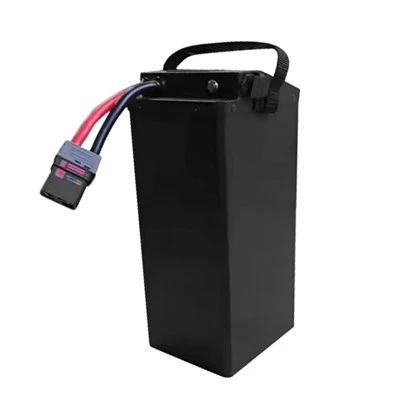



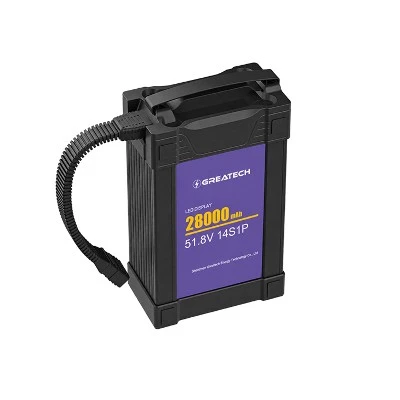


Hey there! As a supplier of 24V 150Ah batteries, I often get asked about the number of cells in these power - packed units. Let's dive right into it and break down this question step by step.
First off, we need to understand the basic voltage of a single cell. In most common battery chemistries, the voltage per cell varies. For lead - acid batteries, which are widely used in many applications, a single cell typically has a nominal voltage of about 2V. This is a well - known fact in the battery world.
Now, if we want to achieve a total battery voltage of 24V, we can use a simple calculation. We divide the total desired voltage (24V) by the voltage of a single cell (2V). So, 24 divided by 2 equals 12. That means, in a 24V lead - acid battery, there are usually 12 cells connected in series.
When cells are connected in series, the voltages add up. For example, if you have two 2V cells connected in series, the total voltage across them is 2V + 2V = 4V. By connecting 12 of these 2V cells in series, we can reach the 24V output that many applications require.
The 150Ah part of the battery specification refers to the ampere - hour capacity. It's a measure of how much charge the battery can store and deliver over time. A 150Ah battery can theoretically supply a current of 150 amperes for one hour, or 1 ampere for 150 hours. But in real - world scenarios, the actual discharge time depends on various factors like the load, temperature, and the battery's age.
Now, you might be wondering why this matters. Well, knowing the number of cells in a battery is crucial for several reasons. If you're looking to replace a damaged cell in a battery pack, you need to know how many cells are in the battery and how they're connected. Also, understanding the cell configuration helps in proper maintenance. For instance, in a lead - acid battery, each cell needs to be checked for proper electrolyte levels and sulfation periodically.
As a supplier of 24V 150Ah Battery, I've seen a wide range of applications for these batteries. They're commonly used in backup power systems for homes and small businesses, in electric vehicles like golf carts, and in some industrial equipment.
Let's talk a bit about other similar batteries in our product line. We also offer 24V 200Ah Battery and 24V 400Ah Battery. These batteries have the same 24V voltage, which means they also have 12 cells connected in series. The difference lies in their capacity. The 200Ah and 400Ah batteries can store and deliver more charge compared to the 150Ah battery. So, if you have a higher power demand or need the battery to last longer, you might want to consider these higher - capacity options.
When it comes to choosing the right battery for your needs, it's important to consider your power requirements. If you're powering a small set of lights and a few low - power devices, a 24V 150Ah battery might be sufficient. But if you're running larger equipment like a water pump or an air compressor, you might need a 24V 200Ah or 24V 400Ah battery.
Another aspect to consider is the battery's lifespan. The number of charge - discharge cycles a battery can go through before its capacity significantly degrades is an important factor. Lead - acid batteries, in general, have a limited number of cycles. But proper maintenance, like keeping the battery charged, avoiding over - discharging, and maintaining the right electrolyte levels, can extend their lifespan.
In addition to lead - acid batteries, there are other battery chemistries available in the market, such as lithium - ion batteries. Lithium - ion cells typically have a higher voltage per cell, around 3.7V. To achieve a 24V battery using lithium - ion cells, you would need to connect approximately 7 cells in series (24 divided by 3.7 is about 6.5, but in practice, you'd use 7 cells to get close to 24V). However, lithium - ion batteries have different characteristics compared to lead - acid batteries. They're lighter, have a higher energy density, and a longer lifespan in terms of charge - discharge cycles. But they're also more expensive.
As a supplier, I can help you choose the right battery based on your specific needs. Whether you're looking for a reliable backup power source or a battery for an electric vehicle, I've got the knowledge and the products to assist you.
If you're interested in purchasing a 24V 150Ah battery or any of our other products, don't hesitate to reach out. We can discuss your requirements in detail and find the best solution for you. Whether you need a single battery or a large quantity for an industrial project, we're here to serve you.
In conclusion, a 24V 150Ah lead - acid battery usually has 12 cells connected in series. Understanding the cell configuration and battery capacity is essential for proper use and maintenance. And if you're in the market for a battery, we have a range of options to meet your power needs. So, get in touch, and let's find the perfect battery for you.
References:


- Battery University: A comprehensive resource for battery knowledge and technology.
- Various industry - specific manuals on battery operation and maintenance.