


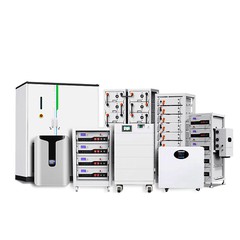


As a supplier of 24V 150Ah smart batteries, I am often asked about the communication interfaces of these advanced energy storage solutions. In this blog post, I will delve into the various communication interfaces available for 24V 150Ah smart batteries, their functions, and the benefits they offer.
Understanding Smart Batteries
Before we explore the communication interfaces, let's briefly understand what a smart battery is. A smart battery is equipped with a battery management system (BMS) that monitors and controls the battery's operation. The BMS provides real - time information about the battery's state of charge (SOC), state of health (SOH), temperature, and other critical parameters. This information is crucial for optimizing battery performance, ensuring safety, and prolonging the battery's lifespan.
Common Communication Interfaces for 24V 150Ah Smart Batteries
1. CAN Bus (Controller Area Network)
CAN bus is one of the most widely used communication interfaces in the automotive and industrial sectors, and it has also found its way into smart battery systems. The CAN bus protocol allows multiple devices to communicate with each other on a single network. In the context of a 24V 150Ah smart battery, the CAN bus enables the BMS to exchange data with other components such as chargers, inverters, and monitoring systems.
The advantages of using CAN bus include high - speed data transfer, robustness against electrical interference, and the ability to support multiple nodes on the network. For example, a charger can receive real - time SOC information from the battery's BMS via the CAN bus and adjust the charging current accordingly. This ensures efficient and safe charging of the battery.
2. RS - 485
RS - 485 is another popular communication standard for smart batteries. It is a differential signaling interface that can support long - distance communication over a twisted - pair cable. RS - 485 is known for its simplicity and cost - effectiveness.
In a 24V 150Ah smart battery system, the RS - 485 interface can be used to connect the BMS to a remote monitoring station or a building management system. The BMS can transmit data such as battery voltage, current, and temperature to the monitoring station, allowing operators to keep track of the battery's performance from a distance.
3. Modbus
Modbus is an open - source communication protocol that is widely used in industrial automation. It can be implemented over different physical layers, including RS - 485 and Ethernet. In the case of a 24V 150Ah smart battery, Modbus can be used to communicate between the BMS and other devices in the system.
Modbus provides a standardized way to read and write data registers, making it easy to integrate the battery system with other equipment. For instance, an inverter can use Modbus to read the battery's SOC and SOH data from the BMS and adjust its operation to ensure optimal power output.
4. Bluetooth
Bluetooth is a short - range wireless communication technology that is commonly used in consumer electronics. In the context of a 24V 150Ah smart battery, Bluetooth can be used for local monitoring and configuration.
Users can connect their smartphones or tablets to the battery's BMS via Bluetooth to access real - time battery data and perform basic configuration tasks. For example, a user can check the battery's SOC, set charging parameters, or receive alerts if the battery's temperature exceeds a certain threshold.


Benefits of Communication Interfaces in 24V 150Ah Smart Batteries
1. Remote Monitoring and Management
The communication interfaces allow for remote monitoring of the battery's performance. Operators can access real - time data from anywhere, which is especially useful for large - scale battery installations such as in solar power plants or data centers. This enables proactive maintenance and troubleshooting, reducing downtime and improving overall system reliability.
2. Integration with Other Systems
Smart batteries with communication interfaces can be easily integrated with other components in a power system, such as chargers, inverters, and energy management systems. This integration allows for seamless operation and optimization of the entire power system. For example, a battery can communicate with a solar inverter to store excess solar energy during the day and discharge it when needed.
3. Safety and Protection
The BMS can use the communication interfaces to transmit safety - related information, such as over - voltage, under - voltage, and over - temperature warnings. This information can be sent to other components in the system to trigger appropriate protective actions, such as shutting down the charger or disconnecting the battery from the load.
Our Product Range and Availability
As a leading supplier of 24V 150Ah smart batteries, we also offer a wide range of related products. If you are looking for other capacities, we have 24V 200Ah Battery, 24V 100Ah Battery, and 24V 400Ah Battery. All our batteries are equipped with advanced BMS and communication interfaces to ensure optimal performance and safety.
Contact Us for Procurement
If you are interested in our 24V 150Ah smart batteries or any of our other products, we invite you to contact us for procurement discussions. Our team of experts is ready to provide you with detailed product information, technical support, and competitive pricing. Whether you are a small - scale user or a large - scale industrial customer, we can meet your energy storage needs.
References
- “CAN Bus Basics” by NXP Semiconductors
- “RS - 485 Communication Guide” by Texas Instruments
- “Modbus Protocol Specification” by Schneider Electric
- “Bluetooth Technology Overview” by Bluetooth SIG


