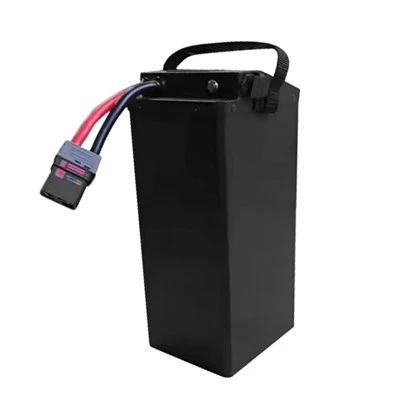



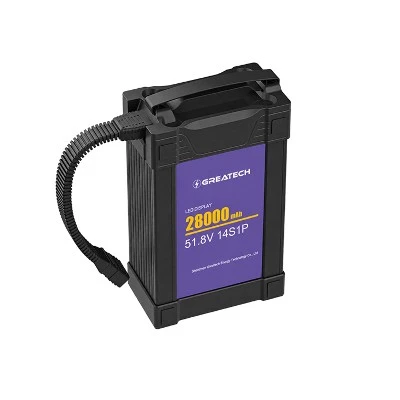


As a supplier of 24V 150Ah batteries, I've witnessed firsthand the significant influence that temperature can have on these power storage units. In this blog, I'll delve into the scientific aspects of how temperature impacts a 24V 150Ah battery, drawing on industry knowledge and real - world experiences.
1. Battery Basics
Before discussing the impact of temperature, it's essential to understand the fundamental workings of a 24V 150Ah battery. The "24V" refers to the nominal voltage of the battery, which indicates the electrical potential difference between its positive and negative terminals. The "150Ah" represents the ampere - hour capacity, meaning that under specific conditions, the battery can supply a current of 150 amperes for one hour, or proportionately lower currents for longer periods.
These batteries are commonly used in a variety of applications, including renewable energy storage systems, backup power supplies for telecommunications equipment, and electric vehicles. Their performance and lifespan are crucial factors that determine their suitability for different uses.
2. Impact of High Temperature
2.1 Chemical Reactions
At high temperatures, the chemical reactions within the battery are accelerated. In a lead - acid battery, for example, the main chemical reactions involve the conversion of lead and lead dioxide to lead sulfate during discharge and the reverse process during charging. Higher temperatures increase the rate of these reactions, which might seem beneficial at first glance as it can lead to a more rapid release of energy.
However, this accelerated reaction rate also has negative consequences. It causes the electrolyte to evaporate more quickly. The electrolyte in a lead - acid battery is a solution of sulfuric acid and water. When the water evaporates, the concentration of sulfuric acid increases, which can lead to corrosion of the battery plates. Over time, this corrosion weakens the plates and reduces the battery's capacity.
2.2 Self - Discharge
High temperatures also increase the self - discharge rate of the battery. Self - discharge is the process by which a battery loses its charge even when it is not connected to a load. The chemical reactions that cause self - discharge are thermally activated, so as the temperature rises, the rate of self - discharge increases. This means that a 24V 150Ah battery stored at a high temperature will lose its charge more quickly than one stored at a lower temperature. For example, a battery that might self - discharge at a rate of 1 - 2% per month at room temperature could self - discharge at a rate of 5 - 10% per month at a temperature of 40 - 50°C.
2.3 Lifespan
The overall lifespan of a 24V 150Ah battery is significantly reduced at high temperatures. The accelerated chemical reactions, corrosion of the plates, and increased self - discharge all contribute to a shorter lifespan. In general, for every 10°C increase in temperature above the recommended operating temperature (usually around 25°C), the battery's lifespan can be reduced by up to half. This is a critical factor for users, as replacing batteries frequently can be costly and inconvenient.
3. Impact of Low Temperature
3.1 Reduced Capacity
One of the most noticeable effects of low temperature on a 24V 150Ah battery is the reduction in its available capacity. At low temperatures, the chemical reactions within the battery slow down. The movement of ions in the electrolyte is also hindered, which makes it more difficult for the battery to deliver its full rated capacity.
For example, a 24V 150Ah battery that can deliver its full capacity at 25°C might only be able to deliver 70 - 80% of its capacity at 0°C. In extremely cold conditions, say - 20°C, the available capacity can drop to as low as 40 - 50% of the rated capacity. This reduced capacity can be a major problem in applications where a reliable and full - capacity power supply is required.
3.2 Increased Internal Resistance
Low temperatures also increase the internal resistance of the battery. The internal resistance is a measure of how much the battery resists the flow of current. When the internal resistance is high, more energy is dissipated as heat within the battery when current is flowing. This not only reduces the efficiency of the battery but also makes it more difficult to charge the battery.
During charging, a battery with high internal resistance requires a higher charging voltage to achieve the same charging current. If the charging voltage is not adjusted properly, the battery may not be fully charged, which can further reduce its capacity over time.
4. Impact on Battery Charging
4.1 Charging Efficiency
Temperature has a significant impact on the charging efficiency of a 24V 150Ah battery. At high temperatures, the charging process can be less efficient due to the increased self - discharge and the accelerated chemical reactions. The battery may require more energy to reach a full charge, and there is a higher risk of overcharging, which can damage the battery.
At low temperatures, the charging efficiency is also reduced because of the increased internal resistance. The battery may take longer to charge, and the charger may need to be adjusted to provide a higher voltage to overcome the internal resistance.


4.2 Charging Algorithms
To optimize the charging process, it is essential to use appropriate charging algorithms that take temperature into account. Many modern chargers are equipped with temperature sensors that can adjust the charging voltage and current based on the battery's temperature. For example, at low temperatures, the charger may increase the charging voltage slightly to compensate for the increased internal resistance, while at high temperatures, it may reduce the charging current to prevent overcharging.
5. Optimal Temperature Range
The optimal temperature range for a 24V 150Ah battery is typically between 20°C and 25°C. Within this range, the chemical reactions within the battery occur at an appropriate rate, the self - discharge rate is relatively low, and the battery can deliver its full rated capacity.
Maintaining the battery within this optimal temperature range is crucial for maximizing its performance and lifespan. In applications where the battery is exposed to extreme temperatures, such as in outdoor renewable energy systems, temperature control measures are often required. This can include using battery enclosures with insulation and ventilation systems, or installing heating or cooling devices to regulate the temperature.
6. Choosing the Right Battery for Different Temperatures
When selecting a 24V 150Ah battery for a specific application, it's important to consider the temperature conditions it will be exposed to. If the application is in a hot environment, a battery with better heat - resistance features, such as improved plate design and electrolyte additives, may be required.
On the other hand, for applications in cold climates, a battery with a lower internal resistance at low temperatures and a design that can withstand repeated freezing and thawing cycles should be chosen.
If you are looking for other battery options, we also offer 24V 200Ah Battery and 24V 100Ah Battery which may better suit your specific needs. For more information about our 24V 150Ah Battery, feel free to contact us for procurement and further discussions.
References
- Linden, D., & Reddy, T. B. (2002). Handbook of Batteries (3rd ed.). McGraw - Hill.
- Berndt, D. (2000). Lead - Acid Batteries: Science and Technology. Springer.
- Rand, D. A. J., Moseley, P. T., Garche, J., & Parker, C. (2004). Valve - Regulated Lead - Acid Batteries. Elsevier.