




As a supplier of 60V batteries, I often encounter inquiries about voltage drop under load. Voltage drop is a critical concept in understanding battery performance, especially when dealing with high - voltage batteries like our 60V offerings. In this blog, I'll delve into what voltage drop is, why it occurs, and how it impacts the use of 60V batteries.
Understanding Voltage Drop
Voltage drop refers to the decrease in voltage that occurs when a current flows through a circuit. In the context of a 60V battery, when a load is connected to the battery, the battery starts to supply current to the load. According to Ohm's Law ((V = IR)), where (V) is voltage, (I) is current, and (R) is resistance. The internal resistance of the battery ((R_{int})) and the resistance of the load ((R_{load})) together form the total resistance in the circuit. As current ((I)) flows through the internal resistance of the battery, a voltage drop ((V_{drop}=I\times R_{int})) occurs within the battery itself.
For example, if a 60V battery has an internal resistance of (0.1\Omega) and the load draws a current of (10A), the voltage drop across the internal resistance is (V_{drop}=10A\times0.1\Omega = 1V). So, the voltage available at the battery terminals under this load is (60V - 1V=59V).
Factors Affecting Voltage Drop in 60V Batteries
Internal Resistance
The internal resistance of a battery is a key factor influencing voltage drop. Batteries with higher internal resistance will experience greater voltage drops under load. The internal resistance can be affected by several factors, including the battery chemistry, age, and temperature.
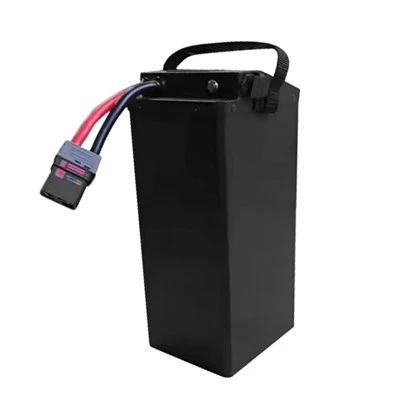
- Battery Chemistry: Different battery chemistries have different internal resistances. For instance, lead - acid batteries generally have higher internal resistance compared to lithium - ion batteries. Our 60V 30Ah Lithium Battery For Electric Vehicles has a relatively low internal resistance due to the lithium - ion chemistry, which means it can maintain a more stable voltage under load compared to a lead - acid battery of the same voltage.
- Age: As a battery ages, its internal resistance tends to increase. This is because of factors such as the degradation of the electrode materials and the build - up of impurities within the battery. An older 60V battery may experience a larger voltage drop under the same load compared to a new one.
- Temperature: Temperature also has a significant impact on internal resistance. At low temperatures, the chemical reactions within the battery slow down, increasing the internal resistance. Conversely, at high temperatures, the internal resistance may decrease, but high temperatures can also cause other issues such as accelerated battery degradation.
Load Current
The magnitude of the load current is directly proportional to the voltage drop. A higher load current will result in a larger voltage drop across the internal resistance of the battery. For example, if a 60V battery is powering a high - power device that draws a large current, say (50A), and has an internal resistance of (0.1\Omega), the voltage drop is (V_{drop}=50A\times0.1\Omega = 5V), and the terminal voltage will be (60V - 5V = 55V).
Impact of Voltage Drop on Battery Performance
Reduced Power Output
Voltage drop can lead to a reduced power output of the battery. Power ((P)) is calculated as (P = VI). When the voltage at the battery terminals drops due to the internal resistance, the power delivered to the load is also reduced. For example, if a load requires a certain power to operate efficiently and the voltage supplied to it decreases, the load may not function properly.
Shorter Battery Life
Excessive voltage drop can also shorten the battery life. When a battery experiences large voltage drops under load, it has to work harder to supply the required power. This can lead to increased heat generation within the battery, which accelerates the degradation of the battery materials. Over time, this can reduce the overall capacity and lifespan of the battery.


Measuring Voltage Drop in 60V Batteries
To measure the voltage drop in a 60V battery under load, you need a voltmeter and a load. First, measure the open - circuit voltage of the battery (the voltage when no load is connected), which should be close to the rated 60V. Then, connect the load to the battery and measure the voltage at the battery terminals while the load is drawing current. The difference between the open - circuit voltage and the voltage under load is the voltage drop.
Minimizing Voltage Drop in 60V Batteries
Selecting the Right Battery
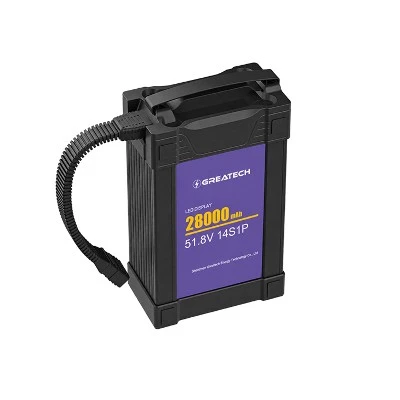
Choosing a battery with low internal resistance is crucial for minimizing voltage drop. Our 60V 55Ah Lithium Ion Power Battery and 60V 50Ah Lithium Ion Power Battery are designed with advanced lithium - ion technology to have low internal resistance, ensuring stable voltage output under load.
Proper Battery Maintenance
Maintaining the battery in good condition can also help reduce voltage drop. This includes keeping the battery at an appropriate temperature, avoiding over - discharging, and regular charging. Temperature management is particularly important, as extreme temperatures can increase the internal resistance of the battery.
Conclusion
Voltage drop is an important aspect to consider when using 60V batteries. Understanding the factors that affect voltage drop and how to measure and minimize it can help you get the most out of your battery. As a 60V battery supplier, we are committed to providing high - quality batteries with low internal resistance to ensure stable performance under load.
If you are interested in our 60V battery products or have any questions about voltage drop or battery performance, we welcome you to contact us for procurement and further discussions. We look forward to working with you to meet your battery needs.
References
- Linden, D., & Reddy, T. B. (2002). Handbook of Batteries (3rd ed.). McGraw - Hill.
- Berndt, D. (2011). Battery Technology Handbook. McGraw - Hill Professional.