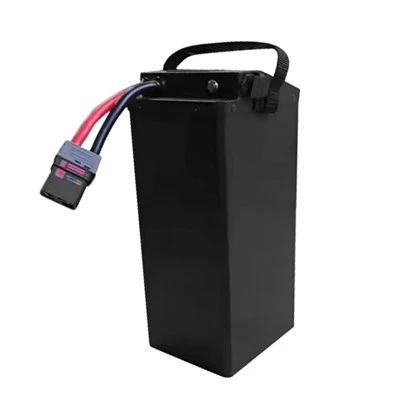



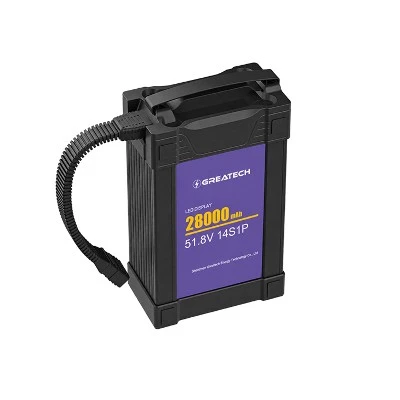


As a supplier of 5kWh batteries, I often get asked whether our 5kWh battery can be used in a lighting system. The answer is a resounding yes, and in this blog post, I'll delve into the details of how and why a 5kWh battery can be an excellent choice for your lighting needs.
Understanding the Basics of a 5kWh Battery
Before we discuss its application in lighting systems, let's understand what a 5kWh battery means. A kilowatt - hour (kWh) is a unit of energy. A 5kWh battery can deliver 5 kilowatts of power for one hour, or 1 kilowatt of power for five hours, and so on. This energy capacity provides a significant amount of stored electricity that can be harnessed for various purposes, including lighting.
Advantages of Using a 5kWh Battery in Lighting Systems
Energy Independence
One of the primary benefits of using a 5kWh battery in a lighting system is energy independence. In areas where the grid is unreliable or non - existent, a battery - powered lighting system can ensure continuous illumination. For example, in remote rural areas, off - grid cabins, or during power outages in urban settings, the 5kWh battery can keep the lights on.
Cost - Savings
Over time, using a 5kWh battery for lighting can lead to cost savings. By storing energy during off - peak hours when electricity rates are lower, you can use the stored energy to power your lights during peak hours, avoiding higher electricity costs. Additionally, if you have a solar panel system, the battery can store the excess energy generated during the day, which can then be used to power the lights at night, further reducing your reliance on the grid.
Environmental Benefits
Battery - powered lighting systems are more environmentally friendly compared to traditional grid - powered systems that rely on fossil fuels. When paired with renewable energy sources like solar or wind, a 5kWh battery can store clean energy and use it to power lights, reducing greenhouse gas emissions.
Sizing the Lighting System for a 5kWh Battery
To effectively use a 5kWh battery in a lighting system, it's crucial to size the lighting load appropriately. First, you need to determine the total power consumption of your lights. For example, if you have ten LED lights, each consuming 10 watts, the total power consumption of the lighting system is 10 x 10 = 100 watts or 0.1 kilowatts.
If you want to run these lights for 50 hours, the total energy required is 0.1 kilowatts x 50 hours = 5 kWh, which is exactly the capacity of our 5kWh battery. However, it's important to note that in real - world scenarios, there are losses in the battery charging and discharging process, so you may need to account for these losses when sizing your system.
Compatibility with Different Types of Lighting
A 5kWh battery can be used with various types of lighting, including:
LED Lights
LED lights are highly energy - efficient, consuming significantly less power compared to traditional incandescent or fluorescent lights. This makes them an ideal choice to pair with a 5kWh battery. With their long lifespan and low power consumption, LED lights can run for extended periods on a single charge of the 5kWh battery.


Fluorescent Lights
Fluorescent lights are also relatively energy - efficient. While they consume more power than LED lights, a 5kWh battery can still power a reasonable number of fluorescent lights for a decent amount of time. However, fluorescent lights require a ballast to start, which may add a small amount of additional power consumption.
Incandescent Lights
Incandescent lights are the least energy - efficient of the three. They convert a large portion of the electrical energy into heat rather than light. Using a 5kWh battery to power incandescent lights will result in a shorter runtime compared to LED or fluorescent lights. However, in some cases where the aesthetic of incandescent lighting is desired, a 5kWh battery can still be used, but the number of lights and the runtime will need to be carefully considered.
Other Considerations
Charging the Battery
The 5kWh battery can be charged in several ways. If you have a solar panel system, the battery can be charged during the day when the sun is shining. You can also charge the battery from the grid during off - peak hours. It's important to use a suitable charger that is compatible with the battery to ensure safe and efficient charging.
Battery Management System (BMS)
A Battery Management System is essential for the proper functioning and longevity of the 5kWh battery. The BMS monitors the battery's state of charge, temperature, and voltage, and protects the battery from overcharging, over - discharging, and short - circuits.
Our Product Range
In addition to our 5kWh battery, we also offer a range of other energy storage batteries that may be suitable for your lighting system depending on your specific needs. For example, if you have a larger lighting load or need longer runtime, you might be interested in our 15KWh Energy Storage Battery. On the other hand, if your lighting requirements are relatively small, our 3KWh Energy Storage Battery could be a good option. And for a mid - range capacity, we have the 7KWh Energy Storage Battery.
Contact Us for Procurement
If you're interested in using a 5kWh battery or any of our other energy storage solutions for your lighting system, we'd love to hear from you. We can provide you with detailed product information, help you size the system according to your needs, and offer competitive pricing. Contact us today to start the procurement process and take a step towards a more reliable, cost - effective, and environmentally friendly lighting system.
References
- "Energy Storage Handbook" - A comprehensive guide on energy storage technologies and applications.
- "Lighting Design Basics" - A book that provides insights into different types of lighting and their power consumption.
- "Battery Technology: Principles and Applications" - A technical reference on battery design, charging, and management.