




In the realm of electric bikes (ebikes), the battery is the heart that powers the ride. One of the most critical decisions when choosing an ebike or its battery is the voltage. Among the various voltage options available, 48V ebike batteries stand out, and in this blog, I'll explore the differences between 48V and other voltage ebike batteries. As a 48V ebike battery supplier, I've witnessed firsthand the unique characteristics and advantages of these power sources.
Understanding Voltage in Ebike Batteries
Voltage is a measure of the electrical potential difference in a battery. In simple terms, it represents the "push" that moves electric charge through a circuit. A higher voltage means more power can be delivered to the motor, which in turn affects the performance of the ebike. Common voltage options for ebike batteries include 24V, 36V, 48V, and even 72V in some high - performance models.
Power and Performance
One of the most significant differences between a 48V battery and lower - voltage alternatives like 24V or 36V is the power output. Power (P) is calculated as the product of voltage (V) and current (I), i.e., P = V×I. For a given current, a 48V battery will provide more power than a 24V or 36V battery.
This increased power translates into better acceleration and higher top speeds. An ebike with a 48V battery can quickly pick up speed, making it ideal for hilly terrains or situations where rapid acceleration is needed, such as merging into traffic. In contrast, 24V and 36V ebikes may struggle on steep inclines or have slower acceleration times.
On the other hand, compared to higher - voltage batteries like 72V, 48V batteries offer a more balanced approach. While 72V batteries can deliver extremely high power, they also require more advanced and expensive components, such as motors and controllers, to handle the increased voltage. This can make the overall cost of the ebike significantly higher. A 48V battery provides a good balance between power and cost - effectiveness, making it a popular choice for a wide range of ebike users.
Range and Efficiency
The range of an ebike, or how far it can travel on a single charge, is another important consideration. The range is affected by several factors, including the battery's capacity (measured in amp - hours, Ah), the efficiency of the motor, and the riding conditions.
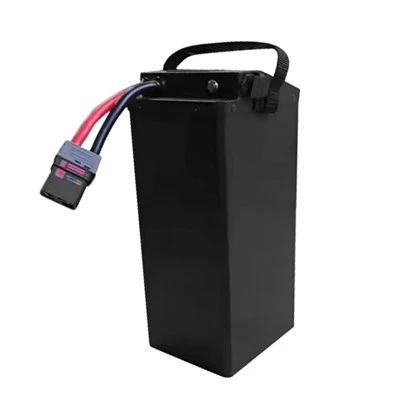
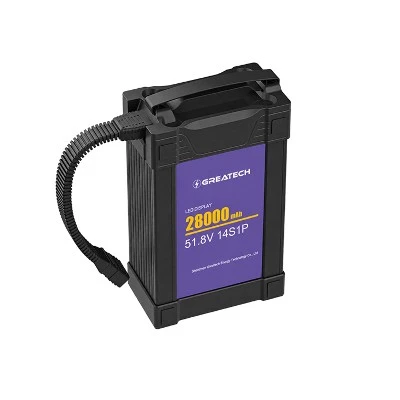
A 48V battery can potentially offer a longer range compared to lower - voltage batteries, especially when paired with a high - capacity battery. For example, our 48V 24.5Ah Electric Bicycle Lithium Battery provides a substantial amount of energy, allowing for extended rides. The higher voltage also means the motor can operate more efficiently. Motors are generally designed to work optimally at a certain voltage, and a 48V motor can convert electrical energy into mechanical energy more effectively than a lower - voltage motor, reducing energy losses and increasing the overall range.
However, it's important to note that higher - voltage batteries like 72V can also offer long ranges, but they may consume more energy during high - power operations. A 48V battery strikes a good balance, providing a decent range without excessive energy consumption.
Charging Time
Charging time is an aspect that concerns many ebike users. The charging time of a battery depends on its capacity and the charger's output. A 48V battery typically takes longer to charge than a 24V or 36V battery of the same capacity because it stores more energy.
For example, a 48V 24Ah E - bike Lithium Li - ion Battery JT053 will take more time to charge compared to a 36V 24Ah battery. However, advancements in charging technology have made it possible to reduce charging times. Many modern 48V chargers are designed to deliver a high - current charge safely, which can significantly reduce the charging time.
In comparison to 72V batteries, 48V batteries usually have a shorter charging time because they store less energy overall. This makes them more convenient for daily use, as users don't have to wait as long to get back on the road.
Safety and Compatibility
Safety is of utmost importance when it comes to ebike batteries. 48V batteries are generally considered safer than higher - voltage batteries like 72V. Higher voltages pose a greater risk of electrical shock and can cause more severe damage in case of a short - circuit or other electrical malfunctions.
48V batteries are also more compatible with a wider range of ebike components. Most standard ebike motors, controllers, and other electrical parts are designed to work with 48V systems. This means that it's easier to find replacement parts and make upgrades to a 48V ebike compared to a 72V system, which may require specialized components.
Cost
Cost is a major factor for many consumers. 48V batteries are more expensive than 24V or 36V batteries due to their higher power output and capacity. However, they are more affordable than 72V batteries. The cost of a battery also depends on its capacity, brand, and the type of cells used.
Our 48V 10Ah Ebike Battery offers a cost - effective option for those who don't need a large capacity. When considering the overall cost of an ebike, a 48V battery provides a good balance between performance and price. It offers better performance than lower - voltage batteries without the high cost associated with 72V systems.
Conclusion
In conclusion, a 48V ebike battery offers a unique combination of power, range, safety, compatibility, and cost - effectiveness. Compared to lower - voltage batteries, it provides better performance and longer ranges, while compared to higher - voltage batteries, it is safer, more compatible, and more affordable.
If you're in the market for an ebike battery, a 48V battery is a great choice for a wide range of applications, from daily commuting to recreational riding. Whether you're a casual rider or an avid cyclist, our selection of 48V ebike batteries can meet your needs.


If you're interested in purchasing our 48V ebike batteries, we invite you to contact us for more information and to discuss your specific requirements. Our team of experts is ready to assist you in finding the perfect battery for your ebike.
References
- Battery University: A comprehensive resource on battery technology and performance.
- Ebike Magazine: Articles and reviews on electric bikes and their components, including batteries.